 Bird Album
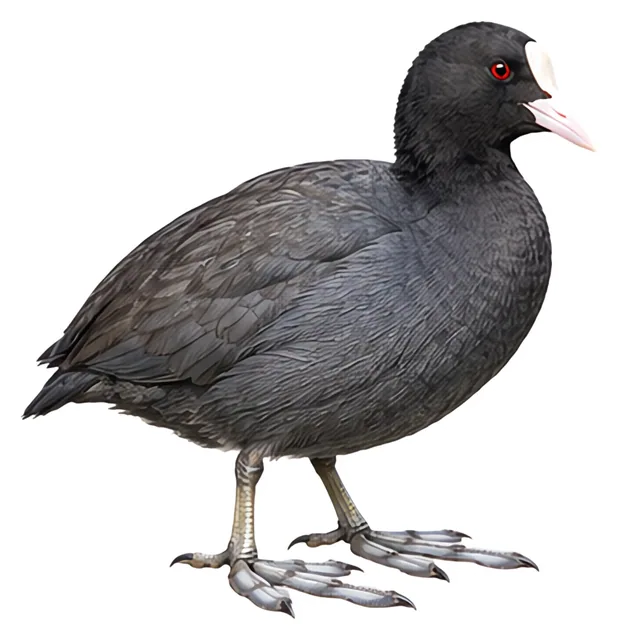
Eurasian Coot
Fulica atra Linnaeus, 1758
36–38 cmLength75 cmWingspan717 gWeight
This blackish waterbird has a white bill and white frontal shield.
Busiest months: January and March–May · Most records: United Kingdom, Australia, Spain
How to identify
Field marks
- White bill and white frontal shield
- Body dark gray-black, with a smooth black head
- Toes long and powerful, with partial webbing
Male, female and young
Sexes similar; juvenile paler, with a white breast and no frontal shield, which becomes fully developed at about one year old.
Voice
Very noisy, with popping, explosive or trumpet-like calls, often given at night.
Where and when it's recorded
Busiest months: January and March–May · Most records: United Kingdom, Australia, Spain

Eurasian Coot has been recorded at 2,813 of the 8,276 birding hotspots we track, in 105 countries and regions.
Records by month Northern Hemisphere
Where it's recorded most
- Jerrabomberra Wetlands Nature ReserveAustralia9,914 records
- Amwell HMWT NRUnited Kingdom8,513 records
- Western Treatment PlantAustralia7,776 records
More places
- Titchwell Marsh RSPB ReserveUnited Kingdom6,714 records
- Desembocadura del Guadalhorce – ÁreaSpain5,668 records
- Txingudi – PlaiaundiSpain5,597 records
- Beddington FarmlandsUnited Kingdom4,931 records
- Minsmere RSPB ReserveUnited Kingdom4,335 records
- Royal Botanic Gardens MelbourneAustralia4,331 records
- WWT London Wetland CentreUnited Kingdom4,283 records
Countries and regions with the most records
eBird records via GBIF up to 2024-12-31. A record means someone listed it; more records partly mean more birders, not more birds.
About
The Eurasian coot (Fulica atra), also known as the common coot or Australian coot, is a member of the rail and crake bird family, the Rallidae. It is found in Europe, Asia, Australia, New Zealand and parts of North Africa. It has a slaty-black body, a glossy black head and a white bill with a white frontal shield.
Excerpt from Wikipedia, CC BY-SA 4.0 · authors · Read more on Wikipedia
Questions
How big is the Eurasian Coot?
The Eurasian Coot is about 36–38 cm long, with a wingspan of 75 cm and weighs around 717 g.
Where does the Eurasian Coot live?
Its breeding range: Palearctic, Oriental, Australasia: widespread. It is most often recorded in United Kingdom, Australia and Spain.
When is the best time to see the Eurasian Coot?
At the hotspots we track, it is recorded most in January, March, April and May (Northern Hemisphere).
Is the Eurasian Coot endangered?
The IUCN Red List classifies the Eurasian Coot as Least Concern.
What does the Eurasian Coot eat?
Main food: Aquatic plants.
What family is the Eurasian Coot in?
It belongs to the family Rails, Crakes & Coots (Rallidae), order Gruiformes.
At a glance
- Length
- 36–38 cm
- Wingspan
- 75 cm
- Weight
- 717 g
- Habitat
- Wetland
- Diet
- Aquatic plants
- Lifestyle
- Varied
- Migration
- Resident (barely migrates)
- Conservation
- Least Concern
More measurements
- Wing
- 198 mm
- Tail
- 54 mm
- Bill
- 38 mm
- Tarsus
- 57 mm
Averages from the AVONET dataset; length from field guides where available.
Range
Palearctic, Oriental, Australasia: widespread
Breeding range, IOC World Bird List 15.2
Classification
- Order
- Gruiformes
- Family
- Rails, Crakes & Coots Rallidae
- Genus
- Fulica
Other birds in the genus Fulica
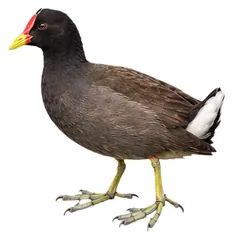 Red-fronted CootFulica rufifrons
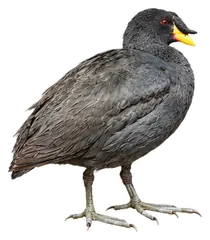 Horned CootFulica cornuta
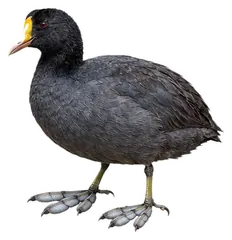 Giant CootFulica gigantea
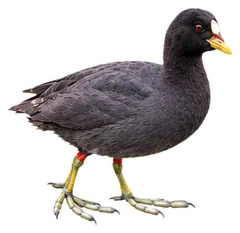 Red-gartered CootFulica armillata
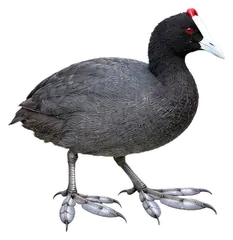 Red-knobbed CootFulica cristata
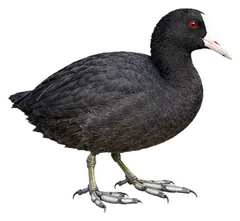 Hawaiian CootFulica alai
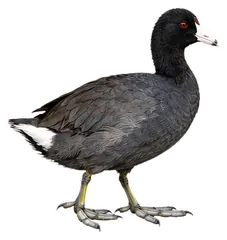 American CootFulica americana
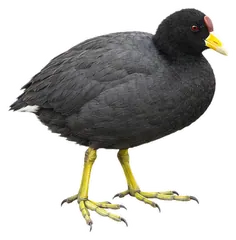 Andean CootFulica ardesiaca
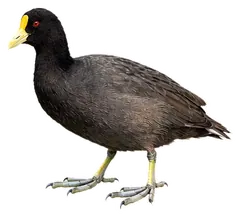 White-winged CootFulica leucoptera
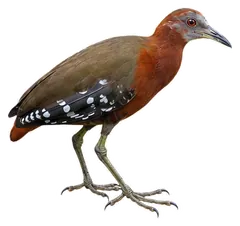 Grey-throated RailCanirallus oculeus
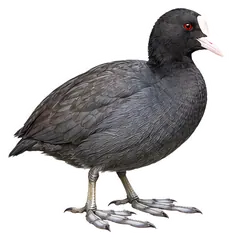
Download illustration
Free to use with credit: “Illustration: Bird Album (birdalbum.com)”. Drawn by AI from a reference photo by Alexis Lours. ↗

Heard it but can't see it? Mingji identifies birds by sound and photo, on your phone.