 Bird Album
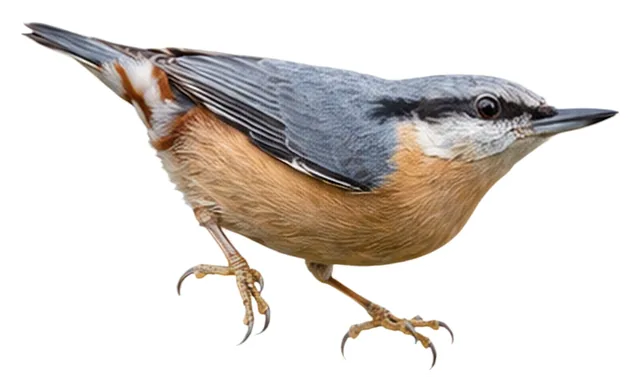
Eurasian Nuthatch
Sitta europaea Linnaeus, 1758
≈16 cmLength24 cmWingspan20 gWeight
It has a short tail, long bill, blue-gray back and black eyestripe, and can climb down trees headfirst.
Busiest months: March–April · Most records: United Kingdom, Czechia, Germany
Looks like Chestnut-vented Nuthatch
How to identify
Field marks
- Blue-gray upperparts with a black eyestripe
- Long, stout, dark gray bill
- Rounded wings and a short, square tail in flight
- Orange-yellow or whitish underparts, depending on subspecies
Male, female and young
The female has slightly paler upperparts, a more rufous eyestripe, and paler sides and lower belly; juveniles resemble the female but have duller plumage and paler legs and feet.
Voice
A loud, sharp “dwip”, often repeated twice; the song is a slow whistled “pee-pee-pee”.
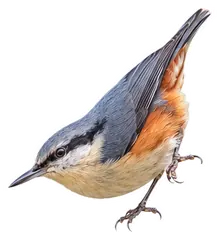
Similar species
Where and when it's recorded

Eurasian Nuthatch has been recorded at 1,078 of the 8,171 birding hotspots we track, in 51 countries and regions.
Records by month Northern Hemisphere
Where it's recorded most
- South Downs NP – Pulborough Brooks RSPB ReserveUnited Kingdom1,727 records
- Herdade da Mitra – LabOrPortugal1,323 records
- Lynford ArboretumUnited Kingdom1,279 records
More places
- Hoces Ebro Rudrón PNat – Molino del CantoSpain1,230 records
- Ďáblický hájCzechia1,190 records
- South ParkBulgaria1,135 records
- Marbury Country ParkUnited Kingdom1,106 records
- Peak District NP – Underhill Farm, ElkstoneUnited Kingdom1,057 records
- Hampstead HeathUnited Kingdom1,048 records
- Amwell HMWT NRUnited Kingdom983 records
Countries and regions with the most records
eBird records via GBIF up to 2024-12-31. A record means someone listed it; more records partly mean more birders, not more birds.
About
The Eurasian nuthatch, wood nuthatch (Sitta europaea), or simply nuthatch, is a small passerine bird found throughout the Palearctic and in Eurasia. It is a vocal bird with a repeated loud dwip call.
Excerpt from Wikipedia, CC BY-SA 4.0 · authors · Read more on Wikipedia
Questions
How big is the Eurasian Nuthatch?
The Eurasian Nuthatch is about ≈16 cm long, with a wingspan of 24 cm and weighs around 20 g.
Where does the Eurasian Nuthatch live?
Its breeding range: Palearctic: widespread. It is most often recorded in United Kingdom, Czechia and Germany.
When is the best time to see the Eurasian Nuthatch?
At the hotspots we track, it is recorded most in March and April (Northern Hemisphere).
Is the Eurasian Nuthatch endangered?
The IUCN Red List classifies the Eurasian Nuthatch as Least Concern.
What does the Eurasian Nuthatch eat?
Main food: Insects & other invertebrates.
What family is the Eurasian Nuthatch in?
It belongs to the family Nuthatches (Sittidae), order Passerines (Passeriformes).
At a glance
- Length
- ≈16 cm
- Wingspan
- 24 cm
- Weight
- 20 g
- Habitat
- Forest
- Diet
- Insects & other invertebrates
- Lifestyle
- Perches in trees
- Migration
- Resident (barely migrates)
- Conservation
- Least Concern
More measurements
- Wing
- 85 mm
- Tail
- 47 mm
- Bill
- 21 mm
- Tarsus
- 20 mm
Averages from the AVONET dataset; length from field guides where available.
Range
Palearctic: widespread
Breeding range, IOC World Bird List 15.2
Subspecies · 4
- Sitta europaea sinensis nc, e China
- Sitta europaea formosana Taiwan (China)
- Sitta europaea seorsa nw China
- Sitta europaea amurensis Russian Far East, ne China and Korea
Classification
- Order
- Passerines Passeriformes
- Family
- Nuthatches Sittidae
- Genus
- Sitta
Other birds in the genus Sitta
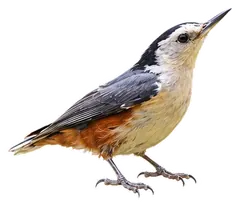 White-cheeked NuthatchSitta leucopsis
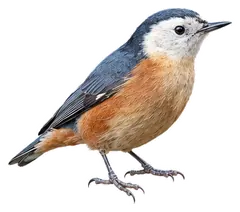 Przevalski's NuthatchSitta przewalskii
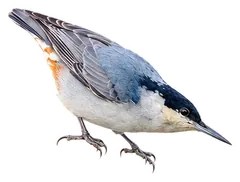 Giant NuthatchSitta magna
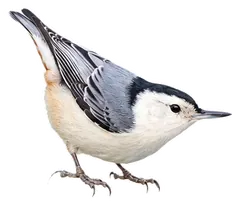 White-breasted NuthatchSitta carolinensis
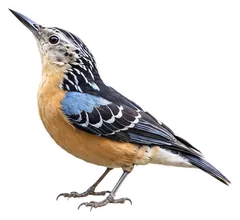 Beautiful NuthatchSitta formosa
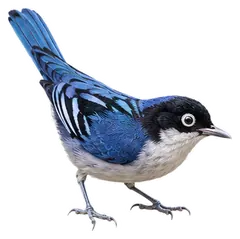 Blue NuthatchSitta azurea
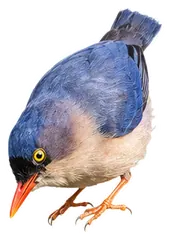 Velvet-fronted NuthatchSitta frontalis
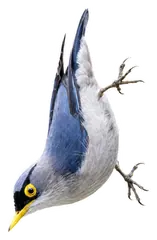 Yellow-billed NuthatchSitta solangiae
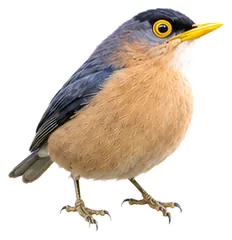 Sulphur-billed NuthatchSitta oenochlamys
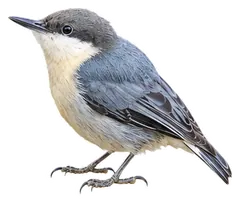 Pygmy NuthatchSitta pygmaea
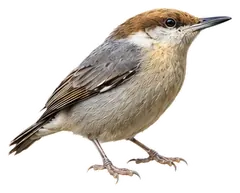 Brown-headed NuthatchSitta pusilla
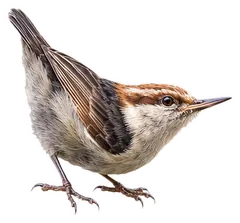 Bahama NuthatchSitta insularis
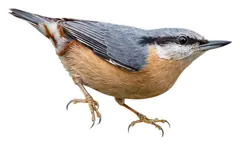
Download illustration
Free to use with credit: “Illustration: Bird Album (birdalbum.com)”. Drawn by AI from a reference photo by Isiwal. ↗

Heard it but can't see it? Mingji identifies birds by sound and photo, on your phone.