 Bird Album
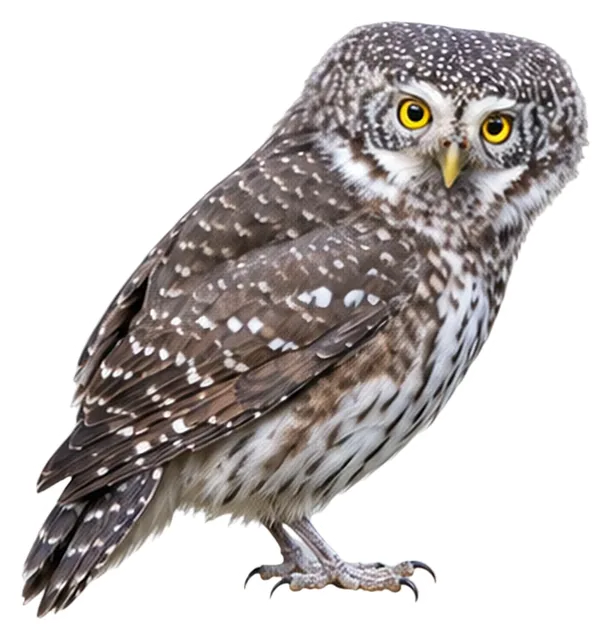
Eurasian Pygmy Owl
Glaucidium passerinum (Linnaeus, 1758)
≈18 cmLength35 cmWingspan58 gWeight
This small owl has a white-spotted crown and a white half-collar around the nape.
Busiest months: October–November · Most records: Russia, Norway, Finland
How to identify
Field marks
- Crown gray, covered in white spots
- Head small and short, without ear tufts
- White half-collar around the nape
- Tail usually darker, with five whitish bars
Male, female and young
Female usually larger and heavier than male.
Voice
The male gives a series of clear, flute-like notes, about one every two seconds; female higher in pitch.
Where and when it's recorded

Eurasian Pygmy Owl has been recorded at 66 of the 8,171 birding hotspots we track, in 16 countries and regions.
Records by month Northern Hemisphere
Where it's recorded most
- Maridalen – uspesifisertNorway65 records
- Moscow Main Botanical GardenRussia62 records
- Izmailovsky ParkRussia49 records
More places
- Sapieginės miškasLithuania46 records
- Urqihan [General Area]China32 records
- Sergievka ParkRussia25 records
- CHKO Jeseníky – Červenohorské sedloCzechia21 records
- Kempele – VihiluotoFinland16 records
- Drazdy ReservoirBelarus15 records
- Lista FyrNorway14 records
Countries and regions with the most records
eBird records via GBIF up to 2024-12-31. A record means someone listed it; more records partly mean more birders, not more birds.
About
The Eurasian pygmy owl (Glaucidium passerinum) is the smallest owl in Europe. This species is found in the boreal forests of Northern and Central Europe to Siberia.
Excerpt from Wikipedia, CC BY-SA 4.0 · authors · Read more on Wikipedia
Questions
How big is the Eurasian Pygmy Owl?
The Eurasian Pygmy Owl is about ≈18 cm long, with a wingspan of 35 cm and weighs around 58 g.
Where does the Eurasian Pygmy Owl live?
Its breeding range: Palearctic: widespread. It is most often recorded in Russia, Norway and Finland.
When is the best time to see the Eurasian Pygmy Owl?
At the hotspots we track, it is recorded most in October and November (Northern Hemisphere).
Is the Eurasian Pygmy Owl endangered?
The IUCN Red List classifies the Eurasian Pygmy Owl as Least Concern.
What does the Eurasian Pygmy Owl eat?
Main food: Vertebrate prey.
What family is the Eurasian Pygmy Owl in?
It belongs to the family Owls (Strigidae), order Strigiformes.
At a glance
- Length
- ≈18 cm
- Wingspan
- 35 cm
- Weight
- 58 g
- Habitat
- Forest
- Diet
- Vertebrate prey
- Lifestyle
- Perches in trees
- Migration
- Partial migrant
- Conservation
- Least Concern
More measurements
- Wing
- 101 mm
- Tail
- 59 mm
- Bill
- 14 mm
- Tarsus
- 15 mm
Averages from the AVONET dataset; length from field guides where available.
Range
Palearctic: widespread
Breeding range, IOC World Bird List 15.2
Subspecies · 1
- Glaucidium passerinum orientale c, e Siberia, Mongolia and ne China
Classification
- Order
- Strigiformes
- Family
- Owls Strigidae
- Genus
- Glaucidium
Other birds in the genus Glaucidium
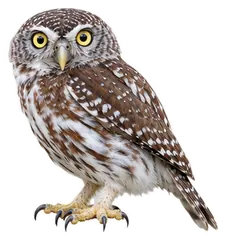 Pearl-spotted OwletGlaucidium perlatum
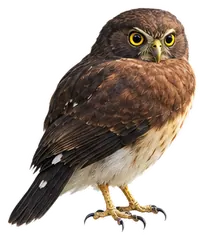 Red-chested OwletGlaucidium tephronotum
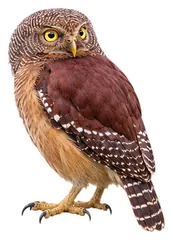 Sjöstedt's Barred OwletGlaucidium sjostedti
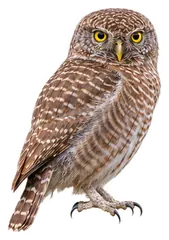 Asian Barred OwletGlaucidium cuculoides
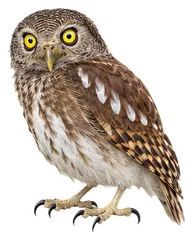 Javan OwletGlaucidium castanopterum
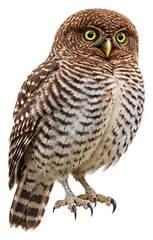 Jungle OwletGlaucidium radiatum
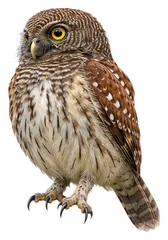 Chestnut-backed OwletGlaucidium castanotum
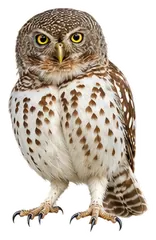 African Barred OwletGlaucidium capense
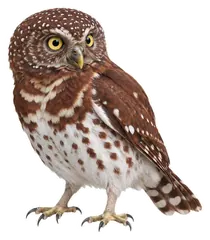 Albertine OwletGlaucidium albertinum
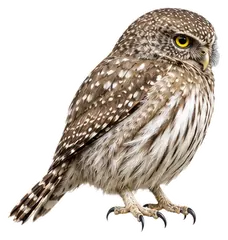 Northern Pygmy OwlGlaucidium californicum
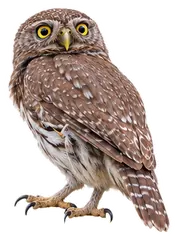 Mountain Pygmy OwlGlaucidium gnoma
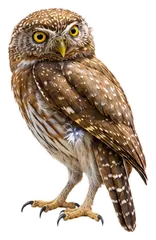 Baja Pygmy OwlGlaucidium hoskinsii
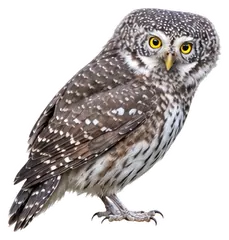
Download illustration
Free to use with credit: “Illustration: Bird Album (birdalbum.com)”. Drawn by AI from a reference photo by Andrew Bazdyrev. ↗
Heard it but can't see it? Mingji identifies birds by sound and photo, on your phone.