 Bird Album
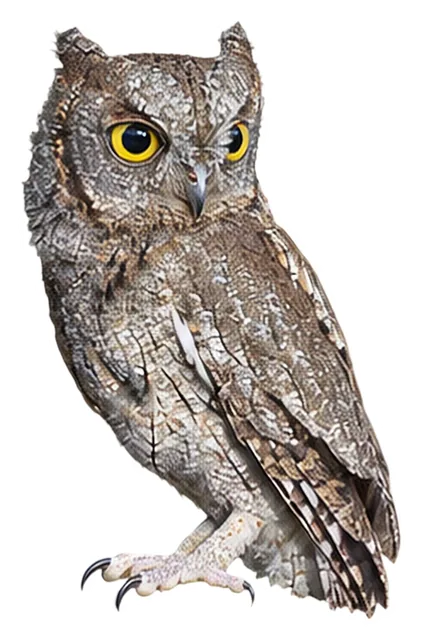
Eurasian Scops Owl
Otus scops (Linnaeus, 1758)
16–21 cmLength59 cmWingspan92 gWeight
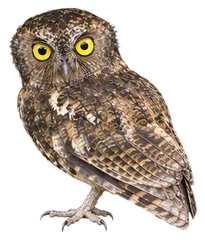
This small owl has bark-like plumage and disguises itself as a broken branch by day.
Busiest months: April–May · Most records: United Arab Emirates, Spain, Greece
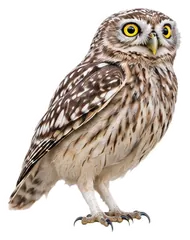
Looks like Little Owl
How to identify
Field marks
- Gray-brown to rufous, resembling bark overall
- Ear-coverts very short, usually almost invisible
- Adult of nominate subspecies has yellow irises and a gray or blue-black bill
- A row of whitish spots on the scapulars
Male, female and young
Female about 15–25 g heavier than male; immature almost identical to adult, but with shorter ear tufts and less conspicuous white patches on the back.
Voice
A low, short whistle, “pew”, “chew” or “kiup”, repeated every 2–3 seconds for several minutes to several hours.
Similar species
Where and when it's recorded

Eurasian Scops Owl has been recorded at 361 of the 8,171 birding hotspots we track, in 54 countries and regions.
Records by month Northern Hemisphere
Where it's recorded most
- Private estate near Green MubazzarahUnited Arab Emirates1,276 records
- Antikythira Bird ObservatoryGreece431 records
- Aras Kuş Halkalama İstasyonuTürkiye329 records
More places
- Sečoveljske soline – jug | Sečovlje Salina – southSlovenia216 records
- International Birding and Research Center Eilat (IBRCE)Israel206 records
- RivaTürkiye138 records
- Jerusalem Bird ObservatoryIsrael135 records
- Parque El Retiro-MadridSpain130 records
- Abraq Al-HabariKuwait112 records
- Ponichala ReserveGeorgia111 records
Countries and regions with the most records
eBird records via GBIF up to 2024-12-31. A record means someone listed it; more records partly mean more birders, not more birds.
About
The Eurasian scops owl (Otus scops), also known as the European scops owl, common scops owl or just scops owl, is a small owl in the typical owl family Strigidae. Its breeding range extends from southern Europe eastwards to southern Siberia and the western Himalayas. It is migratory, wintering in Africa south of the Sahara, although it is resident year-round in parts of Mediterranean Europe.
Excerpt from Wikipedia, CC BY-SA 4.0 · authors · Read more on Wikipedia
Questions
How big is the Eurasian Scops Owl?
The Eurasian Scops Owl is about 16–21 cm long, with a wingspan of 59 cm and weighs around 92 g.
Where does the Eurasian Scops Owl live?
Its breeding range: Palearctic: western, central. It is most often recorded in United Arab Emirates, Spain and Greece.
When is the best time to see the Eurasian Scops Owl?
At the hotspots we track, it is recorded most in April and May (Northern Hemisphere).
Is the Eurasian Scops Owl endangered?
The IUCN Red List classifies the Eurasian Scops Owl as Least Concern.
What does the Eurasian Scops Owl eat?
Main food: Insects & other invertebrates.
What family is the Eurasian Scops Owl in?
It belongs to the family Owls (Strigidae), order Strigiformes.
At a glance
- Length
- 16–21 cm
- Wingspan
- 59 cm
- Weight
- 92 g
- Habitat
- Woodland
- Diet
- Insects & other invertebrates
- Lifestyle
- Perches in trees
- Migration
- Migratory
- Conservation
- Least Concern
More measurements
- Wing
- 147 mm
- Tail
- 66 mm
- Bill
- 17 mm
- Tarsus
- 27 mm
Averages from the AVONET dataset; length from field guides where available.
Range
Palearctic: western, central
Breeding range, IOC World Bird List 15.2
Classification
- Order
- Strigiformes
- Family
- Owls Strigidae
- Genus
- Otus
Other birds in the genus Otus
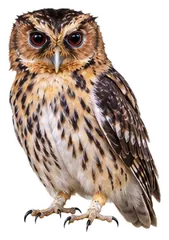 Giant Scops OwlOtus gurneyi
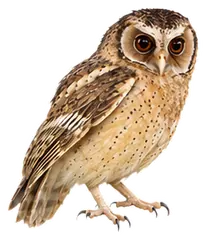 White-fronted Scops OwlOtus sagittatus
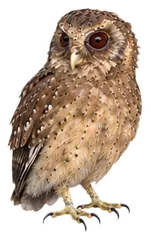 Reddish Scops OwlOtus rufescens
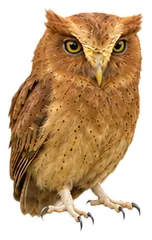 Serendib Scops OwlOtus thilohoffmanni
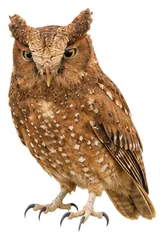 Sandy Scops OwlOtus icterorhynchus
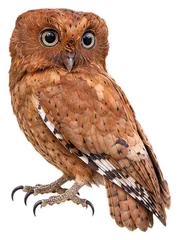 Sokoke Scops OwlOtus ireneae
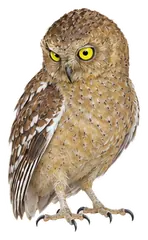 Andaman Scops OwlOtus balli
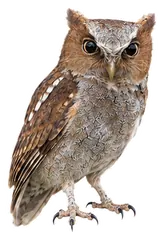 Flores Scops OwlOtus alfredi
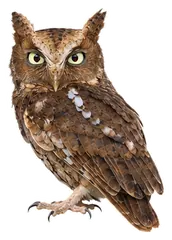 Mountain Scops OwlOtus spilocephalus
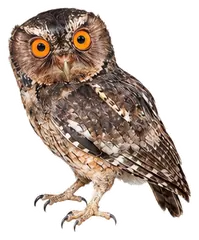 Javan Scops OwlOtus angelinae
 Mindanao Scops OwlOtus mirus
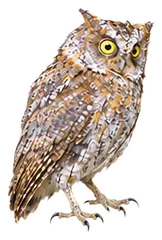 Luzon Scops OwlOtus longicornis
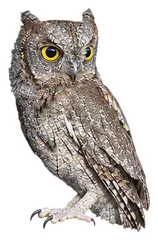
Download illustration
Free to use with credit: “Illustration: Bird Album (birdalbum.com)”. Drawn by AI from a reference photo by Roberto Ghiglia. ↗
Heard it but can't see it? Mingji identifies birds by sound and photo, on your phone.