 Bird Album
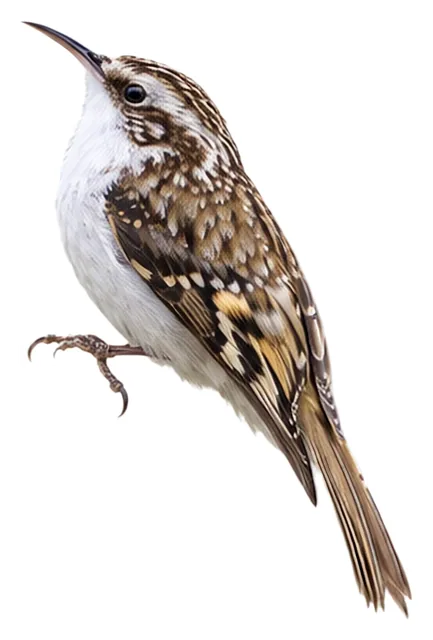
Eurasian Treecreeper
Certhia familiaris Linnaeus, 1758
12 cmLength19 cmWingspan9 gWeight
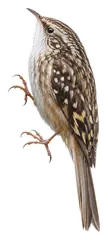
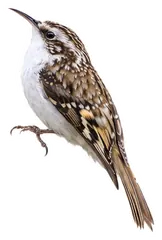
This small bird spirals up tree trunks, with a fine, decurved bill and stiff tail feathers.
Busiest months: January, March–April and October · Most records: United Kingdom, Sweden, Russia
How to identify
Field marks
- Small, fine, decurved bill
- Pale smoky-brown back with white streaks
- Whitish underparts with a slight buff wash on the belly
- Stiff tail feathers and long claws
Male, female and young
Sexes similar; juveniles have darker upperparts, dull white underparts and fine black spots on the flanks.
Voice
Usually a very soft, thin “sit”; its most distinctive call is a penetrating, trilling “tsree”.
Where and when it's recorded

Eurasian Treecreeper has been recorded at 737 of the 8,171 birding hotspots we track, in 49 countries and regions.
Records by month Northern Hemisphere
Where it's recorded most
- Minsmere RSPB ReserveUnited Kingdom1,637 records
- South Downs NP – Pulborough Brooks RSPB ReserveUnited Kingdom1,337 records
- Amwell HMWT NRUnited Kingdom1,268 records
More places
- Rutland WaterUnited Kingdom1,073 records
- Lynford ArboretumUnited Kingdom728 records
- Leighton Moss RSPB ReserveUnited Kingdom616 records
- Sapieginės miškasLithuania564 records
- Arnfield ReservoirUnited Kingdom511 records
- Stodmarsh NNRUnited Kingdom456 records
- Potteric Carr YWT NRUnited Kingdom432 records
Countries and regions with the most records
eBird records via GBIF up to 2024-12-31. A record means someone listed it; more records partly mean more birders, not more birds.
About
The Eurasian treecreeper or common treecreeper (Certhia familiaris) is a small passerine bird also known in the British Isles, where it is the only living member of its genus, simply as treecreeper. It can be most easily distinguished from the similar short-toed treecreeper, which shares much of its European range, by its different song.
Excerpt from Wikipedia, CC BY-SA 4.0 · authors · Read more on Wikipedia
Questions
How big is the Eurasian Treecreeper?
The Eurasian Treecreeper is about 12 cm long, with a wingspan of 19 cm and weighs around 9 g.
Where does the Eurasian Treecreeper live?
Its breeding range: Palearctic: widespread. It is most often recorded in United Kingdom, Sweden and Russia.
When is the best time to see the Eurasian Treecreeper?
At the hotspots we track, it is recorded most in January, March, April and October (Northern Hemisphere).
Is the Eurasian Treecreeper endangered?
The IUCN Red List classifies the Eurasian Treecreeper as Least Concern.
What does the Eurasian Treecreeper eat?
Main food: Insects & other invertebrates.
What family is the Eurasian Treecreeper in?
It belongs to the family Treecreepers (Certhiidae), order Passerines (Passeriformes).
At a glance
- Length
- 12 cm
- Wingspan
- 19 cm
- Weight
- 9 g
- Habitat
- Forest
- Diet
- Insects & other invertebrates
- Lifestyle
- Perches in trees
- Migration
- Resident (barely migrates)
- Conservation
- Least Concern
More measurements
- Wing
- 64 mm
- Tail
- 60 mm
- Bill
- 18 mm
- Tarsus
- 15 mm
Averages from the AVONET dataset; length from field guides where available.
Range
Palearctic: widespread
Breeding range, IOC World Bird List 15.2
Subspecies · 3
- Certhia familiaris daurica s Siberia and n Kazakhstan to se Siberia, n Japan, Korea and ne China
- Certhia familiaris bianchii n, c China
- Certhia familiaris tianschanica se Kazakhstan, Kyrgyzstan and nw China
Classification
- Order
- Passerines Passeriformes
- Family
- Treecreepers Certhiidae
- Genus
- Certhia
Other birds in the genus Certhia
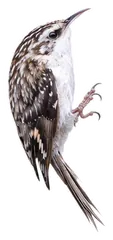 Hodgson's TreecreeperCerthia hodgsoni
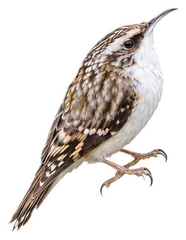 Brown CreeperCerthia americana
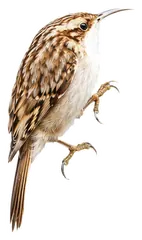 Short-toed TreecreeperCerthia brachydactyla
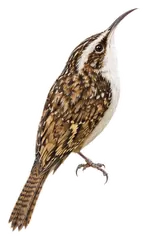 Bar-tailed TreecreeperCerthia himalayana
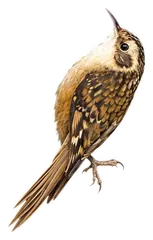 Rusty-flanked TreecreeperCerthia nipalensis
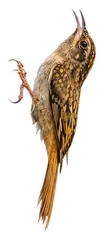 Sikkim TreecreeperCerthia discolor
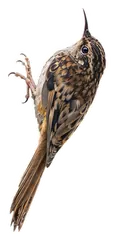 Hume's TreecreeperCerthia manipurensis
 Sichuan TreecreeperCerthia tianquanensis
Download illustration
Free to use with credit: “Illustration: Bird Album (birdalbum.com)”. Drawn by AI from a reference photo by caroline legg. ↗

Heard it but can't see it? Mingji identifies birds by sound and photo, on your phone.