 Bird Album
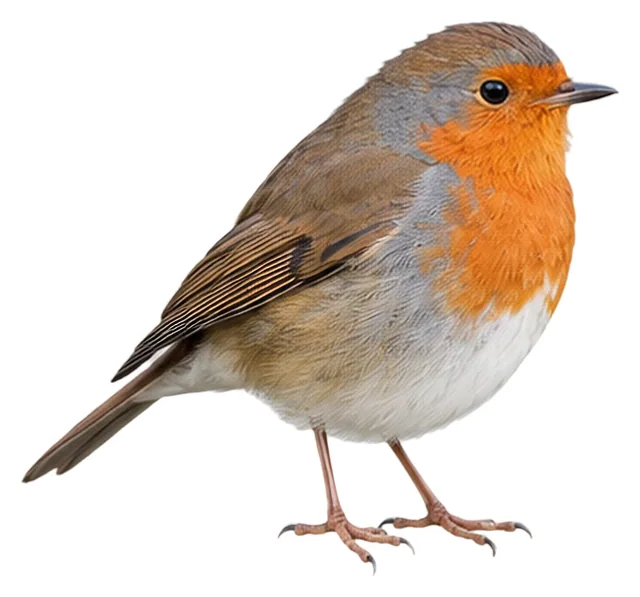
European Robin
Erithacus rubecula (Linnaeus, 1758)
12–14 cmLength21 cmWingspan18 gWeight
This small bird has an orange-red breast and face, and is unafraid of people in British gardens, approaching to find earthworms as they turn the soil.
Busiest months: October · Most records: United Kingdom, Spain, Portugal
Looks like American Robin
How to identify
Field marks
- Orange-red breast and face
- Orange-red area bordered with blue-gray on both sides
- Brown upperparts and whitish belly
- Black bill and eyes; brown legs and feet
Male, female and young
Sexes have identical plumage; juvenile is brown with spots overall and lacks a red breast, with orange patches appearing gradually.
Voice
Call is a flutelike warble; during the breeding season, it sings from morning until evening and also at night.
Similar species
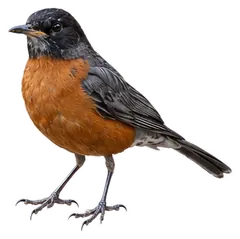
Where and when it's recorded
Busiest months: October · Most records: United Kingdom, Spain, Portugal

European Robin has been recorded at 1,376 of the 8,276 birding hotspots we track, in 78 countries and regions.
Records by month Northern Hemisphere
Where it's recorded most
- Amwell HMWT NRUnited Kingdom7,367 records
- Titchwell Marsh RSPB ReserveUnited Kingdom6,550 records
- Txingudi – PlaiaundiSpain5,337 records
More places
- Minsmere RSPB ReserveUnited Kingdom5,085 records
- Beddington FarmlandsUnited Kingdom4,450 records
- WWT London Wetland CentreUnited Kingdom3,561 records
- South Downs NP – Pulborough Brooks RSPB ReserveUnited Kingdom3,542 records
- Walthamstow WetlandsUnited Kingdom3,442 records
- Urdaibai RB – bird center y laguna de OruetaSpain3,371 records
- Spurn Bird Observatory Recording AreaUnited Kingdom3,329 records
Countries and regions with the most records
eBird records via GBIF up to 2024-12-31. A record means someone listed it; more records partly mean more birders, not more birds.
About
The European robin (Erithacus rubecula), known simply as the robin or robin redbreast in the British Isles, is a small insectivorous passerine bird belonging to the Old World flycatcher family Muscicapidae. It is found across Europe, as far east as Western Siberia, and as far south as North Africa. It is sedentary in the west and south of its range, and migratory in the north and east of its range where winters are harsher.
Excerpt from Wikipedia, CC BY-SA 4.0 · authors · Read more on Wikipedia
Questions
How big is the European Robin?
The European Robin is about 12–14 cm long, with a wingspan of 21 cm and weighs around 18 g.
Where does the European Robin live?
Its breeding range: Palearctic: western, central. It is most often recorded in United Kingdom, Spain and Portugal.
When is the best time to see the European Robin?
At the hotspots we track, it is recorded most in October (Northern Hemisphere).
Is the European Robin endangered?
The IUCN Red List classifies the European Robin as Least Concern.
What does the European Robin eat?
Main food: Omnivore.
What family is the European Robin in?
It belongs to the family Chats, Old World Flycatchers (Muscicapidae), order Passerines (Passeriformes).
At a glance
- Length
- 12–14 cm
- Wingspan
- 21 cm
- Weight
- 18 g
- Habitat
- Forest
- Diet
- Omnivore
- Lifestyle
- Varied
- Migration
- Migratory
- Conservation
- Least Concern
More measurements
- Wing
- 72 mm
- Tail
- 57 mm
- Bill
- 14 mm
- Tarsus
- 24 mm
Averages from the AVONET dataset; length from field guides where available.
Range
Palearctic: western, central
Breeding range, IOC World Bird List 15.2
Classification
- Order
- Passerines Passeriformes
- Family
- Chats, Old World Flycatchers Muscicapidae
- Genus
- Erithacus
More from the family Chats, Old World Flycatchers
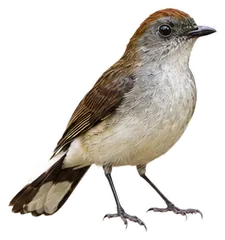 White-tailed AletheAlethe diademata
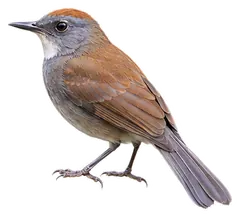 Fire-crested AletheAlethe castanea
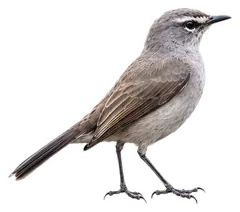 Karoo Scrub RobinTychaedon coryphoeus
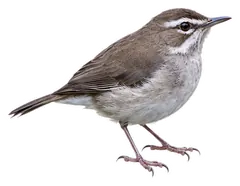 Brown Scrub RobinTychaedon signata
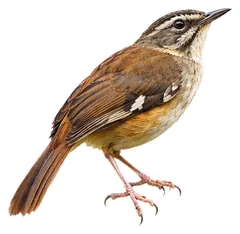 Forest Scrub RobinTychaedon leucosticta
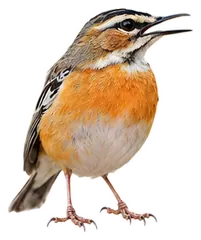 Bearded Scrub RobinTychaedon quadrivirgata
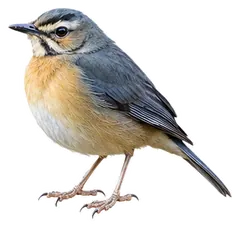 Miombo Scrub RobinTychaedon barbata
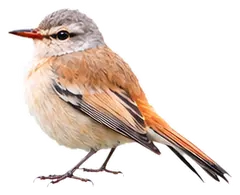 Kalahari Scrub RobinCercotrichas paena
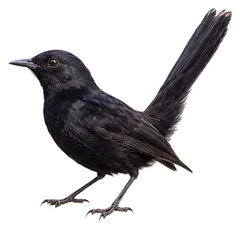 Black Scrub RobinCercotrichas podobe
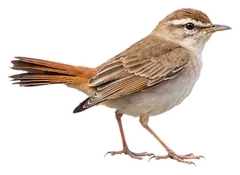 Rufous-tailed Scrub RobinCercotrichas galactotes
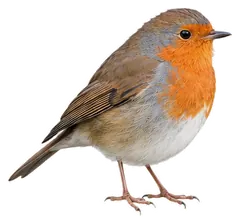
Download illustration
Free to use with credit: “Illustration: Bird Album (birdalbum.com)”. Drawn by AI from a reference photo by Philip Mark Osso. ↗
Heard it but can't see it? Mingji identifies birds by sound and photo, on your phone.