 Bird Album
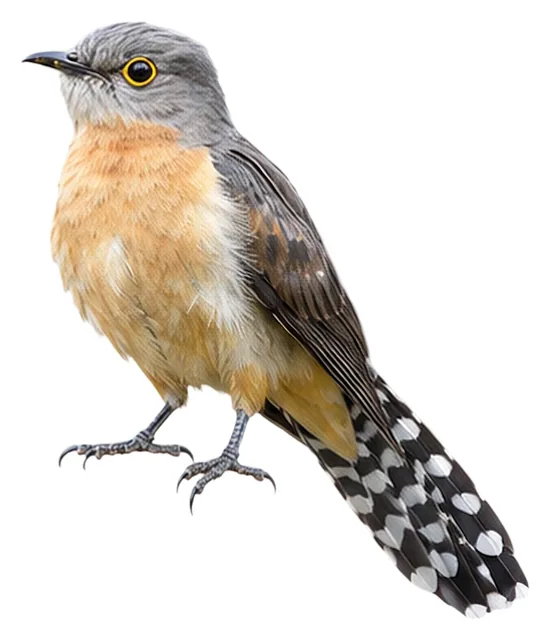
Fan-tailed Cuckoo
Cacomantis flabelliformis (Latham, 1801)
50 gWeight
The fan-tailed cuckoo (Cacomantis flabelliformis) is a species of cuckoo in the family Cuculidae.
Busiest months: September–October · Most records: Australia, Papua New Guinea, New Caledonia
Where and when it's recorded

Fan-tailed Cuckoo has been recorded at 223 of the 8,171 birding hotspots we track, in 7 countries and regions.
Records by month Southern Hemisphere
Where it's recorded most
- Lake Samsonvale – Golds Scrub LaneAustralia1,084 records
- Oxley Creek CommonAustralia1,056 records
- Gold Creek ReservoirAustralia1,022 records
More places
- Barren Grounds Nature ReserveAustralia667 records
- O'Reilly's Rainforest RetreatAustralia653 records
- Kumbartcho SanctuaryAustralia631 records
- Nature Refuge Hawkesbury RoadAustralia542 records
- Australian National Botanic GardensAustralia528 records
- InalaAustralia496 records
- Shepherds BushAustralia469 records
Countries and regions with the most records
eBird records via GBIF up to 2024-12-31. A record means someone listed it; more records partly mean more birders, not more birds.
About
The fan-tailed cuckoo (Cacomantis flabelliformis) is a species of cuckoo in the family Cuculidae.
Excerpt from Wikipedia, CC BY-SA 4.0 · authors · Read more on Wikipedia
Questions
How big is the Fan-tailed Cuckoo?
The Fan-tailed Cuckoo weighs around 50 g.
Where does the Fan-tailed Cuckoo live?
Its breeding range: Australasia, Pacific Ocean: montane New Guinea, southwestern, eastern Australia and Tasmania, New Caledonia, Solomon Islands, Vanuatu and Fiji (southwestern Polynesia). It is most often recorded in Australia, Papua New Guinea and New Caledonia.
When is the best time to see the Fan-tailed Cuckoo?
At the hotspots we track, it is recorded most in September and October (Southern Hemisphere).
Is the Fan-tailed Cuckoo endangered?
The IUCN Red List classifies the Fan-tailed Cuckoo as Least Concern.
What does the Fan-tailed Cuckoo eat?
Main food: Insects & other invertebrates.
What family is the Fan-tailed Cuckoo in?
It belongs to the family Cuckoos (Cuculidae), order Cuculiformes.
At a glance
- Weight
- 50 g
- Habitat
- Forest
- Diet
- Insects & other invertebrates
- Lifestyle
- Perches in trees
- Migration
- Resident (barely migrates)
- Conservation
- Least Concern
More measurements
- Wing
- 137 mm
- Tail
- 133 mm
- Bill
- 22 mm
- Tarsus
- 17 mm
Averages from the AVONET dataset; length from field guides where available.
Range
Australasia, Pacific Ocean: montane New Guinea, southwestern, eastern Australia and Tasmania, New Caledonia, Solomon Islands, Vanuatu and Fiji (southwestern Polynesia)
Breeding range, IOC World Bird List 15.2
Classification
- Order
- Cuculiformes
- Family
- Cuckoos Cuculidae
- Genus
- Cacomantis
Other birds in the genus Cacomantis
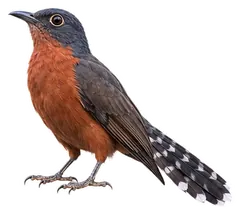 Chestnut-breasted CuckooCacomantis castaneiventris
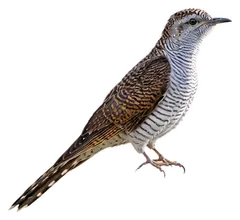 Banded Bay CuckooCacomantis sonneratii
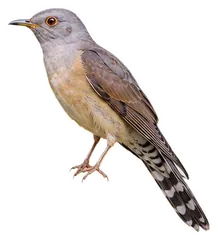 Plaintive CuckooCacomantis merulinus
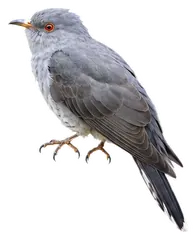 Grey-bellied CuckooCacomantis passerinus
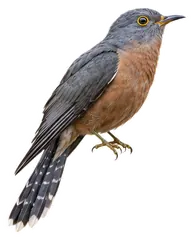 Sunda Brush CuckooCacomantis sepulcralis
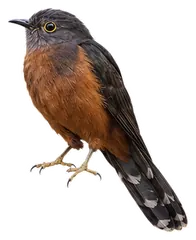 Sulawesi Brush CuckooCacomantis virescens
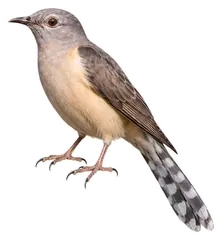 Sahul Brush CuckooCacomantis variolosus
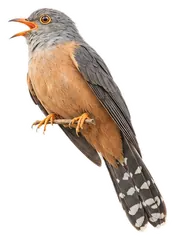 Manus Brush CuckooCacomantis blandus
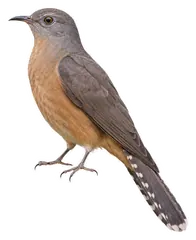 Solomons Brush CuckooCacomantis addendus
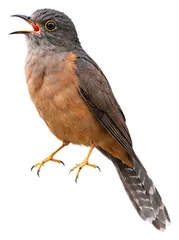 Moluccan Brush CuckooCacomantis aeruginosus
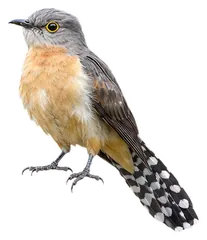
Download illustration
Free to use with credit: “Illustration: Bird Album (birdalbum.com)”. Drawn by AI from a reference photo by Dennis Hocking. ↗
Heard it but can't see it? Mingji identifies birds by sound and photo, on your phone.
In other languages
- EnglishFan-tailed Cuckoo
- 简体中文扇尾杜鹃
- 繁體中文扇尾杜鵑
- 日本語ウチワヒメカッコウ
- DeutschFächerschwanzkuckuck
- FrançaisCoucou à éventail
- EspañolCuco flabeliforme
- Portuguêscuco-de-olho-amarelo
- ItalianoCuculo codaventaglio
- NederlandsWaaierstaartstruikkoekoek
- РусскийВеерохвостая кукушка
- Svenskasolfjädersbuskgök
- DanskViftehalegøg
- Polskikukułka wachlarzowata