 Bird Album
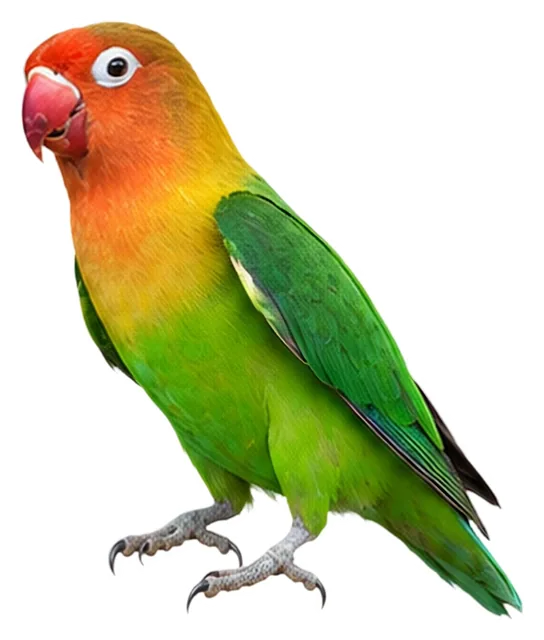
Fischer's Lovebird
Agapornis fischeri Reichenow, 1887
14–15 cmLength48 gWeight
It has a red bill, white eye-rings and a green body, with a neck grading from golden-yellow to orange.
Busiest months: February · Most records: Tanzania, United States, China
How to identify
Field marks
- White ring around the eye, bill red
- Back, breast and wings green
- Neck golden-yellow, grading upward to deep orange
- Crown olive
Male, female and young
Sexes cannot be distinguished by plumage alone; juveniles are duller, with a brown patch at the base of the lower mandible.
Voice
Very vocal, with sharp, high-pitched chirps.
Where and when it's recorded

Fischer's Lovebird has been recorded at 70 of the 8,171 birding hotspots we track, in 15 countries and regions.
Records by month Southern Hemisphere
Where it's recorded most
- Serengeti NPTanzania571 records
- Serengeti NP – SeroneraTanzania372 records
- Ngorongoro Conservation Area – NdutuTanzania353 records
More places
- Ngorongoro Conservation Area – Ndutu Safari LodgeTanzania327 records
- Serengeti NPTanzania208 records
- Ngorongoro Conservation Area – Lake NdutuTanzania160 records
- Tarangire NPTanzania157 records
- Lake Manyara NPTanzania134 records
- Serengeti NP – Visitor CenterTanzania107 records
- Ngorongoro Conservation Area – Ngorongoro CraterTanzania102 records
Countries and regions with the most records
eBird records via GBIF up to 2024-12-31. A record means someone listed it; more records partly mean more birders, not more birds.
About
Fischer's lovebird (Agapornis fischeri) is a small parrot species of the genus Agapornis. They were originally discovered in the late 19th century. They are named after the 19th century German explorer of East Africa Gustav Fischer.
Excerpt from Wikipedia, CC BY-SA 4.0 · authors · Read more on Wikipedia
Questions
How big is the Fischer's Lovebird?
The Fischer's Lovebird is about 14–15 cm long and weighs around 48 g.
Where does the Fischer's Lovebird live?
Its breeding range: Africa: Tanzania. It is most often recorded in Tanzania, United States and China.
When is the best time to see the Fischer's Lovebird?
At the hotspots we track, it is recorded most in February (Southern Hemisphere).
Is the Fischer's Lovebird endangered?
The IUCN Red List classifies the Fischer's Lovebird as Near Threatened.
What does the Fischer's Lovebird eat?
Main food: Seeds.
What family is the Fischer's Lovebird in?
It belongs to the family Old World Parrots (Psittaculidae), order Parrot (Psittaciformes).
At a glance
- Length
- 14–15 cm
- Weight
- 48 g
- Habitat
- Woodland
- Diet
- Seeds
- Lifestyle
- Perches in trees
- Migration
- Resident (barely migrates)
- Conservation
- Near Threatened
More measurements
- Wing
- 93 mm
- Tail
- 43 mm
- Bill
- 19 mm
- Tarsus
- 14 mm
Averages from the AVONET dataset; length from field guides where available.
Range
Africa: Tanzania
Breeding range, IOC World Bird List 15.2
Classification
- Order
- Parrot Psittaciformes
- Family
- Old World Parrots Psittaculidae
- Genus
- Agapornis
Other birds in the genus Agapornis
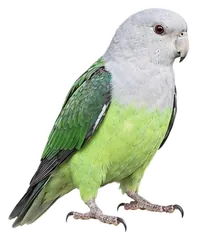 Grey-headed LovebirdAgapornis canus
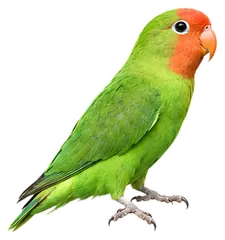 Red-headed LovebirdAgapornis pullarius
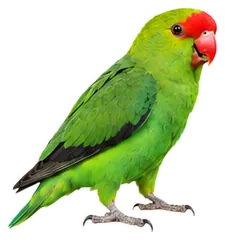 Black-winged LovebirdAgapornis taranta
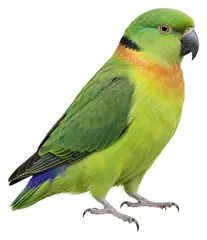 Black-collared LovebirdAgapornis swindernianus
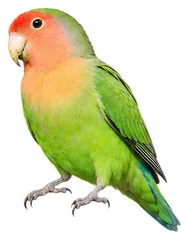 Rosy-faced LovebirdAgapornis roseicollis
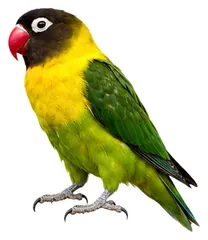 Yellow-collared LovebirdAgapornis personatus
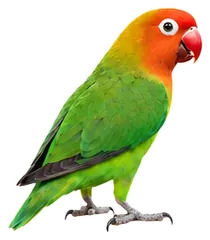 Lilian's LovebirdAgapornis lilianae
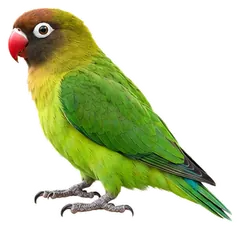 Black-cheeked LovebirdAgapornis nigrigenis
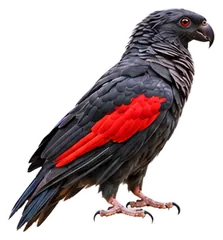 Pesquet's ParrotPsittrichas fulgidus
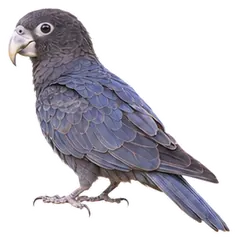 Greater Vasa ParrotCoracopsis vasa
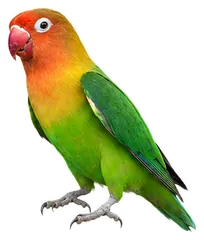
Download illustration
Free to use with credit: “Illustration: Bird Album (birdalbum.com)”. Drawn by AI from a reference photo by judysue3. ↗
Heard it but can't see it? Mingji identifies birds by sound and photo, on your phone.
In other languages
- EnglishFischer's Lovebird
- 简体中文费氏牡丹鹦鹉
- 繁體中文費氏情侶鸚鵡
- 日本語ルリゴシボタンインコ
- DeutschPfirsichköpfchen
- FrançaisInséparable de Fischer
- EspañolInseparable de Fischer
- Portuguêsinseparável-alaranjado
- ItalianoInseparabile di Fischer
- NederlandsFischers Agapornis
- РусскийНеразлучник Фишера
- Svenskaserengetidvärgpapegoja
- DanskRødhovedet Dværgpapegøje
- Polskinierozłączka rudogłowa