 Bird Album
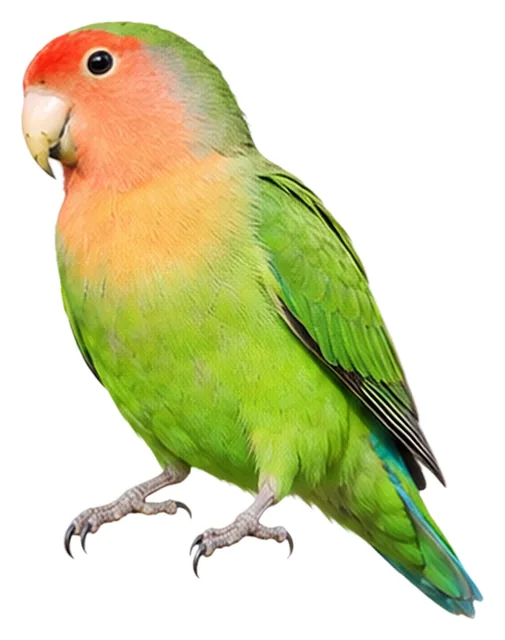
Rosy-faced Lovebird
Agapornis roseicollis (Vieillot, 1818)
≈18 cmLength54 gWeight
The wild type has a pink face, a green body and a splash of blue on the rump.
Most records: United States, Namibia, Spain
How to identify
Field marks
- Wild type has pink face and throat, darker forehead
- Wild type has mostly green body
- Wild type has blue rump
- Legs and feet gray
Male, female and young
Juveniles have paler pink on the face and throat.
Voice
Loud calls, often with incessant squeaking.
Where and when it's recorded

Rosy-faced Lovebird has been recorded at 85 of the 8,171 birding hotspots we track, in 24 countries and regions.
Records by month Northern Hemisphere
Where it's recorded most
- Riparian Preserve at Gilbert Water RanchUnited States2,632 records
- Desert Botanical GardenUnited States1,465 records
- Ondudu LodgeNamibia857 records
More places
- Avis DamNamibia380 records
- Spitzkoppe Nature ReserveNamibia290 records
- Ai Aiba Rock Painting LodgeNamibia201 records
- Waterberg ResortNamibia199 records
- Glendale Recharge PondsUnited States131 records
- Desembocadura del Guadalhorce – ÁreaSpain127 records
- Delta ParkSouth Africa107 records
Countries and regions with the most records
eBird records via GBIF up to 2024-12-31. A record means someone listed it; more records partly mean more birders, not more birds.
About
The rosy-faced lovebird (Agapornis roseicollis), also known as the rosy-collared or peach-faced lovebird, is a species of lovebird native to the Namibian savanna woodlands. Loud and constant chirpers, these birds are very social animals and often congregate in small groups in the wild. They eat throughout the day and take frequent baths.
Excerpt from Wikipedia, CC BY-SA 4.0 · authors · Read more on Wikipedia
Questions
How big is the Rosy-faced Lovebird?
The Rosy-faced Lovebird is about ≈18 cm long and weighs around 54 g.
Where does the Rosy-faced Lovebird live?
Its breeding range: Africa: southwestern. It is most often recorded in United States, Namibia and Spain.
Is the Rosy-faced Lovebird endangered?
The IUCN Red List classifies the Rosy-faced Lovebird as Least Concern.
What does the Rosy-faced Lovebird eat?
Main food: Seeds.
What family is the Rosy-faced Lovebird in?
It belongs to the family Old World Parrots (Psittaculidae), order Parrot (Psittaciformes).
At a glance
- Length
- ≈18 cm
- Weight
- 54 g
- Habitat
- Shrubland
- Diet
- Seeds
- Lifestyle
- Active on the ground
- Migration
- Resident (barely migrates)
- Conservation
- Least Concern
More measurements
- Wing
- 101 mm
- Tail
- 46 mm
- Bill
- 19 mm
- Tarsus
- 13 mm
Averages from the AVONET dataset; length from field guides where available.
Range
Africa: southwestern
Breeding range, IOC World Bird List 15.2
Classification
- Order
- Parrot Psittaciformes
- Family
- Old World Parrots Psittaculidae
- Genus
- Agapornis
Other birds in the genus Agapornis
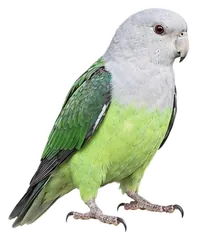 Grey-headed LovebirdAgapornis canus
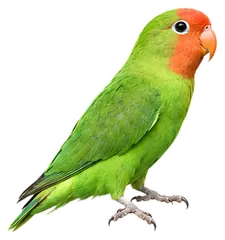 Red-headed LovebirdAgapornis pullarius
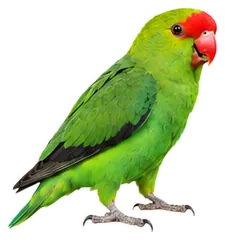 Black-winged LovebirdAgapornis taranta
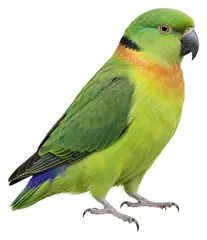 Black-collared LovebirdAgapornis swindernianus
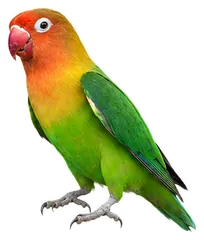 Fischer's LovebirdAgapornis fischeri
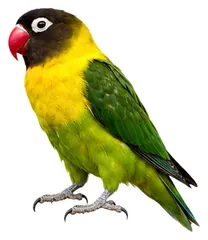 Yellow-collared LovebirdAgapornis personatus
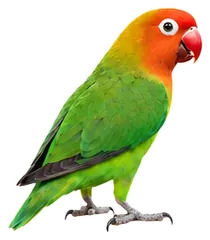 Lilian's LovebirdAgapornis lilianae
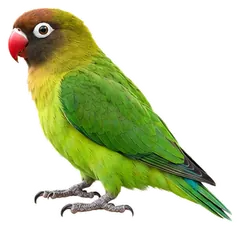 Black-cheeked LovebirdAgapornis nigrigenis
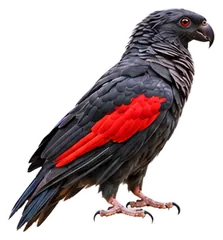 Pesquet's ParrotPsittrichas fulgidus
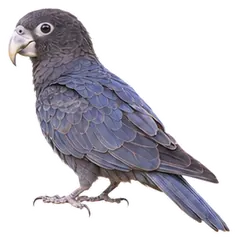 Greater Vasa ParrotCoracopsis vasa
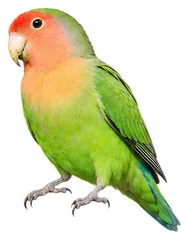
Download illustration
Free to use with credit: “Illustration: Bird Album (birdalbum.com)”. Drawn by AI from a reference photo by Christian Langner. ↗
Heard it but can't see it? Mingji identifies birds by sound and photo, on your phone.
In other languages
- EnglishRosy-faced Lovebird
- 简体中文粉脸牡丹鹦鹉
- 繁體中文粉紅臉情侶鸚鵡
- 日本語コザクラインコ
- DeutschRosenköpfchen
- FrançaisInséparable rosegorge
- EspañolInseparable de Namibia
- Portuguêsinseparável-de-faces-rosadas
- ItalianoInseparabile facciarosa
- NederlandsPerzikkopagapornis
- РусскийРозовощёкий неразлучник
- Svenskarosenhuvad dvärgpapegoja
- DanskRosenhovedet Dværgpapegøje
- Polskinierozłączka czerwonoczelna