 Bird Album
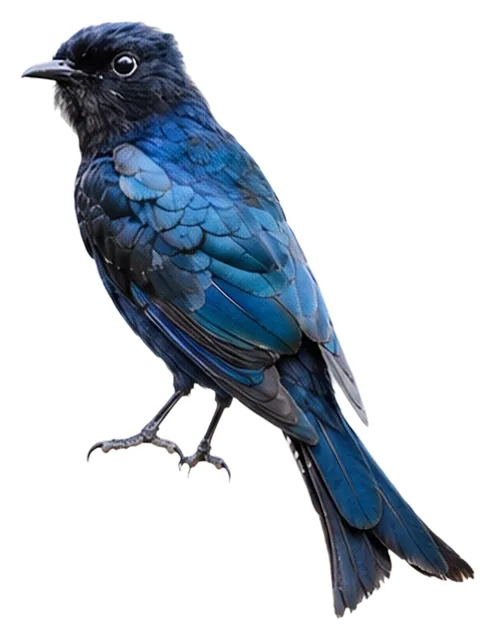
Fork-tailed Drongo-Cuckoo
Surniculus dicruroides (Hodgson, 1839)
24–26 cmLength30 gWeight
The fork-tailed drongo-cuckoo (Surniculus dicruroides) is a species of cuckoo that resembles the Black drongo (Dicrurus macrocercus).
Busiest months: June and November–December · Most records: India, Sri Lanka, Bhutan
Where and when it's recorded
Busiest months: June and November–December · Most records: India, Sri Lanka, Bhutan

Fork-tailed Drongo-Cuckoo has been recorded at 92 of the 8,276 birding hotspots we track, in 3 countries and regions.
Records by month Northern Hemisphere
Where it's recorded most
- Thattekkad Bird SanctuaryIndia330 records
- Thattekad Bird Sanctuary – UrulanthanniIndia172 records
- Bondla Wildlife SanctuaryIndia114 records
More places
- Banjar River, ChaukitolaIndia113 records
- Nilgala, Gal Oya National ParkSri Lanka95 records
- Kalamassery – HMT Estate AreaIndia85 records
- Kerala Agricultural University – Botanical GardenIndia79 records
- Saul Kere / Sowl KereIndia76 records
- Kanha NP – Mukki ZoneIndia73 records
- Eshwar Nagar, ManipalIndia63 records
Countries and regions with the most records
eBird records via GBIF up to 2024-12-31. A record means someone listed it; more records partly mean more birders, not more birds.
About
The fork-tailed drongo-cuckoo (Surniculus dicruroides) is a species of cuckoo that resembles the Black drongo (Dicrurus macrocercus). It is found mainly in hill forests in peninsular India and Sri Lanka although some specimens are known from the Himalayan foothills. It can be identified by its metallic black plumage, straight beak, white barred vent, forked tail and white spot on the back of the head.
Excerpt from Wikipedia, CC BY-SA 4.0 · authors · Read more on Wikipedia
Questions
How big is the Fork-tailed Drongo-Cuckoo?
The Fork-tailed Drongo-Cuckoo is about 24–26 cm long and weighs around 30 g.
Where does the Fork-tailed Drongo-Cuckoo live?
Its breeding range: Oriental: Himalayan foothills, central, southern India and Sri Lanka. It is most often recorded in India, Sri Lanka and Bhutan.
When is the best time to see the Fork-tailed Drongo-Cuckoo?
At the hotspots we track, it is recorded most in June, November and December (Northern Hemisphere).
Is the Fork-tailed Drongo-Cuckoo endangered?
The IUCN Red List classifies the Fork-tailed Drongo-Cuckoo as Least Concern.
What does the Fork-tailed Drongo-Cuckoo eat?
Main food: Insects & other invertebrates.
What family is the Fork-tailed Drongo-Cuckoo in?
It belongs to the family Cuckoos (Cuculidae), order Cuculiformes.
At a glance
- Length
- 24–26 cm
- Weight
- 30 g
- Habitat
- Forest
- Diet
- Insects & other invertebrates
- Lifestyle
- Perches in trees
- Migration
- Resident (barely migrates)
- Conservation
- Least Concern
More measurements
- Wing
- 136 mm
- Tail
- 123 mm
- Bill
- 24 mm
- Tarsus
- 16 mm
Averages from the AVONET dataset; length from field guides where available.
Range
Oriental: Himalayan foothills, central, southern India and Sri Lanka
Breeding range, IOC World Bird List 15.2
Classification
- Order
- Cuculiformes
- Family
- Cuckoos Cuculidae
- Genus
- Surniculus
Other birds in the genus Surniculus
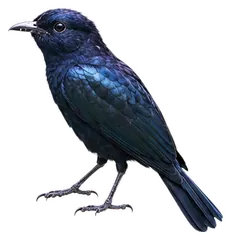 Philippine Drongo-CuckooSurniculus velutinus
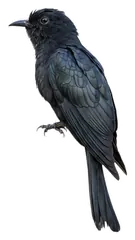 Square-tailed Drongo-CuckooSurniculus lugubris
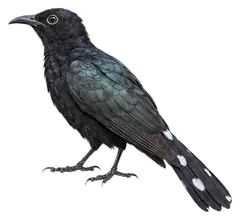 Moluccan Drongo-CuckooSurniculus musschenbroeki
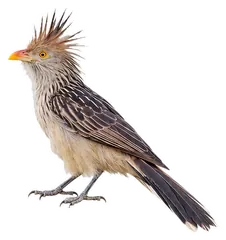 Guira CuckooGuira guira
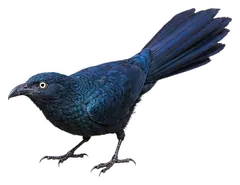 Greater AniCrotophaga major
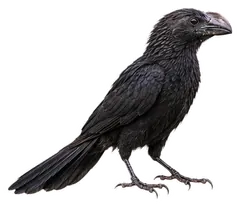 Smooth-billed AniCrotophaga ani
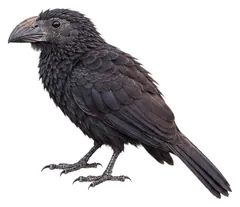 Groove-billed AniCrotophaga sulcirostris
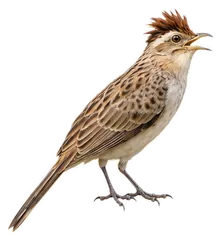 Striped CuckooTapera naevia
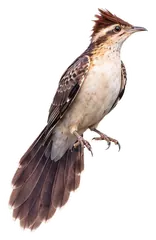 Pheasant CuckooDromococcyx phasianellus
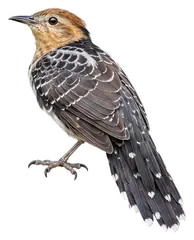 Pavonine CuckooDromococcyx pavoninus
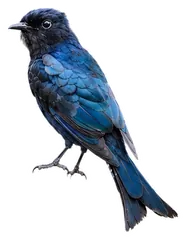
Download illustration
Free to use with credit: “Illustration: Bird Album (birdalbum.com)”. Drawn by AI from a reference photo by Shantanu Kuveskar. ↗
Heard it but can't see it? Mingji identifies birds by sound and photo, on your phone.
In other languages
- EnglishFork-tailed Drongo-Cuckoo
- 简体中文叉尾乌鹃
- 繁體中文扇尾烏鵑
- 日本語エンビオウチュウカッコウ
- 한국어검은두견이
- DeutschGabelschwanz-Drongokuckuck
- FrançaisCoucou à queue fourchue
- EspañolCuclillo drongo coliahorquillado
- Portuguêscuco-drongo-de-cauda-forcada
- ItalianoCuculo drongo codaforcuta
- NederlandsVorkstaartdrongokoekoek
- РусскийВилохвостая дронговая кукушка
- Svenskaklyvstjärtad drongogök
- DanskSplithalet Drongogøg
- Polskikukielczyk indochiński