 Bird Album
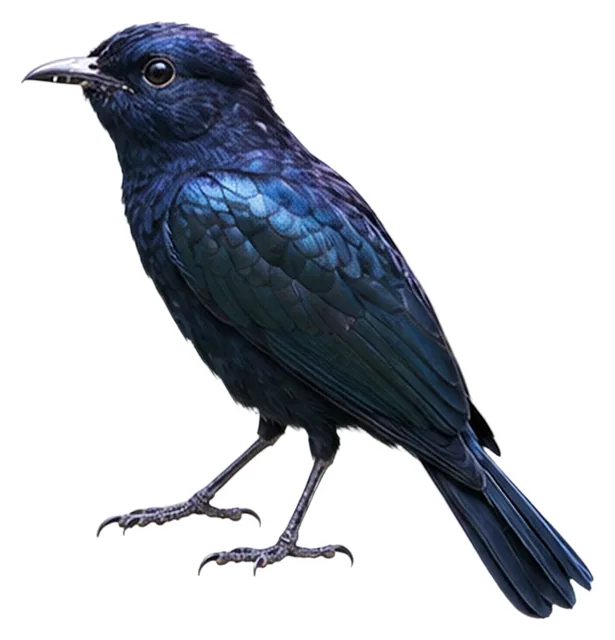
Philippine Drongo-Cuckoo
Surniculus velutinus Sharpe, 1877
36 gWeight
The Philippine drongo-cuckoo (Surniculus velutinus) is a bird of the cuckoo family found only in the Philippines.
Busiest months: February–March · Most records: Philippines
Where and when it's recorded
Busiest months: February–March · Most records: Philippines

Philippine Drongo-Cuckoo has been recorded at 31 of the 8,276 birding hotspots we track, in 1 country or region.
Records by month Northern Hemisphere
Where it's recorded most
- Raja Sikatuna National ParkPhilippines289 records
- Bislig lowlands – PICOP Road 4Philippines209 records
- Bislig lowlands – PICOP Road 42Philippines163 records
More places
- Bislig lowlands – PICOP Roads 1-4Philippines91 records
- Bislig lowlands – 321 Quarry TrailPhilippines68 records
- Brgy. Kuden, Senator Ninoy AquinoPhilippines58 records
- Philippine Eagle Center, Davao CityPhilippines42 records
- Mt. Makiling Forest Reserve – TrailPhilippines42 records
- Palo Alto, BarasPhilippines31 records
- Pasonanca Natural Park, Zamboanga City – BalunoPhilippines26 records
Countries and regions with the most records
eBird records via GBIF up to 2024-12-31. A record means someone listed it; more records partly mean more birders, not more birds.
About
The Philippine drongo-cuckoo (Surniculus velutinus) is a bird of the cuckoo family found only in the Philippines. It was formerly a subspecies of the Square-tailed drongo-cuckoo. It is found in tropical moist lowland forest up to 1,000 meters above sea level.
Excerpt from Wikipedia, CC BY-SA 4.0 · authors · Read more on Wikipedia
Questions
How big is the Philippine Drongo-Cuckoo?
The Philippine Drongo-Cuckoo weighs around 36 g.
Where does the Philippine Drongo-Cuckoo live?
Its breeding range: Oriental: Philippines (except Palawan group). It is most often recorded in Philippines.
When is the best time to see the Philippine Drongo-Cuckoo?
At the hotspots we track, it is recorded most in February and March (Northern Hemisphere).
Is the Philippine Drongo-Cuckoo endangered?
The IUCN Red List classifies the Philippine Drongo-Cuckoo as Least Concern.
What does the Philippine Drongo-Cuckoo eat?
Main food: Insects & other invertebrates.
What family is the Philippine Drongo-Cuckoo in?
It belongs to the family Cuckoos (Cuculidae), order Cuculiformes.
At a glance
- Weight
- 36 g
- Habitat
- Forest
- Diet
- Insects & other invertebrates
- Lifestyle
- Perches in trees
- Migration
- Resident (barely migrates)
- Conservation
- Least Concern
More measurements
- Wing
- 111 mm
- Tail
- 101 mm
- Bill
- 22 mm
- Tarsus
- 16 mm
Averages from the AVONET dataset; length from field guides where available.
Range
Oriental: Philippines (except Palawan group)
Breeding range, IOC World Bird List 15.2
Classification
- Order
- Cuculiformes
- Family
- Cuckoos Cuculidae
- Genus
- Surniculus
Other birds in the genus Surniculus
 Square-tailed Drongo-CuckooSurniculus lugubris
 Fork-tailed Drongo-CuckooSurniculus dicruroides
 Moluccan Drongo-CuckooSurniculus musschenbroeki
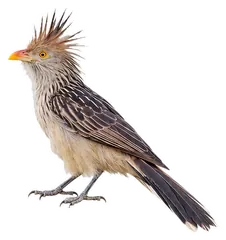 Guira CuckooGuira guira
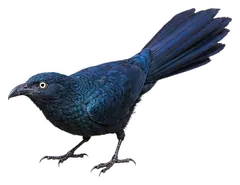 Greater AniCrotophaga major
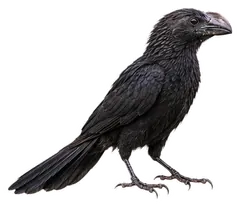 Smooth-billed AniCrotophaga ani
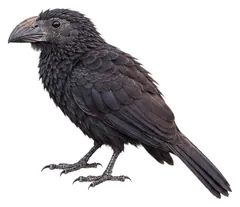 Groove-billed AniCrotophaga sulcirostris
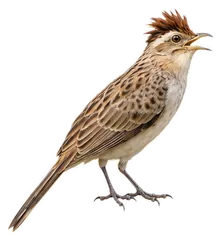 Striped CuckooTapera naevia
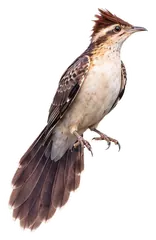 Pheasant CuckooDromococcyx phasianellus
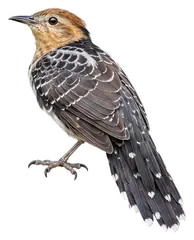 Pavonine CuckooDromococcyx pavoninus
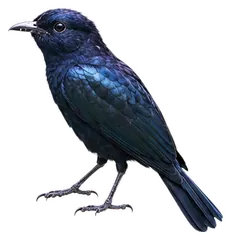
Download illustration
Free to use with credit: “Illustration: Bird Album (birdalbum.com)”. Drawn by AI from a reference photo by Stefanie De Win. ↗
Heard it but can't see it? Mingji identifies birds by sound and photo, on your phone.
In other languages
- EnglishPhilippine Drongo-Cuckoo
- 简体中文菲律宾乌鹃
- 繁體中文菲律賓烏鵑
- 日本語フィリピンオウチュウカッコウ
- DeutschPhilippinendrongokuckuck
- FrançaisCoucou velouté
- EspañolCuclillo drongo filipino
- Portuguêscuco-drongo-filipino
- ItalianoCuculo drongo delle Filippine
- NederlandsFilipijnse Drongokoekoek
- РусскийФилиппинская дронговая кукушка
- Svenskafilippindrongogök
- DanskFilippinsk Drongogøg
- Polskikukielczyk aksamitny