 Bird Album
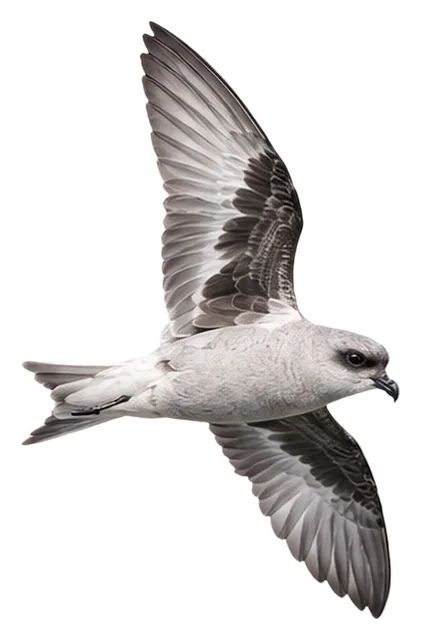
Fork-tailed Storm Petrel
Hydrobates furcatus (Gmelin, JF, 1789)
60 gWeight
Busiest months: July and September · Most records: United States, Canada, Japan
Where and when it's recorded

Fork-tailed Storm Petrel has been recorded at 24 of the 8,171 birding hotspots we track, in 4 countries and regions.
Records by month Northern Hemisphere
Where it's recorded most
- St. Paul IslandUnited States614 records
- Pt. Pinos – seawatch onlyUnited States278 records
- GambellUnited States123 records
More places
- Southeast Farallon IslandUnited States56 records
- Neah Bay – town and bay onlyUnited States27 records
- Rocky Point Bird ObservatoryCanada12 records
- Pt. PinosUnited States12 records
- Point No PointUnited States12 records
- Rodeo LagoonUnited States10 records
- Mark Hatfield Marine Science Center and Estuary TrailUnited States7 records
Countries and regions with the most records
eBird records via GBIF up to 2024-12-31. A record means someone listed it; more records partly mean more birders, not more birds.
Questions
How big is the Fork-tailed Storm Petrel?
The Fork-tailed Storm Petrel weighs around 60 g.
Where does the Fork-tailed Storm Petrel live?
Its breeding range: Pacific Ocean: islands off northern Kuril and Commander Islands (southeastern Russia), Aleutian Islands, and Gulf of Alaska to northern California. It is most often recorded in United States, Canada and Japan.
When is the best time to see the Fork-tailed Storm Petrel?
At the hotspots we track, it is recorded most in July and September (Northern Hemisphere).
Is the Fork-tailed Storm Petrel endangered?
The IUCN Red List classifies the Fork-tailed Storm Petrel as Least Concern.
What does the Fork-tailed Storm Petrel eat?
Main food: Fish, shrimp & shellfish.
What family is the Fork-tailed Storm Petrel in?
It belongs to the family Northern Storm Petrels (Hydrobatidae), order Procellariiformes.
At a glance
- Weight
- 60 g
- Habitat
- Ocean
- Diet
- Fish, shrimp & shellfish
- Lifestyle
- Feeds in the air
- Migration
- Migratory
- Conservation
- Least Concern
More measurements
- Wing
- 156 mm
- Tail
- 90 mm
- Bill
- 17 mm
- Tarsus
- 25 mm
Averages from the AVONET dataset; length from field guides where available.
Range
Pacific Ocean: islands off northern Kuril and Commander Islands (southeastern Russia), Aleutian Islands, and Gulf of Alaska to northern California
Breeding range, IOC World Bird List 15.2
Classification
- Order
- Procellariiformes
- Family
- Northern Storm Petrels Hydrobatidae
- Genus
- Hydrobates
Other birds in the genus Hydrobates
 European Storm PetrelHydrobates pelagicus
 Ringed Storm PetrelHydrobates hornbyi
 Swinhoe's Storm PetrelHydrobates monorhis
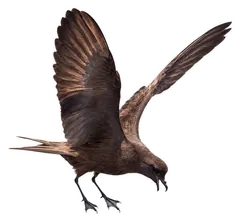 Matsudaira's Storm PetrelHydrobates matsudairae
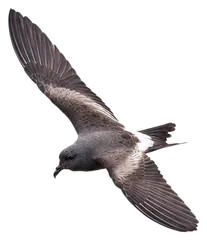 Leach's Storm PetrelHydrobates leucorhous
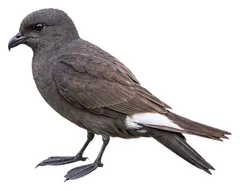 Townsend's Storm PetrelHydrobates socorroensis
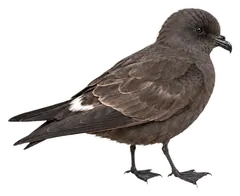 Ainley's Storm PetrelHydrobates cheimomnestes
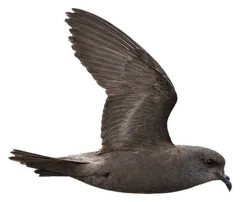 Ashy Storm PetrelHydrobates homochroa
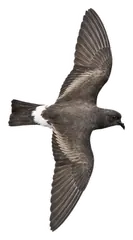 Band-rumped Storm PetrelHydrobates castro
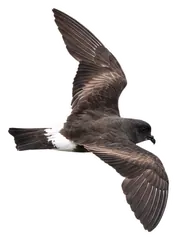 Monteiro's Storm PetrelHydrobates monteiroi
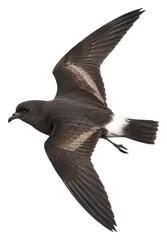 Cape Verde Storm PetrelHydrobates jabejabe
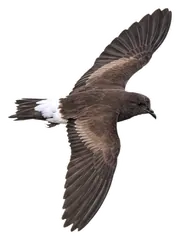 Wedge-rumped Storm PetrelHydrobates tethys
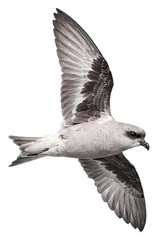
Download illustration
Free to use with credit: “Illustration: Bird Album (birdalbum.com)”. Drawn by AI from a reference photo by Ken Chamberlain. ↗
Heard it but can't see it? Mingji identifies birds by sound and photo, on your phone.
In other languages
- EnglishFork-tailed Storm Petrel
- 简体中文灰蓝叉尾海燕
- 繁體中文灰藍叉尾海燕
- 日本語ハイイロウミツバメ
- DeutschGabelschwanz-Wellenläufer
- FrançaisOcéanite à queue fourchue
- EspañolPaíño rabihorcado
- Portuguêspainho-prateado
- ItalianoUccello delle tempeste forcuto
- NederlandsParelgrijs Stormvogeltje
- РусскийСизая качурка
- Svenskagrå stormsvala
- DanskKløfthalet Stormsvale
- Polskinawałnik popielaty