 Bird Album
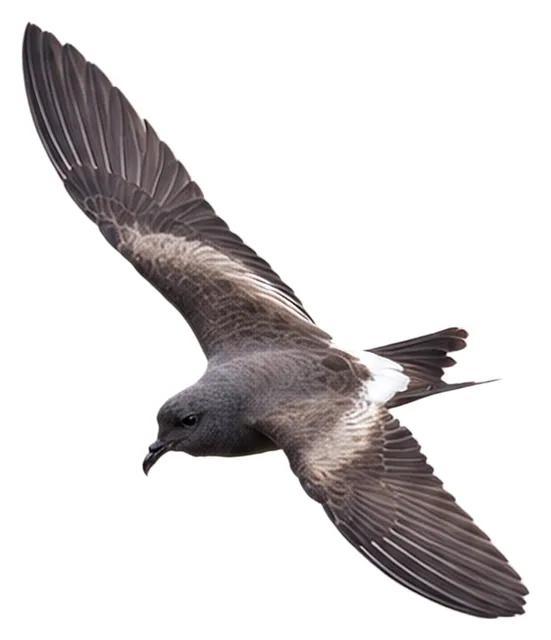
Leach's Storm Petrel
Hydrobates leucorhous (Vieillot, 1818)
≈20 cmLength46 cmWingspan37 gWeight
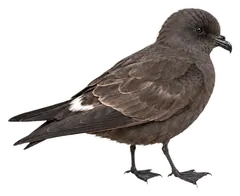
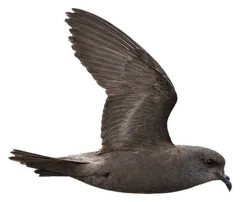
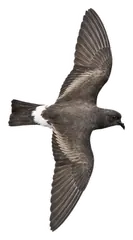
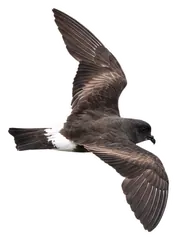
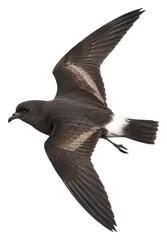
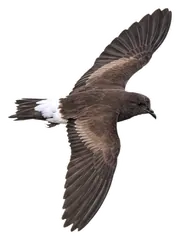
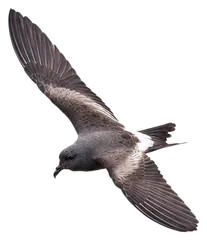
A small storm petrel with a usually white rump and a forked tail, it flutters its wings in flight.
Busiest months: August–October · Most records: Canada, United States, United Kingdom
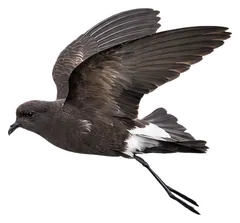
Looks like Wilson's Storm Petrel
How to identify
Field marks
- Blackish overall, face slightly paler
- A single paler gray-brown band across secondary coverts on upperwing
- Rump usually white, with a dark line down the center
- Forked tail
Similar species
Where and when it's recorded
Busiest months: August–October · Most records: Canada, United States, United Kingdom

Leach's Storm Petrel has been recorded at 182 of the 8,276 birding hotspots we track, in 31 countries and regions.
Records by month Northern Hemisphere
To protect this bird from disturbance, we don't list exact sites.
Countries and regions with the most records
eBird records via GBIF up to 2024-12-31. A record means someone listed it; more records partly mean more birders, not more birds.
About
Leach's storm petrel or Leach's petrel (Hydrobates leucorhous) is a small seabird of the tubenose order. It is named after the British zoologist William Elford Leach. The scientific name is derived from Ancient Greek.
Excerpt from Wikipedia, CC BY-SA 4.0 · authors · Read more on Wikipedia
Questions
How big is the Leach's Storm Petrel?
The Leach's Storm Petrel is about ≈20 cm long, with a wingspan of 46 cm and weighs around 37 g.
Where does the Leach's Storm Petrel live?
Its breeding range: Pacific Ocean, Atlantic Ocean: northeastern Atlantic from southern Iceland, Faroe Islands, central Norway, Ireland and Scotland; northwestern Atlantic from southern Labrador to Massachusetts; northwestern Pacific from northeastern Russia and northeastern Japan to Alaska and northern, central Baja California (northwestern Mexico); also off southwestern Africa. It is most often recorded in Canada, United States and United Kingdom.
When is the best time to see the Leach's Storm Petrel?
At the hotspots we track, it is recorded most in August, September and October (Northern Hemisphere).
Is the Leach's Storm Petrel endangered?
The IUCN Red List classifies the Leach's Storm Petrel as Vulnerable.
What does the Leach's Storm Petrel eat?
Main food: Fish, shrimp & shellfish.
What family is the Leach's Storm Petrel in?
It belongs to the family Northern Storm Petrels (Hydrobatidae), order Procellariiformes.
At a glance
- Length
- ≈20 cm
- Wingspan
- 46 cm
- Weight
- 37 g
- Habitat
- Ocean
- Diet
- Fish, shrimp & shellfish
- Lifestyle
- Feeds in the air
- Migration
- Migratory
- Conservation
- Vulnerable
More measurements
- Wing
- 150 mm
- Tail
- 75 mm
- Bill
- 18 mm
- Tarsus
- 23 mm
Averages from the AVONET dataset; length from field guides where available.
Range
Pacific Ocean, Atlantic Ocean: northeastern Atlantic from southern Iceland, Faroe Islands, central Norway, Ireland and Scotland; northwestern Atlantic from southern Labrador to Massachusetts; northwestern Pacific from northeastern Russia and northeastern Japan to Alaska and northern, central Baja California (northwestern Mexico); also off southwestern Africa
Breeding range, IOC World Bird List 15.2
Classification
- Order
- Procellariiformes
- Family
- Northern Storm Petrels Hydrobatidae
- Genus
- Hydrobates
Other birds in the genus Hydrobates
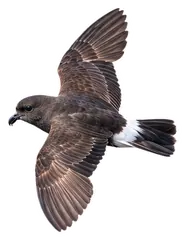 European Storm PetrelHydrobates pelagicus
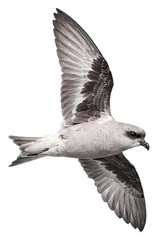 Fork-tailed Storm PetrelHydrobates furcatus
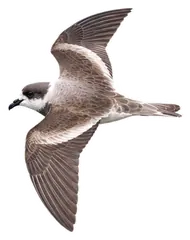 Ringed Storm PetrelHydrobates hornbyi
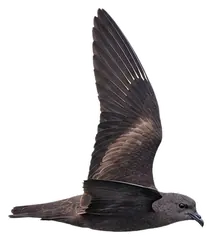 Swinhoe's Storm PetrelHydrobates monorhis
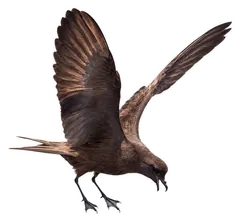 Matsudaira's Storm PetrelHydrobates matsudairae
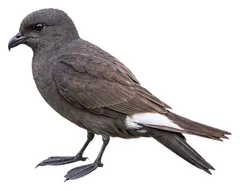 Townsend's Storm PetrelHydrobates socorroensis
 Ainley's Storm PetrelHydrobates cheimomnestes
 Ashy Storm PetrelHydrobates homochroa
 Band-rumped Storm PetrelHydrobates castro
 Monteiro's Storm PetrelHydrobates monteiroi
 Cape Verde Storm PetrelHydrobates jabejabe
 Wedge-rumped Storm PetrelHydrobates tethys
Download illustration
Free to use with credit: “Illustration: Bird Album (birdalbum.com)”. Drawn by AI from a reference photo by sebastienbenoit. ↗
Heard it but can't see it? Mingji identifies birds by sound and photo, on your phone.
In other languages
- EnglishLeach's Storm Petrel
- 简体中文白腰叉尾海燕
- 繁體中文白腰叉尾海燕
- 日本語コシジロウミツバメ
- DeutschWellenläufer
- FrançaisOcéanite cul-blanc
- EspañolPaíño boreal
- Portuguêspainho-de-cauda-forcada
- ItalianoUccello delle tempeste codaforcuta
- NederlandsVaal Stormvogeltje
- РусскийСеверная качурка
- Svenskaklykstjärtad stormsvala
- DanskStor Stormsvale
- Polskinawałnik duży