 Bird Album
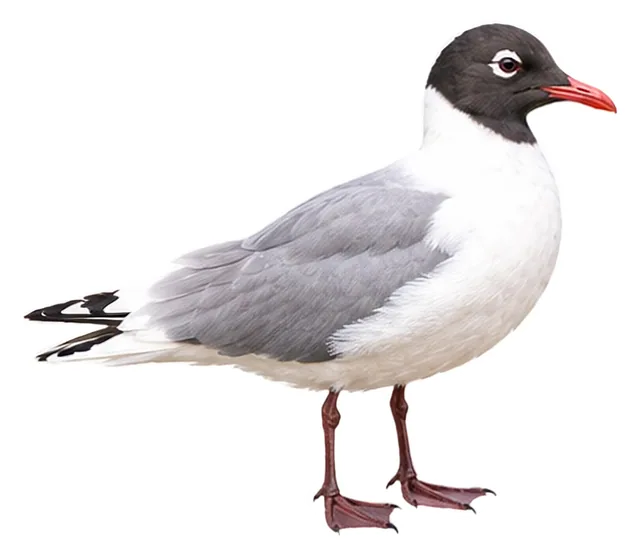
Franklin's Gull
Leucophaeus pipixcan (Wagler, 1831)
≈39 cmLength92 cmWingspan280 gWeight
It is a small gull with a white body, black hood and darker gray back and wings than similar gulls in summer plumage.
Busiest months: April–May · Most records: United States, Canada, Chile
Looks like Laughing Gull
How to identify
Field marks
- Body white, back and wings dark gray in summer plumage
- Wingtips black, bordered by a single white band
- Bill and legs red
- Black hood in the breeding season, mostly disappearing in winter
Male, female and young
Juvenile resembles adult, but the black hood is less developed and the white wing-bar is absent.
Similar species
Where and when it's recorded
Busiest months: April–May · Most records: United States, Canada, Chile

Franklin's Gull has been recorded at 678 of the 8,276 birding hotspots we track, in 51 countries and regions.
Records by month Northern Hemisphere
Where it's recorded most
- Antelope Island SP – CausewayUnited States5,481 records
- Calgary – Inglewood Bird SanctuaryCanada5,280 records
- Frank Lake – NW lookout/blind/outflowCanada4,178 records
More places
- Calgary – Carburn ParkCanada3,772 records
- Cheyenne Bottoms WAUnited States3,176 records
- Bear River MBR – Auto Tour LoopUnited States3,052 records
- Farmington Bay WMAUnited States2,806 records
- Hagerman NWRUnited States2,633 records
- Refugio de Vida Silvestre Los Pantanos de Villa – Laguna Costera y Playa MarvillaPeru2,395 records
- South Padre Is. – WBC/Conv. Center/Laguna Madre TrailUnited States2,219 records
Countries and regions with the most records
eBird records via GBIF up to 2024-12-31. A record means someone listed it; more records partly mean more birders, not more birds.
About
Franklin's gull (Leucophaeus pipixcan) is a small (length 12.6–14.2 in, 32–36 cm) gull. The genus name Leucophaeus is from Ancient Greek leukos, "white", and phaios, "dusky". The specific pipixcan is a Nahuatl name for a type of gull.
Excerpt from Wikipedia, CC BY-SA 4.0 · authors · Read more on Wikipedia
Questions
How big is the Franklin's Gull?
The Franklin's Gull is about ≈39 cm long, with a wingspan of 92 cm and weighs around 280 g.
Where does the Franklin's Gull live?
Its breeding range: North America: prairie marshes of western, northern Alberta and east-central Oregon to southwestern Manitoba (west-central, east-central Canada) and northwestern Minnesota. It is most often recorded in United States, Canada and Chile.
When is the best time to see the Franklin's Gull?
At the hotspots we track, it is recorded most in April and May (Northern Hemisphere).
What does the Franklin's Gull eat?
Main food: Omnivore.
What family is the Franklin's Gull in?
It belongs to the family Gulls, Terns, Skimmers (Laridae), order Charadriiformes.
At a glance
- Length
- ≈39 cm
- Wingspan
- 92 cm
- Weight
- 280 g
- Habitat
- Coast & tidal flats
- Diet
- Omnivore
- Lifestyle
- Varied
- Migration
- Migratory
More measurements
- Wing
- 279 mm
- Tail
- 95 mm
- Bill
- 40 mm
- Tarsus
- 40 mm
Averages from the AVONET dataset; length from field guides where available.
Range
North America: prairie marshes of western, northern Alberta and east-central Oregon to southwestern Manitoba (west-central, east-central Canada) and northwestern Minnesota
Breeding range, IOC World Bird List 15.2
Classification
- Order
- Charadriiformes
- Family
- Gulls, Terns, Skimmers Laridae
- Genus
- Leucophaeus
Other birds in the genus Leucophaeus
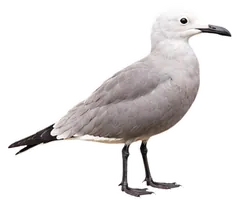 Grey GullLeucophaeus modestus
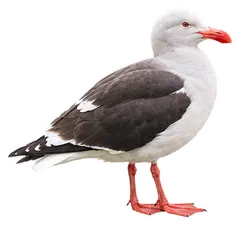 Dolphin GullLeucophaeus scoresbii
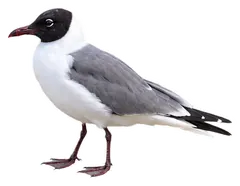 Laughing GullLeucophaeus atricilla
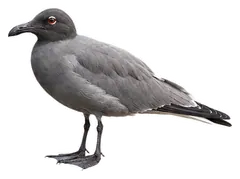 Lava GullLeucophaeus fuliginosus
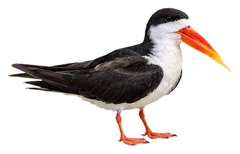 African SkimmerRynchops flavirostris
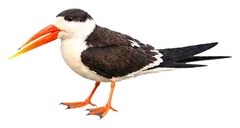 Indian SkimmerRynchops albicollis
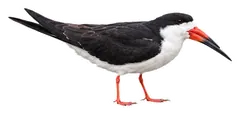 Black SkimmerRynchops niger
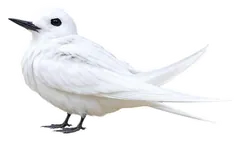 Atlantic White TernGygis alba
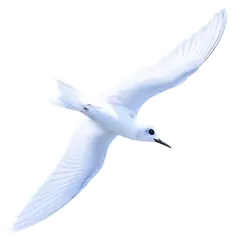 Little White TernGygis microrhyncha
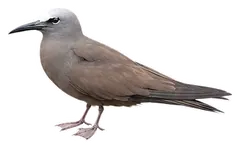 Brown NoddyAnous stolidus
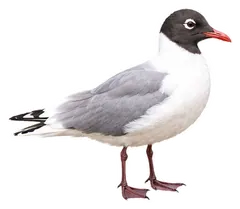
Download illustration
Free to use with credit: “Illustration: Bird Album (birdalbum.com)”. Drawn by AI from a reference photo by Nathan French. ↗
Heard it but can't see it? Mingji identifies birds by sound and photo, on your phone.