 Bird Album
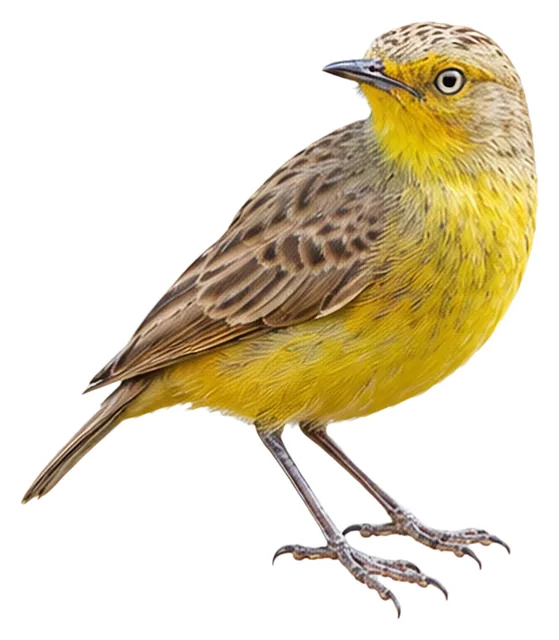
Gibberbird
Ashbyia lovensis (Ashby, 1911)
12–13 cmLength18 gWeight
The gibberbird (Ashbyia lovensis) is a species of chat within the Meliphagidae family of passerine birds.
Where and when it's recorded
No records at the public birding hotspots we track. It may be rare, remote, or its locations protected.
About
The gibberbird (Ashbyia lovensis) is a species of chat within the Meliphagidae family of passerine birds.
Excerpt from Wikipedia, CC BY-SA 4.0 · authors · Read more on Wikipedia
Questions
How big is the Gibberbird?
The Gibberbird is about 12–13 cm long and weighs around 18 g.
Where does the Gibberbird live?
Its breeding range: Australasia: north-central South Australia, southeastern Queensland and northwestern New South Wales (east-central Australia).
Is the Gibberbird endangered?
The IUCN Red List classifies the Gibberbird as Least Concern.
What does the Gibberbird eat?
Main food: Insects & other invertebrates.
What family is the Gibberbird in?
It belongs to the family Honeyeaters (Meliphagidae), order Passerines (Passeriformes).
At a glance
- Length
- 12–13 cm
- Weight
- 18 g
- Habitat
- Desert
- Diet
- Insects & other invertebrates
- Lifestyle
- Active on the ground
- Migration
- Partial migrant
- Conservation
- Least Concern
More measurements
- Wing
- 74 mm
- Tail
- 40 mm
- Bill
- 14 mm
- Tarsus
- 21 mm
Averages from the AVONET dataset; length from field guides where available.
Range
Australasia: north-central South Australia, southeastern Queensland and northwestern New South Wales (east-central Australia)
Breeding range, IOC World Bird List 15.2
Classification
- Order
- Passerines Passeriformes
- Family
- Honeyeaters Meliphagidae
- Genus
- Ashbyia
More from the family Honeyeaters
 Dark-eared MyzaMyza celebensis
 White-eared MyzaMyza sarasinorum
 Eastern SpinebillAcanthorhynchus tenuirostris
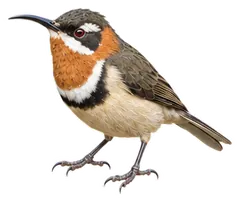 Western SpinebillAcanthorhynchus superciliosus
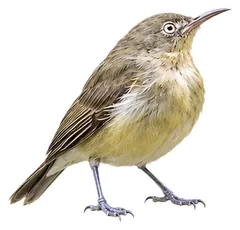 Green-backed HoneyeaterGlycichaera fallax
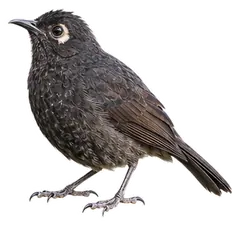 Sooty HoneyeaterMelionyx fuscus
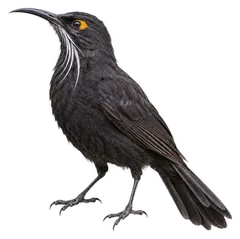 Long-bearded HoneyeaterMelionyx princeps
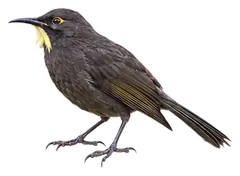 Short-bearded HoneyeaterMelionyx nouhuysi
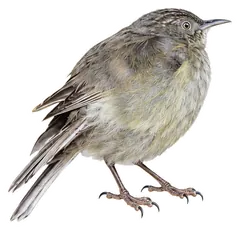 Leaden HoneyeaterPtiloprora plumbea
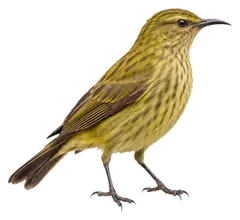 Yellowish-streaked HoneyeaterPtiloprora meekiana
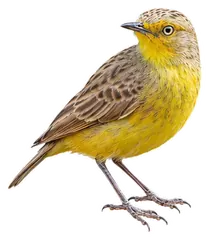
Download illustration
Free to use with credit: “Illustration: Bird Album (birdalbum.com)”. Drawn by AI from a reference photo by Steve Murray. ↗
Heard it but can't see it? Mingji identifies birds by sound and photo, on your phone.
In other languages
- EnglishGibberbird
- 简体中文漠澳䳭
- 繁體中文漠澳䳭
- 日本語キイロヒバリヒタキ
- DeutschWüstentrugschmätzer
- FrançaisEpthianure d’Ashby
- EspañolEptianuro de Ashby
- Portuguêspica-mel-do-deserto
- ItalianoUccello del gibber
- NederlandsWoestijnschijnpaapje
- РусскийЖелтобрюхая пустынница
- Svenskagibberhonungsskvätta
- DanskØrkenhonningsmutte
- Polskipodkasałka pustynna