 Bird Album
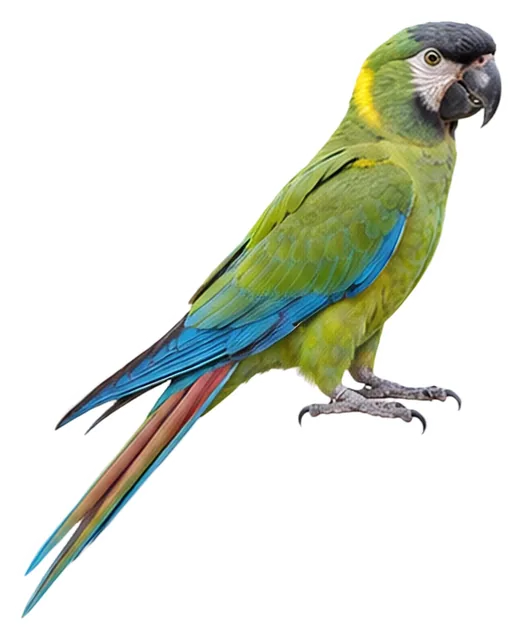
Golden-collared Macaw
Primolius auricollis (Cassin, 1853)
38 cmLength245 gWeight
It has a green body, with a yellow collar resembling a scarf across the nape.
Busiest months: July–October · Most records: Brazil, Bolivia, Argentina
How to identify
Field marks
- Yellow collar widest at nape
- Forehead and crown brownish-black
- Long, pointed tail red at base, green in middle and blue at tip
- Large area of white bare skin on face
Male, female and young
The yellow collar gradually develops with age and is brighter in adults.
Where and when it's recorded
Busiest months: July–October · Most records: Brazil, Bolivia, Argentina

Golden-collared Macaw has been recorded at 43 of the 8,276 birding hotspots we track, in 5 countries and regions.
Records by month Southern Hemisphere
Where it's recorded most
- Poconé – Pousada PiuvalBrazil508 records
- Aquidauana – Pousada AguapéBrazil473 records
- Refúgio Ecológico CaimanBrazil366 records
More places
- Poconé – Aymara LodgeBrazil345 records
- Pantanal – Pousada Rio ClaroBrazil291 records
- Barba Azul Nature ReserveBolivia269 records
- Reserva Natural Privada Eco-Portal de PiedraArgentina250 records
- Poconé – SouthWild PantanalBrazil222 records
- Miranda – Fazenda San FranciscoBrazil196 records
- PN CalileguaArgentina193 records
Countries and regions with the most records
eBird records via GBIF up to 2024-12-31. A record means someone listed it; more records partly mean more birders, not more birds.
About
The golden-collared macaw or yellow-collared macaw (Primolius auricollis) is a small, mostly green Central South American parrot, a member of a large group of Neotropical parrots known as macaws. It has a bright yellow patch on the back of its neck/upper shoulders that gives the species its name. In aviculture, it is one of a number of smaller macaws often called "mini-macaws".
Excerpt from Wikipedia, CC BY-SA 4.0 · authors · Read more on Wikipedia
Questions
How big is the Golden-collared Macaw?
The Golden-collared Macaw is about 38 cm long and weighs around 245 g.
Where does the Golden-collared Macaw live?
Its breeding range: South America: central Brazil, southwestern Brazil and Bolivia to northern Argentina and northern Paraguay. It is most often recorded in Brazil, Bolivia and Argentina.
When is the best time to see the Golden-collared Macaw?
At the hotspots we track, it is recorded most in July, August, September and October (Southern Hemisphere).
Is the Golden-collared Macaw endangered?
The IUCN Red List classifies the Golden-collared Macaw as Least Concern.
What does the Golden-collared Macaw eat?
Main food: Omnivore.
What family is the Golden-collared Macaw in?
It belongs to the family African & New World Parrots (Psittacidae), order Parrot (Psittaciformes).
At a glance
- Length
- 38 cm
- Weight
- 245 g
- Habitat
- Woodland
- Diet
- Omnivore
- Lifestyle
- Perches in trees
- Migration
- Resident (barely migrates)
- Conservation
- Least Concern
More measurements
- Wing
- 202 mm
- Tail
- 179 mm
- Bill
- 36 mm
- Tarsus
- 18 mm
Averages from the AVONET dataset; length from field guides where available.
Range
South America: central Brazil, southwestern Brazil and Bolivia to northern Argentina and northern Paraguay
Breeding range, IOC World Bird List 15.2
Classification
- Order
- Parrot Psittaciformes
- Family
- African & New World Parrots Psittacidae
- Genus
- Primolius
Other birds in the genus Primolius
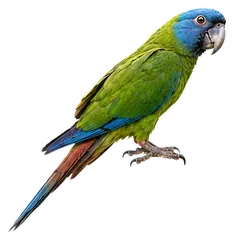 Blue-headed MacawPrimolius couloni
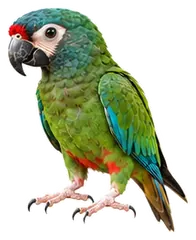 Blue-winged MacawPrimolius maracana
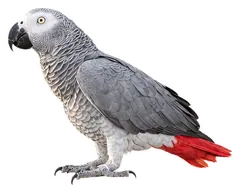 Grey ParrotPsittacus erithacus
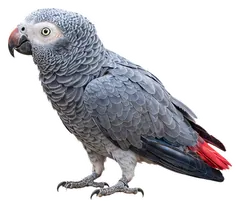 Timneh ParrotPsittacus timneh
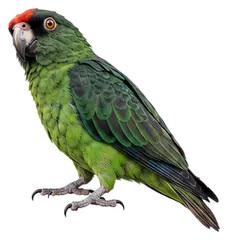 Red-fronted ParrotPoicephalus gulielmi
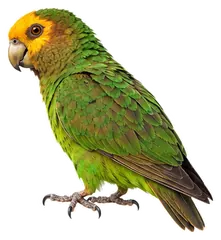 Yellow-fronted ParrotPoicephalus flavifrons
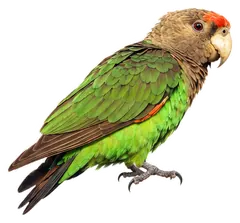 Brown-necked ParrotPoicephalus fuscicollis
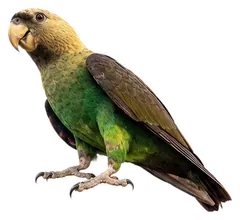 Cape ParrotPoicephalus robustus
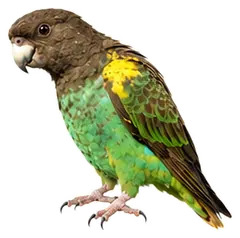 Meyer's ParrotPoicephalus meyeri
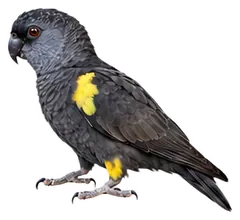 Rüppell's ParrotPoicephalus rueppellii
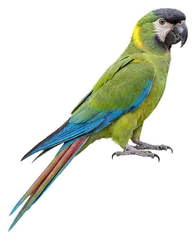
Download illustration
Free to use with credit: “Illustration: Bird Album (birdalbum.com)”. Drawn by AI from a reference photo by Morten Ross. ↗
Heard it but can't see it? Mingji identifies birds by sound and photo, on your phone.