 Bird Album
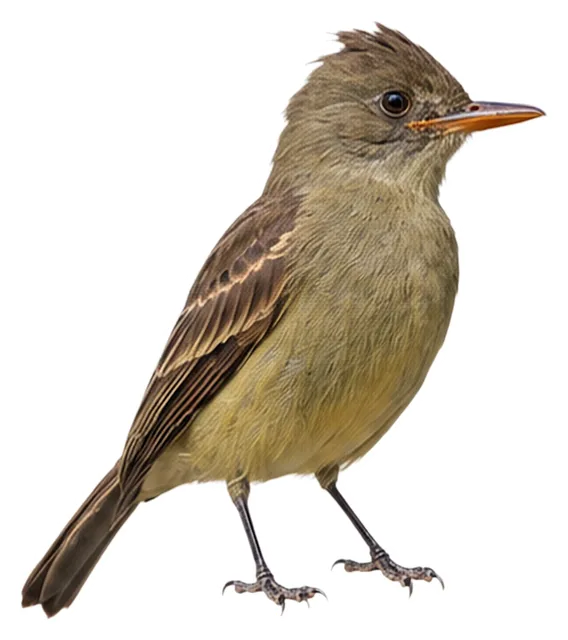
Greater Pewee
Contopus pertinax Cabanis & Heine, 1860
18–20 cmLength27 gWeight
The greater pewee (Contopus pertinax), formerly known as Coues's flycatcher, is a passerine bird in the family Tyrannidae, the tyrant flycatchers.
Busiest months: January · Most records: United States, Mexico, Guatemala
Where and when it's recorded
Busiest months: January · Most records: United States, Mexico, Guatemala

Greater Pewee has been recorded at 100 of the 8,276 birding hotspots we track, in 7 countries and regions.
Records by month Northern Hemisphere
Where it's recorded most
- Mt. Lemmon – Rose Canyon and LakeUnited States2,685 records
- Finca Rubel ChaimGuatemala1,399 records
- Reid ParkUnited States1,338 records
More places
- Ramsey Canyon PreserveUnited States1,147 records
- Bear Creek ParkUnited States1,131 records
- Rancho PrimaveraMexico1,011 records
- Parque Ecológico de XochimilcoMexico783 records
- Reserva Ecológica Sierra de San Juan – La NoriaMexico746 records
- ANP Bosque de TlalpanMexico648 records
- Reserva de La Chara PintaMexico646 records
Countries and regions with the most records
eBird records via GBIF up to 2024-12-31. A record means someone listed it; more records partly mean more birders, not more birds.
About
The greater pewee (Contopus pertinax), formerly known as Coues's flycatcher, is a passerine bird in the family Tyrannidae, the tyrant flycatchers. It is found from Arizona and New Mexico to Nicaragua.
Excerpt from Wikipedia, CC BY-SA 4.0 · authors · Read more on Wikipedia
Questions
How big is the Greater Pewee?
The Greater Pewee is about 18–20 cm long and weighs around 27 g.
Where does the Greater Pewee live?
Its breeding range: North America, Middle America: southwestern USA to Nicaragua. It is most often recorded in United States, Mexico and Guatemala.
When is the best time to see the Greater Pewee?
At the hotspots we track, it is recorded most in January (Northern Hemisphere).
Is the Greater Pewee endangered?
The IUCN Red List classifies the Greater Pewee as Least Concern.
What does the Greater Pewee eat?
Main food: Insects & other invertebrates.
What family is the Greater Pewee in?
It belongs to the family Tyrant Flycatchers, Calyptura (Tyrannidae), order Passerines (Passeriformes).
At a glance
- Length
- 18–20 cm
- Weight
- 27 g
- Habitat
- Forest
- Diet
- Insects & other invertebrates
- Lifestyle
- Perches in trees
- Migration
- Resident (barely migrates)
- Conservation
- Least Concern
More measurements
- Wing
- 108 mm
- Tail
- 83 mm
- Bill
- 23 mm
- Tarsus
- 17 mm
Averages from the AVONET dataset; length from field guides where available.
Range
North America, Middle America: southwestern USA to Nicaragua
Breeding range, IOC World Bird List 15.2
Classification
- Order
- Passerines Passeriformes
- Family
- Tyrant Flycatchers, Calyptura Tyrannidae
- Genus
- Contopus
Other birds in the genus Contopus
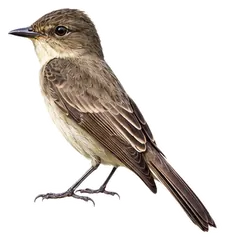 Olive-sided FlycatcherContopus cooperi
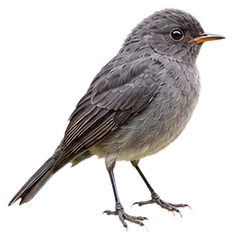 Dark PeweeContopus lugubris
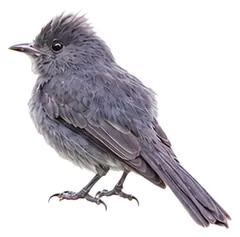 Smoke-colored PeweeContopus fumigatus
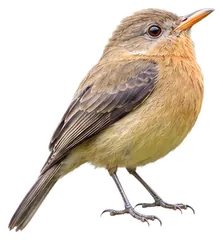 Ochraceous PeweeContopus ochraceus
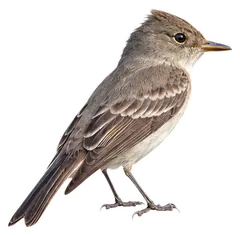 Western Wood PeweeContopus sordidulus
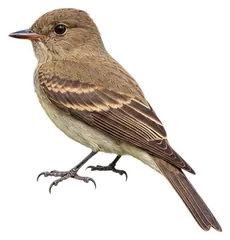 Eastern Wood PeweeContopus virens
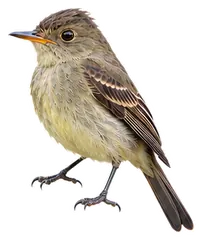 Northern Tropical PeweeContopus bogotensis
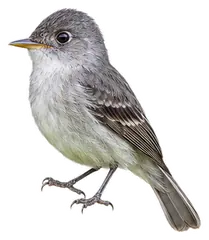 Tumbes PeweeContopus punensis
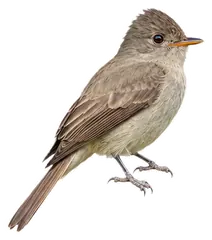 Southern Tropical PeweeContopus cinereus
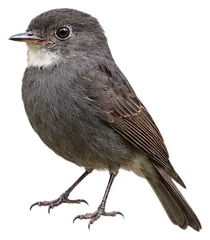 White-throated PeweeContopus albogularis
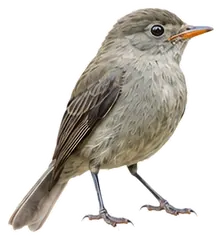 Blackish PeweeContopus nigrescens
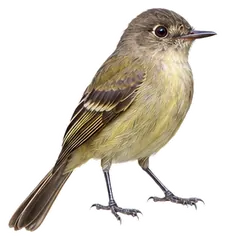 Cuban PeweeContopus caribaeus
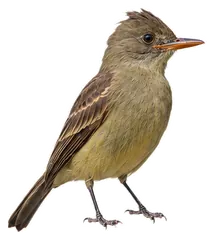
Download illustration
Free to use with credit: “Illustration: Bird Album (birdalbum.com)”. Drawn by AI from a reference photo by guyincognito. ↗
Heard it but can't see it? Mingji identifies birds by sound and photo, on your phone.