 Bird Album
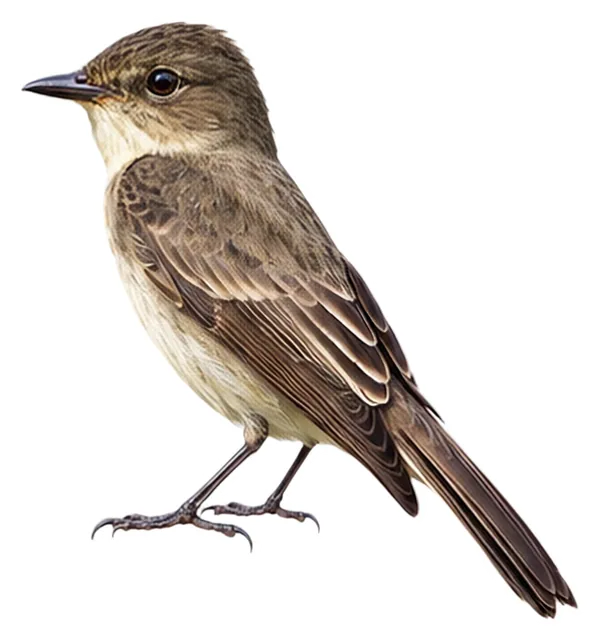
Olive-sided Flycatcher
Contopus cooperi (Nuttall, 1831)
32 gWeight
The olive-sided flycatcher (Contopus cooperi) is a small to medium sized passerine bird in the family Tyrannidae, the tyrant flycatcher family.
Busiest months: May · Most records: United States, Canada, Costa Rica
Where and when it's recorded
Busiest months: May · Most records: United States, Canada, Costa Rica

Olive-sided Flycatcher has been recorded at 1,212 of the 8,276 birding hotspots we track, in 26 countries and regions.
Records by month Northern Hemisphere
Where it's recorded most
- Rocky Point Bird ObservatoryCanada2,424 records
- Pt. Reyes Bird Observatory – PalomarinUnited States2,360 records
- Magee Marsh – BoardwalkUnited States1,781 records
More places
- Mt. Tabor ParkUnited States1,307 records
- Montrose Point Bird Sanctuary, Lincoln Park, ChicagoUnited States1,158 records
- Metchosin – Pedder BayCanada1,005 records
- Calgary – Confederation ParkCanada863 records
- Sweetwater WetlandsUnited States759 records
- Prospect ParkUnited States746 records
- Point Pelee National ParkCanada716 records
Countries and regions with the most records
eBird records via GBIF up to 2024-12-31. A record means someone listed it; more records partly mean more birders, not more birds.
About
The olive-sided flycatcher (Contopus cooperi) is a small to medium sized passerine bird in the family Tyrannidae, the tyrant flycatcher family. It is a migratory species that travels from South America to North America to breed during the summer. It is an agile flyer and mainly consumes flying insects caught in flight.
Excerpt from Wikipedia, CC BY-SA 4.0 · authors · Read more on Wikipedia
Questions
How big is the Olive-sided Flycatcher?
The Olive-sided Flycatcher weighs around 32 g.
Where does the Olive-sided Flycatcher live?
Its breeding range: North America: western Alaska to southwestern USA, northwestern Mexico, east-central USA and southeastern Canada. It is most often recorded in United States, Canada and Costa Rica.
When is the best time to see the Olive-sided Flycatcher?
At the hotspots we track, it is recorded most in May (Northern Hemisphere).
Is the Olive-sided Flycatcher endangered?
The IUCN Red List classifies the Olive-sided Flycatcher as Least Concern.
What does the Olive-sided Flycatcher eat?
Main food: Insects & other invertebrates.
What family is the Olive-sided Flycatcher in?
It belongs to the family Tyrant Flycatchers, Calyptura (Tyrannidae), order Passerines (Passeriformes).
At a glance
- Weight
- 32 g
- Habitat
- Forest
- Diet
- Insects & other invertebrates
- Lifestyle
- Perches in trees
- Migration
- Migratory
- Conservation
- Least Concern
More measurements
- Wing
- 105 mm
- Tail
- 69 mm
- Bill
- 20 mm
- Tarsus
- 15 mm
Averages from the AVONET dataset; length from field guides where available.
Range
North America: western Alaska to southwestern USA, northwestern Mexico, east-central USA and southeastern Canada
Breeding range, IOC World Bird List 15.2
Classification
- Order
- Passerines Passeriformes
- Family
- Tyrant Flycatchers, Calyptura Tyrannidae
- Genus
- Contopus
Other birds in the genus Contopus
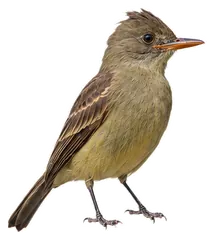 Greater PeweeContopus pertinax
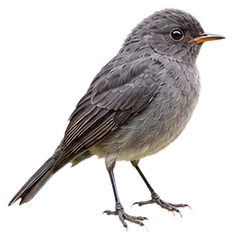 Dark PeweeContopus lugubris
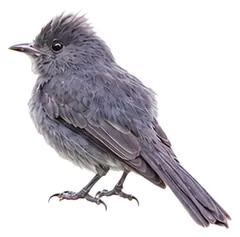 Smoke-colored PeweeContopus fumigatus
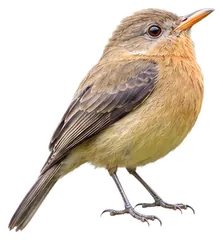 Ochraceous PeweeContopus ochraceus
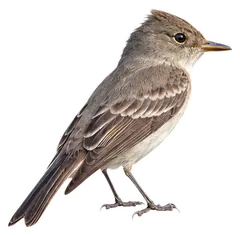 Western Wood PeweeContopus sordidulus
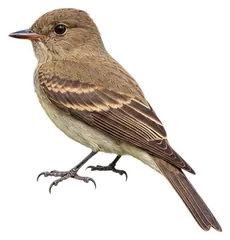 Eastern Wood PeweeContopus virens
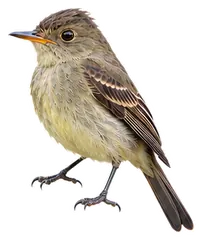 Northern Tropical PeweeContopus bogotensis
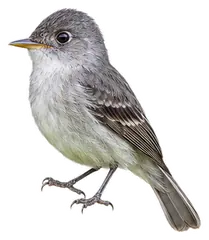 Tumbes PeweeContopus punensis
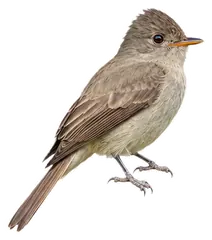 Southern Tropical PeweeContopus cinereus
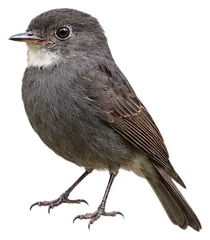 White-throated PeweeContopus albogularis
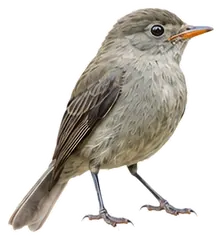 Blackish PeweeContopus nigrescens
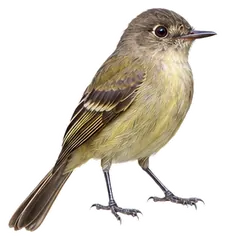 Cuban PeweeContopus caribaeus
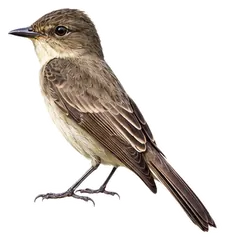
Download illustration
Free to use with credit: “Illustration: Bird Album (birdalbum.com)”. Drawn by AI from a reference photo by Ad Konings. ↗
Heard it but can't see it? Mingji identifies birds by sound and photo, on your phone.