 Bird Album
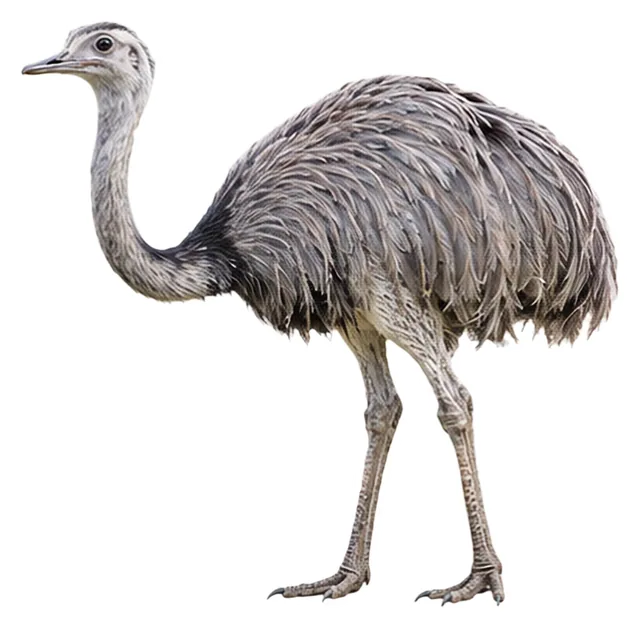
Greater Rhea
Rhea americana (Linnaeus, 1758)
150 cmLength23 kgWeight
The greater rhea (Rhea americana) is a species of flightless bird native to eastern South America.
Busiest months: July–October · Most records: Brazil, Argentina, Uruguay
Where and when it's recorded
Busiest months: July–October · Most records: Brazil, Argentina, Uruguay

Greater Rhea has been recorded at 108 of the 8,276 birding hotspots we track, in 6 countries and regions.
Records by month Southern Hemisphere
Where it's recorded most
- Poconé – Pousada PiuvalBrazil2,682 records
- Poconé – Pousada Pouso AlegreBrazil661 records
- Aquidauana – Pousada AguapéBrazil645 records
More places
- Pantanal – northern TranspantaneiraBrazil452 records
- Miranda – Fazenda San FranciscoBrazil431 records
- Refúgio Ecológico CaimanBrazil425 records
- Área Natural Protegida Don SebastiánArgentina334 records
- Viru-Viru Airport GrasslandsBolivia296 records
- PN Iberá – Portal Laguna IberáArgentina289 records
- Ea. Rincón del SocorroArgentina265 records
Countries and regions with the most records
eBird records via GBIF up to 2024-12-31. A record means someone listed it; more records partly mean more birders, not more birds.
About
The greater rhea (Rhea americana) is a species of flightless bird native to eastern South America. Other names for the greater rhea include the grey, common, or American rhea; ema (Portuguese); or ñandú (Guaraní and Spanish). One of two species in the genus Rhea, in the family Rheidae, it inhabits a variety of open areas, such as grasslands, savanna or grassy wetlands.
Excerpt from Wikipedia, CC BY-SA 4.0 · authors · Read more on Wikipedia
Questions
How big is the Greater Rhea?
The Greater Rhea is about 150 cm long and weighs around 23 kg.
Where does the Greater Rhea live?
Its breeding range: South America: southeastern. It is most often recorded in Brazil, Argentina and Uruguay.
When is the best time to see the Greater Rhea?
At the hotspots we track, it is recorded most in July, August, September and October (Southern Hemisphere).
Is the Greater Rhea endangered?
The IUCN Red List classifies the Greater Rhea as Near Threatened.
What does the Greater Rhea eat?
Main food: Omnivore.
What family is the Greater Rhea in?
It belongs to the family Rheas (Rheidae), order Rheiformes.
At a glance
- Length
- 150 cm
- Weight
- 23 kg
- Habitat
- Grassland
- Diet
- Omnivore
- Lifestyle
- Active on the ground
- Migration
- Resident (barely migrates)
- Conservation
- Near Threatened
More measurements
- Wing
- 604 mm
- Tail
- 62 mm
- Bill
- 86 mm
- Tarsus
- 308 mm
Averages from the AVONET dataset; length from field guides where available.
Range
South America: southeastern
Breeding range, IOC World Bird List 15.2
Classification
- Order
- Rheiformes
- Family
- Rheas Rheidae
- Genus
- Rhea
Other birds in the genus Rhea
 Lesser RheaRhea pennata
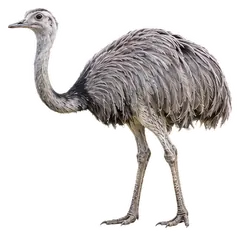
Download illustration
Free to use with credit: “Illustration: Bird Album (birdalbum.com)”. Drawn by AI from a reference photo by Martin Arregui. ↗
Heard it but can't see it? Mingji identifies birds by sound and photo, on your phone.