 Bird Album
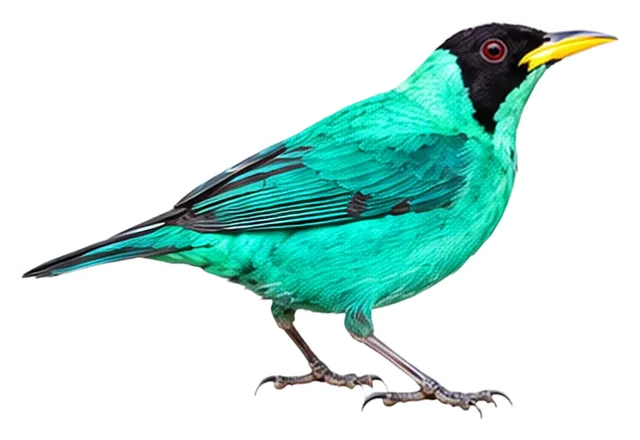
Green Honeycreeper
Chlorophanes spiza (Linnaeus, 1758)
13 cmLength19 gWeight
The adult male of the nominate subspecies has a mostly black head, an emerald-green body and a slender, mostly honey-yellow bill.
Busiest months: January–March · Most records: Costa Rica, Colombia, Panama
How to identify
Field marks
- Bill slender and slightly decurved
- Adult male of the nominate subspecies has a mostly deep black head
- Adult male of the nominate subspecies has a green body that appears blue at some angles
- Adult male of the nominate subspecies has a mostly honey-yellow bill with a black ridge
Male, female and young
Female of the nominate subspecies has a grass-green head and back and paler underparts; juvenile resembles the female but is duller, with a grayish belly.
Voice
Calls mostly high, sharp “psit” or “tseet” notes.
Where and when it's recorded
Busiest months: January–March · Most records: Costa Rica, Colombia, Panama

Green Honeycreeper has been recorded at 498 of the 8,276 birding hotspots we track, in 17 countries and regions.
Records by month Northern Hemisphere
Where it's recorded most
- Arenal Observatory LodgeCosta Rica10,847 records
- Estación Biológica La Selva-OTSCosta Rica6,901 records
- Asa Wright Nature CenterTrinidad & Tobago6,235 records
More places
- Rancho NaturalistaCosta Rica3,817 records
- Wilson Botanical GardenCosta Rica3,595 records
- Canopy TowerPanama3,568 records
- Alto Anchicayá - El DescansoColombia3,428 records
- Hotel Tinamú Birding Nature ReserveColombia2,628 records
- Selva Verde LodgeCosta Rica2,446 records
- Rio Silanche Bird SanctuaryEcuador2,432 records
Countries and regions with the most records
eBird records via GBIF up to 2024-12-31. A record means someone listed it; more records partly mean more birders, not more birds.
About
The green honeycreeper (Chlorophanes spiza) is a species of bird in the family Thraupidae, the tanagers and allies. It is found in the tropical New World from southern Mexico south to Brazil, and on Trinidad.
Excerpt from Wikipedia, CC BY-SA 4.0 · authors · Read more on Wikipedia
Questions
How big is the Green Honeycreeper?
The Green Honeycreeper is about 13 cm long and weighs around 19 g.
Where does the Green Honeycreeper live?
Its breeding range: Middle America, South America: southern Mexico to eastern Brazil. It is most often recorded in Costa Rica, Colombia and Panama.
When is the best time to see the Green Honeycreeper?
At the hotspots we track, it is recorded most in January, February and March (Northern Hemisphere).
Is the Green Honeycreeper endangered?
The IUCN Red List classifies the Green Honeycreeper as Least Concern.
What does the Green Honeycreeper eat?
Main food: Fruit.
What family is the Green Honeycreeper in?
It belongs to the family Tanagers & Allies (Thraupidae), order Passerines (Passeriformes).
At a glance
- Length
- 13 cm
- Weight
- 19 g
- Habitat
- Forest
- Diet
- Fruit
- Lifestyle
- Perches in trees
- Migration
- Resident (barely migrates)
- Conservation
- Least Concern
More measurements
- Wing
- 68 mm
- Tail
- 48 mm
- Bill
- 16 mm
- Tarsus
- 19 mm
Averages from the AVONET dataset; length from field guides where available.
Range
Middle America, South America: southern Mexico to eastern Brazil
Breeding range, IOC World Bird List 15.2
Classification
- Order
- Passerines Passeriformes
- Family
- Tanagers & Allies Thraupidae
- Genus
- Chlorophanes
More from the family Tanagers & Allies
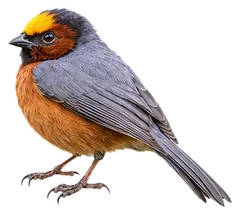 PlushcapCatamblyrhynchus diadema
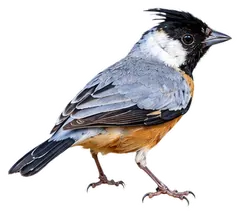 Coal-crested FinchCharitospiza eucosma
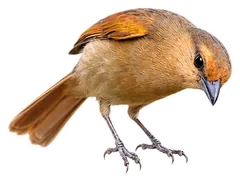 Brown TanagerOrchesticus abeillei
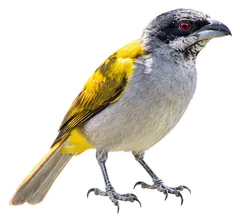 Yellow-shouldered GrosbeakParkerthraustes humeralis
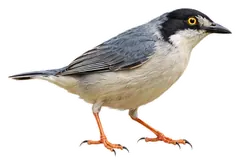 Hooded TanagerNemosia pileata
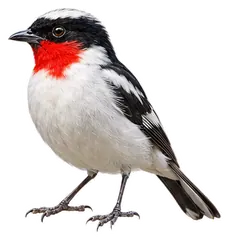 Cherry-throated TanagerNemosia rourei
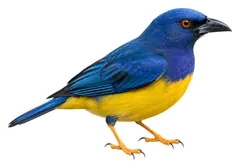 Blue-backed TanagerCyanicterus cyanicterus
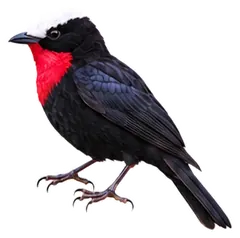 White-capped TanagerSericossypha albocristata
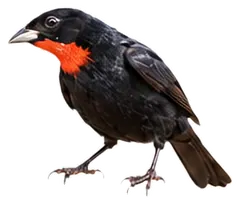 Scarlet-throated TanagerCompsothraupis loricata
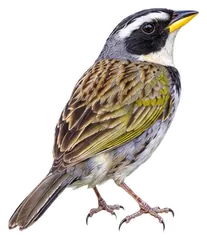 Black-masked FinchCoryphaspiza melanotis
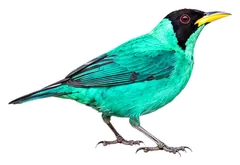
Download illustration
Free to use with credit: “Illustration: Bird Album (birdalbum.com)”. Drawn by AI from a reference photo by Greg Lasley. ↗
Heard it but can't see it? Mingji identifies birds by sound and photo, on your phone.