 Bird Album
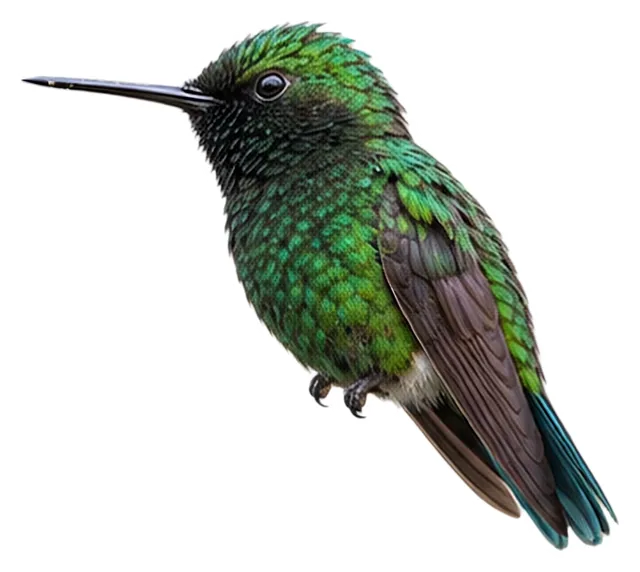
Green-tailed Emerald
Chlorostilbon alice (Bourcier & Mulsant, 1848)
3.5 gWeight
The green-tailed emerald (Chlorostilbon alice) is a species of hummingbird in the "emeralds", tribe Trochilini of subfamily Trochilinae.
Busiest months: May · Most records: Venezuela
Where and when it's recorded
Busiest months: May · Most records: Venezuela

Green-tailed Emerald has been recorded at 19 of the 8,276 birding hotspots we track, in 1 country or region.
Records by month Northern Hemisphere
Where it's recorded most
- El EncantadoVenezuela217 records
- Hacienda la Trinidad – ChezTotoVenezuela105 records
- PN El Avila – Los VenadosVenezuela54 records
More places
- El Junko – Club de GolfVenezuela48 records
- PN Macarao – El BarnizVenezuela30 records
- RF de Palmichal – Santuario de Flora y Fauna BugparadiseVenezuela30 records
- PN El Avila – Cota Mil a Estribo de DuarteVenezuela25 records
- El Hatillo – Hermanos MayorVenezuela12 records
- PN Henri Pittier – Estacion Rancho GrandeVenezuela11 records
- Escuela Perros y Pensión Los TequesVenezuela8 records
Countries and regions with the most records
eBird records via GBIF up to 2024-12-31. A record means someone listed it; more records partly mean more birders, not more birds.
About
The green-tailed emerald (Chlorostilbon alice) is a species of hummingbird in the "emeralds", tribe Trochilini of subfamily Trochilinae. It is endemic to Venezuela.
Excerpt from Wikipedia, CC BY-SA 4.0 · authors · Read more on Wikipedia
Questions
How big is the Green-tailed Emerald?
The Green-tailed Emerald weighs around 3.5 g.
Where does the Green-tailed Emerald live?
Its breeding range: South America: northern Venezuela. It is most often recorded in Venezuela.
When is the best time to see the Green-tailed Emerald?
At the hotspots we track, it is recorded most in May (Northern Hemisphere).
Is the Green-tailed Emerald endangered?
The IUCN Red List classifies the Green-tailed Emerald as Least Concern.
What does the Green-tailed Emerald eat?
Main food: Nectar.
What family is the Green-tailed Emerald in?
It belongs to the family Hummingbirds (Trochilidae), order Apodiformes.
At a glance
- Weight
- 3.5 g
- Habitat
- Forest
- Diet
- Nectar
- Lifestyle
- Feeds in the air
- Migration
- Partial migrant
- Conservation
- Least Concern
More measurements
- Wing
- 40 mm
- Tail
- 22 mm
- Bill
- 15 mm
- Tarsus
- 4 mm
Averages from the AVONET dataset; length from field guides where available.
Range
South America: northern Venezuela
Breeding range, IOC World Bird List 15.2
Classification
- Order
- Apodiformes
- Family
- Hummingbirds Trochilidae
- Genus
- Chlorostilbon
Other birds in the genus Chlorostilbon
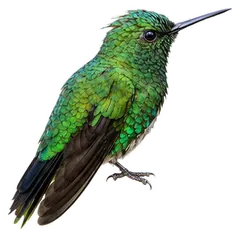 Garden EmeraldChlorostilbon assimilis
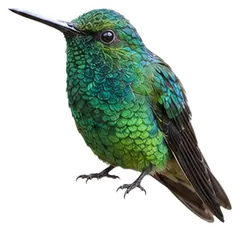 Western EmeraldChlorostilbon melanorhynchus
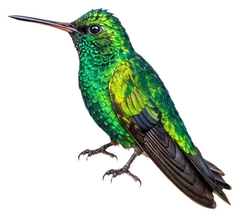 Red-billed EmeraldChlorostilbon gibsoni
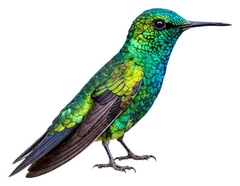 Blue-tailed EmeraldChlorostilbon mellisugus
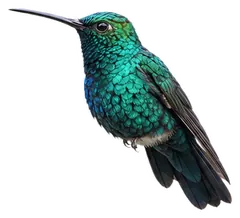 Chiribiquete EmeraldChlorostilbon olivaresi
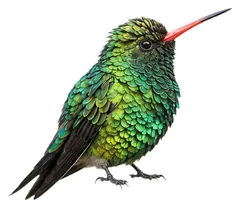 Glittering-bellied EmeraldChlorostilbon lucidus
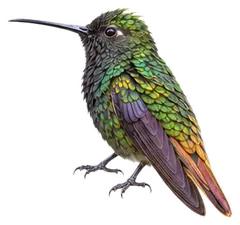 Coppery EmeraldChlorostilbon russatus
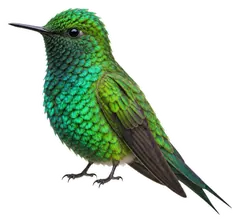 Narrow-tailed EmeraldChlorostilbon stenurus
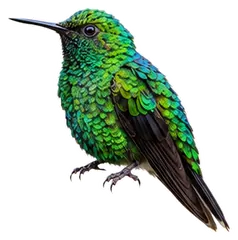 Short-tailed EmeraldChlorostilbon poortmani
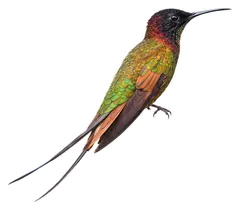 Crimson TopazTopaza pella
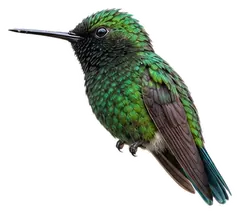
Download illustration
Free to use with credit: “Illustration: Bird Album (birdalbum.com)”. Drawn by AI from a reference photo by Manuel A. Pérez R.. ↗
Heard it but can't see it? Mingji identifies birds by sound and photo, on your phone.
In other languages
- EnglishGreen-tailed Emerald
- 简体中文绿尾翠蜂鸟
- 繁體中文綠尾翠蜂鳥
- 日本語ミドリオヒメエメラルドハチドリ
- DeutschAlicesmaragdkolibri
- FrançaisÉmeraude alice
- EspañolEsmeralda Coliverde
- Portuguêsesmeralda-de-cauda-verde
- ItalianoSmeraldo codaverde
- NederlandsGroenstaartsmaragdkolibrie
- РусскийЗеленохвостый изумруд
- Svenskagrönstjärtad smaragd
- DanskGrønhalet Smaragd
- Polskizłocik wenezuelski