 Bird Album
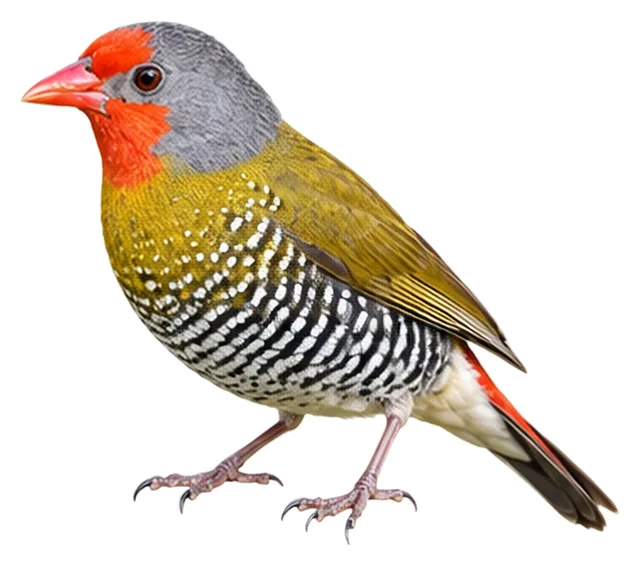
Green-winged Pytilia
Pytilia melba (Linnaeus, 1758)
15 gWeight
The green-winged pytilia (Pytilia melba) is a small colourful seed-eating bird in the family Estrildidae.
Busiest months: November · Most records: South Africa, Namibia, Kenya
Where and when it's recorded
Busiest months: November · Most records: South Africa, Namibia, Kenya

Green-winged Pytilia has been recorded at 294 of the 8,276 birding hotspots we track, in 24 countries and regions.
Records by month Southern Hemisphere
Where it's recorded most
- Ondudu LodgeNamibia474 records
- Zaagkuildrift RdSouth Africa371 records
- Mkhuze GRSouth Africa368 records
More places
- Polokwane GRSouth Africa224 records
- Tarangire NPTanzania219 records
- Lake Baringo – Inshore Cliffs and surroundsKenya212 records
- Nyandungu Urban Wetland Eco-tourism ParkRwanda180 records
- Lake BaringoKenya179 records
- Avis DamNamibia171 records
- Kruger NP – Skukuza CampSouth Africa168 records
Countries and regions with the most records
eBird records via GBIF up to 2024-12-31. A record means someone listed it; more records partly mean more birders, not more birds.
About
The green-winged pytilia (Pytilia melba) is a small colourful seed-eating bird in the family Estrildidae. It is widespread throughout Sub-Saharan Africa, though it is more rarely seen in central, far southern and coastal western parts of the continent.
Excerpt from Wikipedia, CC BY-SA 4.0 · authors · Read more on Wikipedia
Questions
How big is the Green-winged Pytilia?
The Green-winged Pytilia weighs around 15 g.
Where does the Green-winged Pytilia live?
Its breeding range: Africa: western, central, eastern, southern. It is most often recorded in South Africa, Namibia and Kenya.
When is the best time to see the Green-winged Pytilia?
At the hotspots we track, it is recorded most in November (Southern Hemisphere).
Is the Green-winged Pytilia endangered?
The IUCN Red List classifies the Green-winged Pytilia as Least Concern.
What does the Green-winged Pytilia eat?
Main food: Seeds.
What family is the Green-winged Pytilia in?
It belongs to the family Waxbills, Munias & Allies (Estrildidae), order Passerines (Passeriformes).
At a glance
- Weight
- 15 g
- Habitat
- Shrubland
- Diet
- Seeds
- Lifestyle
- Active on the ground
- Migration
- Resident (barely migrates)
- Conservation
- Least Concern
More measurements
- Wing
- 57 mm
- Tail
- 47 mm
- Bill
- 13 mm
- Tarsus
- 17 mm
Averages from the AVONET dataset; length from field guides where available.
Range
Africa: western, central, eastern, southern
Breeding range, IOC World Bird List 15.2
Classification
- Order
- Passerines Passeriformes
- Family
- Waxbills, Munias & Allies Estrildidae
- Genus
- Pytilia
Other birds in the genus Pytilia
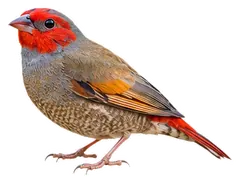 Orange-winged PytiliaPytilia afra
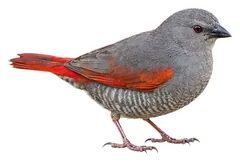 Red-winged PytiliaPytilia phoenicoptera
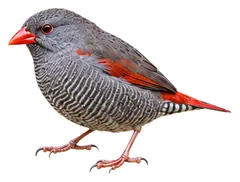 Red-billed PytiliaPytilia lineata
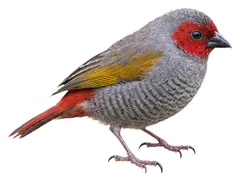 Yellow-winged PytiliaPytilia hypogrammica
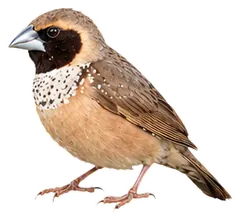 Pictorella MannikinHeteromunia pectoralis
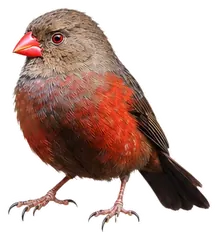 Mountain FiretailOreostruthus fuliginosus
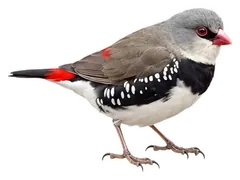 Diamond FiretailStagonopleura guttata
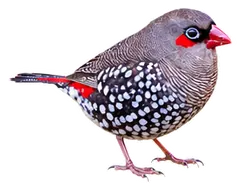 Red-eared FiretailStagonopleura oculata
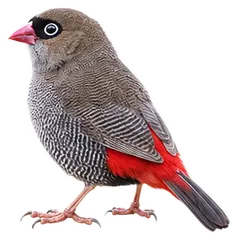 Beautiful FiretailStagonopleura bella
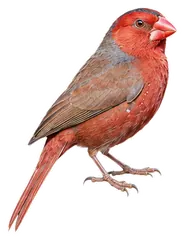 Crimson FinchNeochmia phaeton
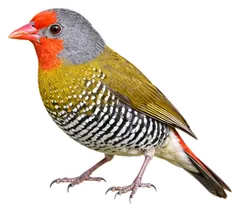
Download illustration
Free to use with credit: “Illustration: Bird Album (birdalbum.com)”. Drawn by AI from a reference photo by copper. ↗
Heard it but can't see it? Mingji identifies birds by sound and photo, on your phone.