 Bird Album
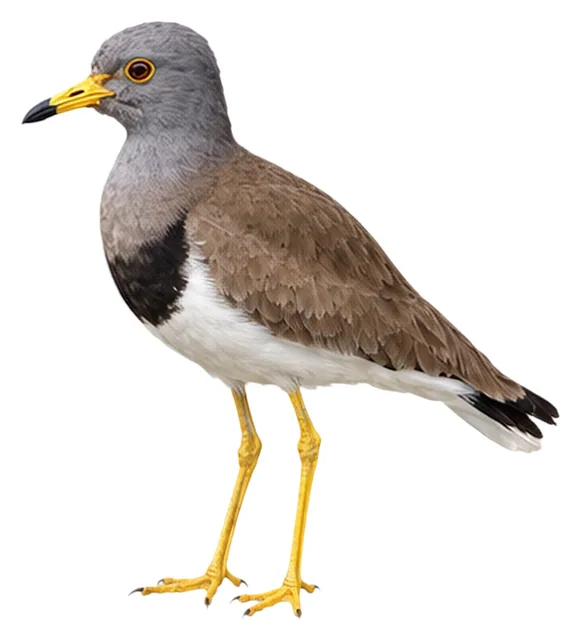
Grey-headed Lapwing
Vanellus cinereus (Blyth, 1842)
34–37 cmLength76 cmWingspan270 gWeight
It has a gray head and neck and a dark gray breast-band, with conspicuous black, white and rufous in flight.
Busiest months: December–April · Most records: China, India, Thailand
How to identify
Field marks
- Gray head and neck
- Dark gray breast-band and white belly
- Rufous back and white rump
- Black primaries and white underwing in flight
Male, female and young
Sexes have similar plumage, with the male slightly larger; juveniles have gray-tinged white areas and an indistinct breast-band.
Voice
A sharp “chee-it”.
Where and when it's recorded
Busiest months: December–April · Most records: China, India, Thailand

Grey-headed Lapwing has been recorded at 845 of the 8,276 birding hotspots we track, in 19 countries and regions.
Records by month Northern Hemisphere
Where it's recorded most
- Kaziranga NP & Surroundings – Eastern RangeIndia603 records
- Lat Krabang – Thap Yao paddies & aquaculture pondsThailand431 records
- Baruipur MarshesIndia430 records
More places
- Taipei – Tianliaoyang WetlandTaiwan (China)413 records
- Kaziranga NP & Surroundings – Western RangeIndia412 records
- Chilika Lake – MangalajodiIndia390 records
- Kaziranga NP & SurroundingsIndia279 records
- Mai Po Nature ReserveHong Kong (China)277 records
- Nong Bong Khai Non-hunting Area – headquarters vicinityThailand254 records
- Gajoldoba Barrage JGIndia246 records
Countries and regions with the most records
eBird records via GBIF up to 2024-12-31. A record means someone listed it; more records partly mean more birders, not more birds.
About
The grey-headed lapwing (Vanellus cinereus) is a lapwing species which breeds in northeast China and Japan. The mainland population winters in northern Southeast Asia from northeastern India to Cambodia. The Japanese population winters, at least partially, in southern Honshū.
Excerpt from Wikipedia, CC BY-SA 4.0 · authors · Read more on Wikipedia
Questions
How big is the Grey-headed Lapwing?
The Grey-headed Lapwing is about 34–37 cm long, with a wingspan of 76 cm and weighs around 270 g.
Where does the Grey-headed Lapwing live?
Its breeding range: Palearctic: inland Heilongjiang and Inner Mongolia (north-central, northeastern China), Honshu to Kyushu (central, southern Japan). It is most often recorded in China, India and Thailand.
When is the best time to see the Grey-headed Lapwing?
At the hotspots we track, it is recorded most in January, February, March, April and December (Northern Hemisphere).
Is the Grey-headed Lapwing endangered?
The IUCN Red List classifies the Grey-headed Lapwing as Least Concern.
What does the Grey-headed Lapwing eat?
Main food: Fish, shrimp & shellfish.
What family is the Grey-headed Lapwing in?
It belongs to the family Plovers (Charadriidae), order Charadriiformes.
At a glance
- Length
- 34–37 cm
- Wingspan
- 76 cm
- Weight
- 270 g
- Habitat
- Wetland
- Diet
- Fish, shrimp & shellfish
- Lifestyle
- Active on the ground
- Migration
- Migratory
- Conservation
- Least Concern
More measurements
- Wing
- 240 mm
- Tail
- 103 mm
- Bill
- 39 mm
- Tarsus
- 78 mm
Averages from the AVONET dataset; length from field guides where available.
Range
Palearctic: inland Heilongjiang and Inner Mongolia (north-central, northeastern China), Honshu to Kyushu (central, southern Japan)
Breeding range, IOC World Bird List 15.2
Classification
- Order
- Charadriiformes
- Family
- Plovers Charadriidae
- Genus
- Vanellus
Other birds in the genus Vanellus
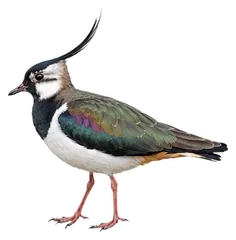 Northern LapwingVanellus vanellus
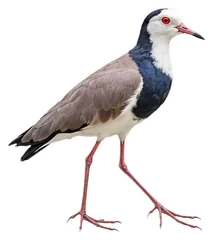 Long-toed LapwingVanellus crassirostris
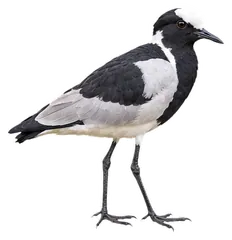 Blacksmith LapwingVanellus armatus
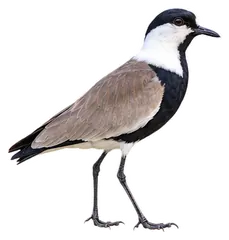 Spur-winged LapwingVanellus spinosus
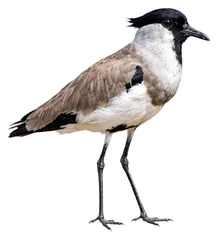 River LapwingVanellus duvaucelii
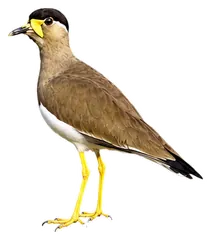 Yellow-wattled LapwingVanellus malabaricus
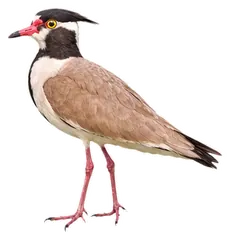 Black-headed LapwingVanellus tectus
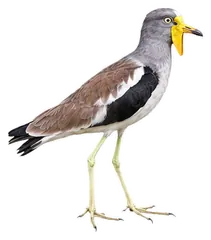 White-crowned LapwingVanellus albiceps
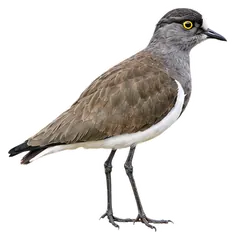 Senegal LapwingVanellus lugubris
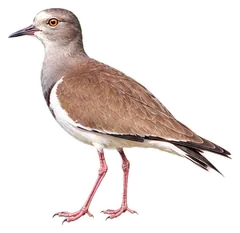 Black-winged LapwingVanellus melanopterus
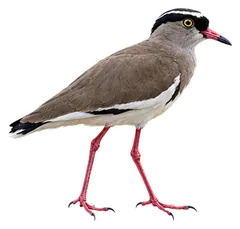 Crowned LapwingVanellus coronatus
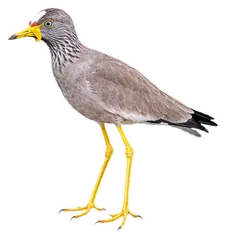 African Wattled LapwingVanellus senegallus
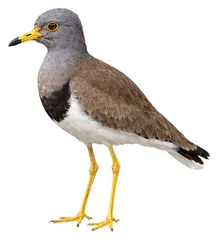
Download illustration
Free to use with credit: “Illustration: Bird Album (birdalbum.com)”. Drawn by AI from a reference photo by Alpsdake. ↗

Heard it but can't see it? Mingji identifies birds by sound and photo, on your phone.