 Bird Album
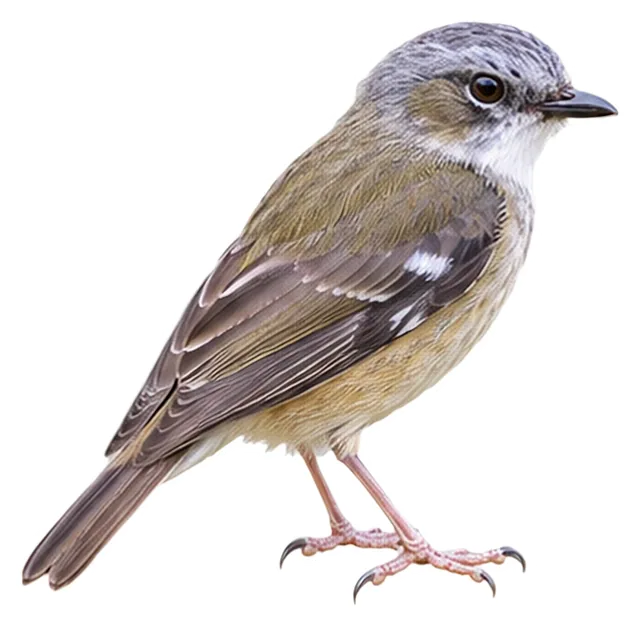
Grey-headed Robin
Heteromyias cinereifrons (Ramsay, EP, 1876)
36 gWeight
The grey-headed robin (Heteromyias cinereifrons) is a species of bird in the family Petroicidae.
Busiest months: October · Most records: Australia
Where and when it's recorded
Busiest months: October · Most records: Australia

Grey-headed Robin has been recorded at 11 of the 8,276 birding hotspots we track, in 1 country or region.
Records by month Southern Hemisphere
Where it's recorded most
- Mount Hypipamee National ParkAustralia1,458 records
- Crater Lakes National Park – Chambers Rainforest LodgeAustralia1,006 records
- Crater Lakes National Park – Lake EachamAustralia888 records
More places
- Crater Lakes National Park – Lake BarrineAustralia782 records
- Kingfisher Park Birdwatchers LodgeAustralia614 records
- Kingfisher Park Birdwatchers Lodge – Morning WalkAustralia442 records
- JulattenAustralia113 records
- Hasties Swamp National ParkAustralia17 records
- Hasties Swamp Bird HideAustralia12 records
- Abattoir Swamp, JulattenAustralia3 records
Countries and regions with the most records
eBird records via GBIF up to 2024-12-31. A record means someone listed it; more records partly mean more birders, not more birds.
About
The grey-headed robin (Heteromyias cinereifrons) is a species of bird in the family Petroicidae. It is found in northeastern Queensland, Australia.
Excerpt from Wikipedia, CC BY-SA 4.0 · authors · Read more on Wikipedia
Questions
How big is the Grey-headed Robin?
The Grey-headed Robin weighs around 36 g.
Where does the Grey-headed Robin live?
Its breeding range: Australasia: east-central Queensland (northeastern Australia). It is most often recorded in Australia.
When is the best time to see the Grey-headed Robin?
At the hotspots we track, it is recorded most in October (Southern Hemisphere).
Is the Grey-headed Robin endangered?
The IUCN Red List classifies the Grey-headed Robin as Near Threatened.
What does the Grey-headed Robin eat?
Main food: Insects & other invertebrates.
What family is the Grey-headed Robin in?
It belongs to the family Australasian Robins (Petroicidae), order Passerines (Passeriformes).
At a glance
- Weight
- 36 g
- Habitat
- Forest
- Diet
- Insects & other invertebrates
- Lifestyle
- Perches in trees
- Migration
- Resident (barely migrates)
- Conservation
- Near Threatened
More measurements
- Wing
- 105 mm
- Tail
- 71 mm
- Bill
- 21 mm
- Tarsus
- 30 mm
Averages from the AVONET dataset; length from field guides where available.
Range
Australasia: east-central Queensland (northeastern Australia)
Breeding range, IOC World Bird List 15.2
Classification
- Order
- Passerines Passeriformes
- Family
- Australasian Robins Petroicidae
- Genus
- Heteromyias
Other birds in the genus Heteromyias
 Ashy RobinHeteromyias albispecularis
 Black-capped RobinHeteromyias armiti
 Lesser Ground RobinAmalocichla incerta
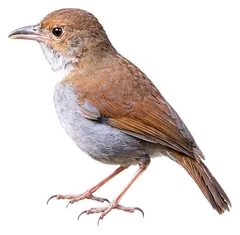 Greater Ground RobinAmalocichla sclateriana
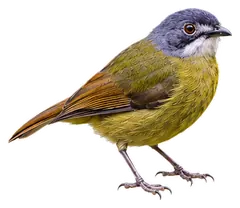 Green-backed RobinPachycephalopsis hattamensis
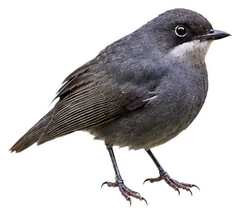 White-eyed RobinPachycephalopsis poliosoma
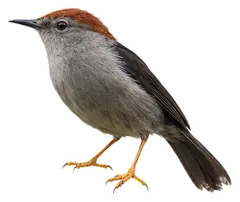 Garnet RobinEugerygone rubra
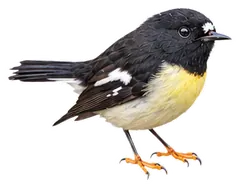 TomtitPetroica macrocephala
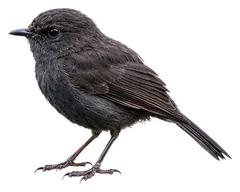 Black RobinPetroica traversi
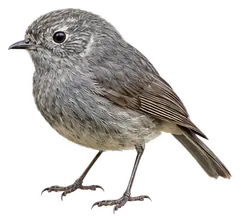 North Island RobinPetroica longipes
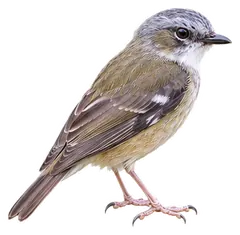
Download illustration
Free to use with credit: “Illustration: Bird Album (birdalbum.com)”. Drawn by AI from a reference photo by matthewkwan. ↗
Heard it but can't see it? Mingji identifies birds by sound and photo, on your phone.
In other languages
- EnglishGrey-headed Robin
- 简体中文灰头丛鹟
- 繁體中文灰頭異鶲
- 日本語ハイガシラヤブヒタキ
- DeutschGraustirn-Farnschnäpper
- FrançaisMiro à tête grise
- EspañolPetroica cabecigrís
- Portuguêspapinho-de-testa-cinzenta
- ItalianoBalia frontegrigia
- NederlandsGrijskopstruikvliegenvanger
- РусскийСеролобая дриада
- Svenskagråkronad sydhake
- DanskGråhovedet Sangfluesnapper
- Polskigwizdacz szarołbisty