 Bird Album
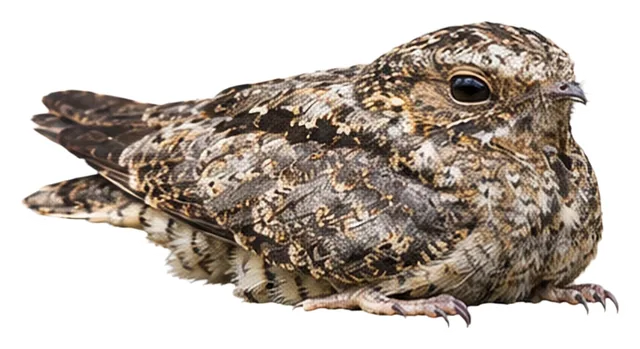
Hispaniolan Nightjar
Antrostomus ekmani Lönnberg, 1929
26–30 cmLength64 gWeight
The Hispaniolan nightjar (Antrostomus ekmani) is a nightjar species endemic to the Caribbean island of Hispaniola, which is shared by the Dominican Republic and Haiti.
Busiest months: January · Most records: Dominican Republic, Haiti
Where and when it's recorded

Hispaniolan Nightjar has been recorded at 6 of the 8,171 birding hotspots we track, in 2 countries and regions.
Records by month Northern Hemisphere
Where it's recorded most
- ZapoténDominican Republic216 records
- Rabo de GatoDominican Republic104 records
- Paraíso Caño HondoDominican Republic4 records
More places
- Jardín Botánico NacionalDominican Republic2 records
- Trou CaïmanHaiti1 record
- Punta Cana Resort and ClubDominican Republic1 record
Countries and regions with the most records
eBird records via GBIF up to 2024-12-31. A record means someone listed it; more records partly mean more birders, not more birds.
About
The Hispaniolan nightjar (Antrostomus ekmani) is a nightjar species endemic to the Caribbean island of Hispaniola, which is shared by the Dominican Republic and Haiti.
Excerpt from Wikipedia, CC BY-SA 4.0 · authors · Read more on Wikipedia
Questions
How big is the Hispaniolan Nightjar?
The Hispaniolan Nightjar is about 26–30 cm long and weighs around 64 g.
Where does the Hispaniolan Nightjar live?
Its breeding range: North America: Hispaniola. It is most often recorded in Dominican Republic and Haiti.
When is the best time to see the Hispaniolan Nightjar?
At the hotspots we track, it is recorded most in January (Northern Hemisphere).
Is the Hispaniolan Nightjar endangered?
The IUCN Red List classifies the Hispaniolan Nightjar as Least Concern.
What does the Hispaniolan Nightjar eat?
Main food: Insects & other invertebrates.
What family is the Hispaniolan Nightjar in?
It belongs to the family Nightjars (Caprimulgidae), order Caprimulgiformes.
At a glance
- Length
- 26–30 cm
- Weight
- 64 g
- Diet
- Insects & other invertebrates
- Lifestyle
- Feeds in the air
- Migration
- Resident (barely migrates)
- Conservation
- Least Concern
More measurements
- Wing
- 172 mm
- Tail
- 135 mm
- Bill
- 24 mm
- Tarsus
- 16 mm
Averages from the AVONET dataset; length from field guides where available.
Range
North America: Hispaniola
Breeding range, IOC World Bird List 15.2
Classification
- Order
- Caprimulgiformes
- Family
- Nightjars Caprimulgidae
- Genus
- Antrostomus
Other birds in the genus Antrostomus
 Chuck-will's-widowAntrostomus carolinensis
 Rufous NightjarAntrostomus rufus
 Cuban NightjarAntrostomus cubanensis
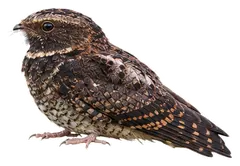 Tawny-collared NightjarAntrostomus salvini
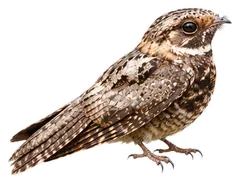 Yucatan NightjarAntrostomus badius
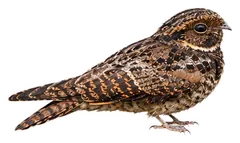 Silky-tailed NightjarAntrostomus sericocaudatus
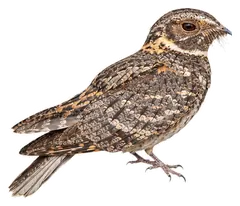 Buff-collared NightjarAntrostomus ridgwayi
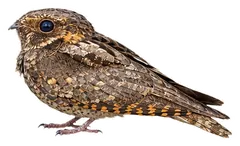 Eastern Whip-poor-willAntrostomus vociferus
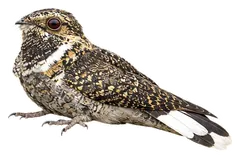 Mexican Whip-poor-willAntrostomus arizonae
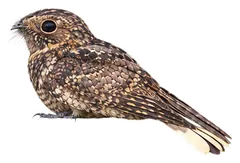 Puerto Rican NightjarAntrostomus noctitherus
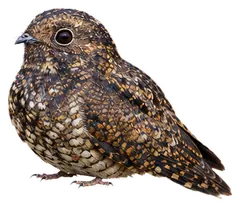 Dusky NightjarAntrostomus saturatus
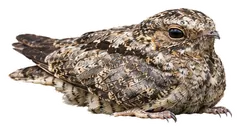
Download illustration
Free to use with credit: “Illustration: Bird Album (birdalbum.com)”. Drawn by AI from a reference photo by Fredy Ruiz. ↗
Heard it but can't see it? Mingji identifies birds by sound and photo, on your phone.
In other languages
- EnglishHispaniolan Nightjar
- 简体中文斯岛夜鹰
- 繁體中文希斯潘諾拉夜鷹
- DeutschHispaniolanachtschwalbe
- FrançaisEngoulevent d’Hispaniola
- EspañolChotacabras de La Española
- Portuguêsbacurau-haitiano
- ItalianoSucciacapre di Hispaniola
- NederlandsHispaniolanachtzwaluw
- РусскийГаитянский козодой
- Svenskahispaniolanattskärra
- DanskHispañiola Natravn
- Polskilelkowiec haitański