 Bird Album
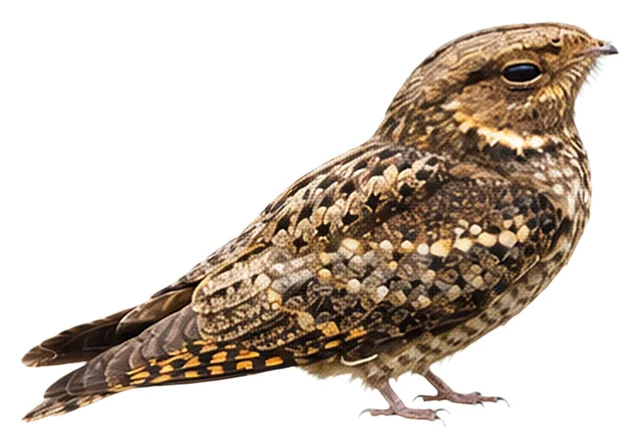
Chuck-will's-widow
Antrostomus carolinensis (Gmelin, JF, 1789)
28–33 cmLength109 gWeight
The chuck-will's-widow (Antrostomus carolinensis) is a nocturnal bird of the nightjar family Caprimulgidae.
Busiest months: April · Most records: United States, Costa Rica, Canada
Where and when it's recorded

Chuck-will's-widow has been recorded at 305 of the 8,276 birding hotspots we track, in 18 countries and regions.
Records by month Northern Hemisphere
Where it's recorded most
- Blucher ParkUnited States2,535 records
- Sabine WoodsUnited States1,260 records
- Warbler Woods Bird SanctuaryUnited States1,066 records
More places
- Fort De Soto ParkUnited States559 records
- Arenal MisticoparkCosta Rica507 records
- Lake Apopka North Shore – Orange County sectionUnited States452 records
- Estero Llano Grande SP WBCUnited States438 records
- Green Cay Wetlands & Nature CenterUnited States435 records
- Edwin B. Forsythe NWRUnited States421 records
- High Island – Smith Oaks SanctuaryUnited States410 records
Countries and regions with the most records
eBird records via GBIF up to 2024-12-31. A record means someone listed it; more records partly mean more birders, not more birds.
About
The chuck-will's-widow (Antrostomus carolinensis) is a nocturnal bird of the nightjar family Caprimulgidae. It is mostly found in the southeastern United States (with disjunct populations in Long Island, New York; Ontario, Canada; and Cape Cod, Massachusetts) near swamps, rocky uplands, and pine woods. It migrates to the West Indies, Central America, and northwestern South America.
Excerpt from Wikipedia, CC BY-SA 4.0 · authors · Read more on Wikipedia
Questions
How big is the Chuck-will's-widow?
The Chuck-will's-widow is about 28–33 cm long and weighs around 109 g.
Where does the Chuck-will's-widow live?
Its breeding range: North America: eastern USA. It is most often recorded in United States, Costa Rica and Canada.
When is the best time to see the Chuck-will's-widow?
At the hotspots we track, it is recorded most in April (Northern Hemisphere).
Is the Chuck-will's-widow endangered?
The IUCN Red List classifies the Chuck-will's-widow as Near Threatened.
What does the Chuck-will's-widow eat?
Main food: Insects & other invertebrates.
What family is the Chuck-will's-widow in?
It belongs to the family Nightjars (Caprimulgidae), order Caprimulgiformes.
At a glance
- Length
- 28–33 cm
- Weight
- 109 g
- Habitat
- Woodland
- Diet
- Insects & other invertebrates
- Lifestyle
- Feeds in the air
- Migration
- Migratory
- Conservation
- Near Threatened
More measurements
- Wing
- 208 mm
- Tail
- 141 mm
- Bill
- 15 mm
- Tarsus
- 18 mm
Averages from the AVONET dataset; length from field guides where available.
Range
North America: eastern USA
Breeding range, IOC World Bird List 15.2
Classification
- Order
- Caprimulgiformes
- Family
- Nightjars Caprimulgidae
- Genus
- Antrostomus
Other birds in the genus Antrostomus
 Rufous NightjarAntrostomus rufus
 Cuban NightjarAntrostomus cubanensis
 Hispaniolan NightjarAntrostomus ekmani
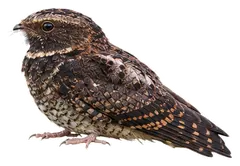 Tawny-collared NightjarAntrostomus salvini
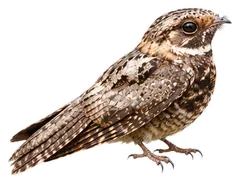 Yucatan NightjarAntrostomus badius
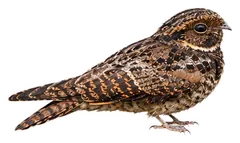 Silky-tailed NightjarAntrostomus sericocaudatus
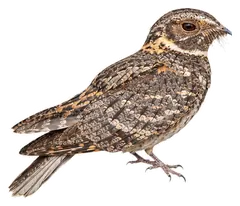 Buff-collared NightjarAntrostomus ridgwayi
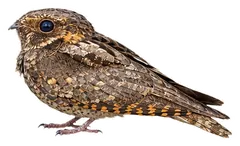 Eastern Whip-poor-willAntrostomus vociferus
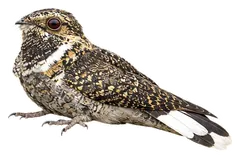 Mexican Whip-poor-willAntrostomus arizonae
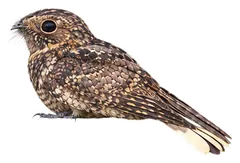 Puerto Rican NightjarAntrostomus noctitherus
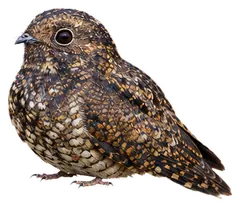 Dusky NightjarAntrostomus saturatus
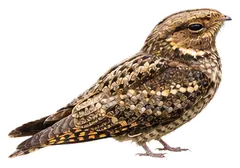
Download illustration
Free to use with credit: “Illustration: Bird Album (birdalbum.com)”. Drawn by AI from a reference photo by John Brush. ↗
Heard it but can't see it? Mingji identifies birds by sound and photo, on your phone.
In other languages
- EnglishChuck-will's-widow
- 简体中文卡氏夜鹰
- 繁體中文加羅林夜鷹
- 日本語チャックウィルヨタカ
- DeutschCarolinanachtschwalbe
- FrançaisEngoulevent de Caroline
- EspañolChotacabras de la Carolina
- Portuguêsnoitibó-carolino
- ItalianoSucciacapre della Carolina
- NederlandsChuck Will's Widow
- РусскийКаролинский козодой
- Svenskakarolinanattskärra
- DanskCarolinanatravn
- Polskilelkowiec karoliński