 Bird Album
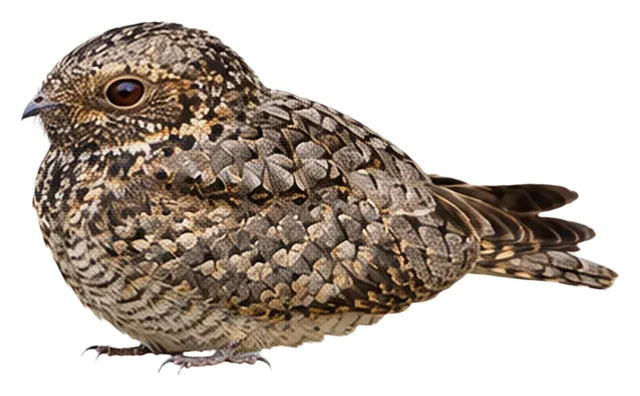
Common Poorwill
Phalaenoptilus nuttallii (Audubon, 1844)
48 gWeight
The common poorwill (Phalaenoptilus nuttallii) is a nocturnal bird of the family Caprimulgidae, the nightjars.
Busiest months: April–May · Most records: United States, Canada, Mexico
Where and when it's recorded

Common Poorwill has been recorded at 109 of the 8,171 birding hotspots we track, in 3 countries and regions.
Records by month Northern Hemisphere
Where it's recorded most
- Madera Canyon – Proctor Rd.United States831 records
- Irvine Regional ParkUnited States552 records
- Santa Margarita Ranch (LTC 079)United States481 records
More places
- Davis Mountains SPUnited States473 records
- PortalUnited States372 records
- Madera Canyon – Santa Rita LodgeUnited States335 records
- Intermountain Bird Observatory at Lucky PeakUnited States312 records
- Catalina SPUnited States311 records
- Portal – Cave Creek RanchUnited States275 records
- Commons Ford Ranch Metro ParkUnited States271 records
Countries and regions with the most records
eBird records via GBIF up to 2024-12-31. A record means someone listed it; more records partly mean more birders, not more birds.
About
The common poorwill (Phalaenoptilus nuttallii) is a nocturnal bird of the family Caprimulgidae, the nightjars. It is found from British Columbia and southeastern Alberta, through the western United States to northern Mexico. The bird's habitat is dry, open areas with grasses or shrubs, and even stony desert slopes with very little vegetation.
Excerpt from Wikipedia, CC BY-SA 4.0 · authors · Read more on Wikipedia
Questions
How big is the Common Poorwill?
The Common Poorwill weighs around 48 g.
Where does the Common Poorwill live?
Its breeding range: North America, Middle America: southwestern Canada to northern Mexico. It is most often recorded in United States, Canada and Mexico.
When is the best time to see the Common Poorwill?
At the hotspots we track, it is recorded most in April and May (Northern Hemisphere).
Is the Common Poorwill endangered?
The IUCN Red List classifies the Common Poorwill as Least Concern.
What does the Common Poorwill eat?
Main food: Insects & other invertebrates.
What family is the Common Poorwill in?
It belongs to the family Nightjars (Caprimulgidae), order Caprimulgiformes.
At a glance
- Weight
- 48 g
- Habitat
- Shrubland
- Diet
- Insects & other invertebrates
- Lifestyle
- Varied
- Migration
- Partial migrant
- Conservation
- Least Concern
More measurements
- Wing
- 144 mm
- Tail
- 85 mm
- Bill
- 14 mm
- Tarsus
- 17 mm
Averages from the AVONET dataset; length from field guides where available.
Range
North America, Middle America: southwestern Canada to northern Mexico
Breeding range, IOC World Bird List 15.2
Classification
- Order
- Caprimulgiformes
- Family
- Nightjars Caprimulgidae
- Genus
- Phalaenoptilus
More from the family Nightjars
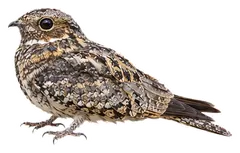 Spotted NightjarEurostopodus argus
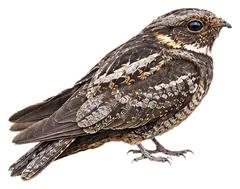 White-throated NightjarEurostopodus mystacalis
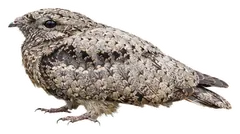 Solomons NightjarEurostopodus nigripennis
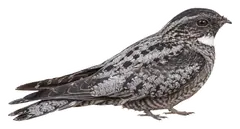 New Caledonian NightjarEurostopodus exul
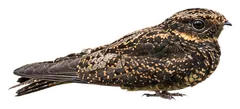 Satanic NightjarEurostopodus diabolicus
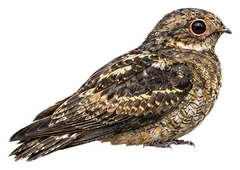 Papuan NightjarEurostopodus papuensis
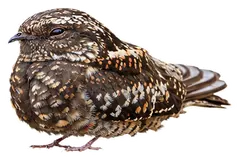 Archbold's NightjarEurostopodus archboldi
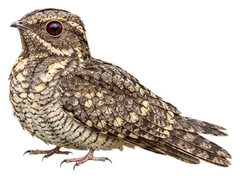 Malaysian Eared NightjarLyncornis temminckii
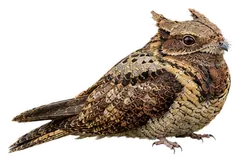 Great Eared NightjarLyncornis macrotis
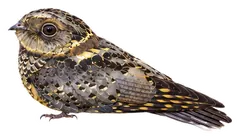 Collared NightjarGactornis enarratus
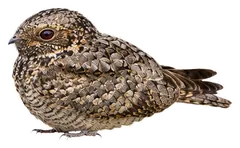
Download illustration
Free to use with credit: “Illustration: Bird Album (birdalbum.com)”. Drawn by AI from a reference photo by Ken-ichi Ueda. ↗
Heard it but can't see it? Mingji identifies birds by sound and photo, on your phone.
In other languages
- EnglishCommon Poorwill
- 简体中文北美小夜鹰
- 繁體中文弱夜鷹
- 日本語プアーウィルヨタカ
- DeutschWinternachtschwalbe
- FrançaisEngoulevent de Nuttall
- EspañolChotacabras pachacua
- Portuguêsnoitibó-de-garganta-branca
- ItalianoSucciacapre di Nuttall
- NederlandsPoorwill
- РусскийСпящий козодой
- Svenskadvalnattskärra
- DanskAmerikansk Poorwill
- Polskilelkowiec zimowy