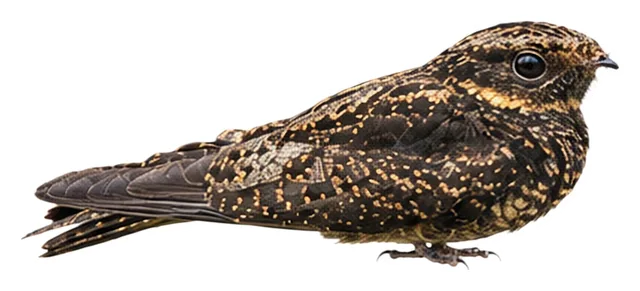
Satanic Nightjar
Eurostopodus diabolicus Stresemann, 1931
27 cmLength104 gWeight
The Satanic nightjar (Eurostopodus diabolicus), also Heinrich's nightjar, satanic eared-nightjar, Sulawesi eared-nightjar, Satanic goatsucker or diabolical nightjar is a mid-sized, spotted, dark brown nightjar endemic to the Indonesian island of Sulawesi.
Busiest months: September · Most records: Indonesia
Where and when it's recorded
Busiest months: September · Most records: Indonesia

Satanic Nightjar has been recorded at 7 of the 8,276 birding hotspots we track, in 1 country or region.
Records by month Southern Hemisphere
Where it's recorded most
- Lore Lindu NPIndonesia97 records
- Lore Lindu NP – Lake Tambing vicinityIndonesia13 records
- Gunung MahawuIndonesia6 records
More places
- Gunung MahawuIndonesia1 record
- Dumoga-Bone (Bogani Nani Wartabone) NP – TambunIndonesia1 record
- Tangkoko Batuangas NR – overlookIndonesia1 record
- Tangkoko Batuangus NR – Forest andIndonesia1 record
Countries and regions with the most records
eBird records via GBIF up to 2024-12-31. A record means someone listed it; more records partly mean more birders, not more birds.
About
The Satanic nightjar (Eurostopodus diabolicus), also Heinrich's nightjar, satanic eared-nightjar, Sulawesi eared-nightjar, Satanic goatsucker or diabolical nightjar is a mid-sized, spotted, dark brown nightjar endemic to the Indonesian island of Sulawesi. The species was discovered in 1931 by Gerd Heinrich, a German natural historian who collected a single female holotype from Mount Klabat on the Minahasa peninsula of Northern Sulawesi.
Excerpt from Wikipedia, CC BY-SA 4.0 · authors · Read more on Wikipedia
Questions
How big is the Satanic Nightjar?
The Satanic Nightjar is about 27 cm long and weighs around 104 g.
Where does the Satanic Nightjar live?
Its breeding range: Australasia: montane northern, central Sulawesi. It is most often recorded in Indonesia.
When is the best time to see the Satanic Nightjar?
At the hotspots we track, it is recorded most in September (Southern Hemisphere).
Is the Satanic Nightjar endangered?
The IUCN Red List classifies the Satanic Nightjar as Least Concern.
What does the Satanic Nightjar eat?
Main food: Insects & other invertebrates.
What family is the Satanic Nightjar in?
It belongs to the family Nightjars (Caprimulgidae), order Caprimulgiformes.
At a glance
- Length
- 27 cm
- Weight
- 104 g
- Habitat
- Forest
- Diet
- Insects & other invertebrates
- Lifestyle
- Feeds in the air
- Migration
- Resident (barely migrates)
- Conservation
- Least Concern
More measurements
- Wing
- 200 mm
- Tail
- 130 mm
- Bill
- 23 mm
- Tarsus
- 14 mm
Averages from the AVONET dataset; length from field guides where available.
Range
Australasia: montane northern, central Sulawesi
Breeding range, IOC World Bird List 15.2
Classification
- Order
- Caprimulgiformes
- Family
- Nightjars Caprimulgidae
- Genus
- Eurostopodus
Other birds in the genus Eurostopodus
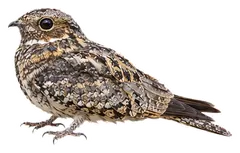 Spotted NightjarEurostopodus argus
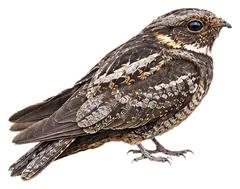 White-throated NightjarEurostopodus mystacalis
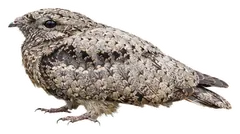 Solomons NightjarEurostopodus nigripennis
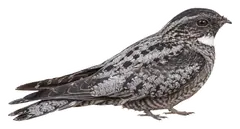 New Caledonian NightjarEurostopodus exul
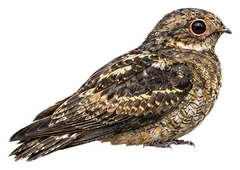 Papuan NightjarEurostopodus papuensis
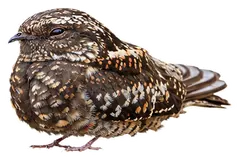 Archbold's NightjarEurostopodus archboldi
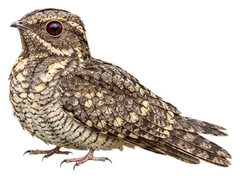 Malaysian Eared NightjarLyncornis temminckii
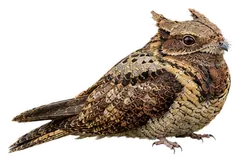 Great Eared NightjarLyncornis macrotis
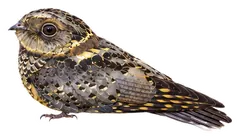 Collared NightjarGactornis enarratus
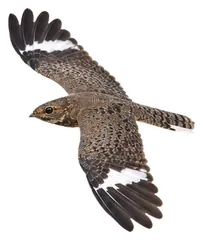 Nacunda NighthawkChordeiles nacunda
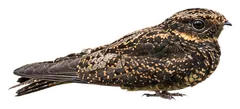
Download illustration
Free to use with credit: “Illustration: Bird Album (birdalbum.com)”. Drawn by AI from a reference photo by David Beadle. ↗
Heard it but can't see it? Mingji identifies birds by sound and photo, on your phone.
In other languages
- EnglishSatanic Nightjar
- 简体中文环颈毛腿夜鹰
- 繁體中文猛毛腿夜鷹
- 日本語セレベスヒゲナシヨタカ
- DeutschTeufelsnachtschwalbe
- FrançaisEngoulevent satanique
- EspañolChotacabras diabólico
- Portuguêsnoitibó-satânico
- ItalianoSucciacapre satanico
- NederlandsDuivelsnachtzwaluw
- РусскийСатанинский козодой
- Svenskadjävulsnattskärra
- DanskSulawesi Hornnatravn
- Polskirogatnik diaboliczny