 Bird Album
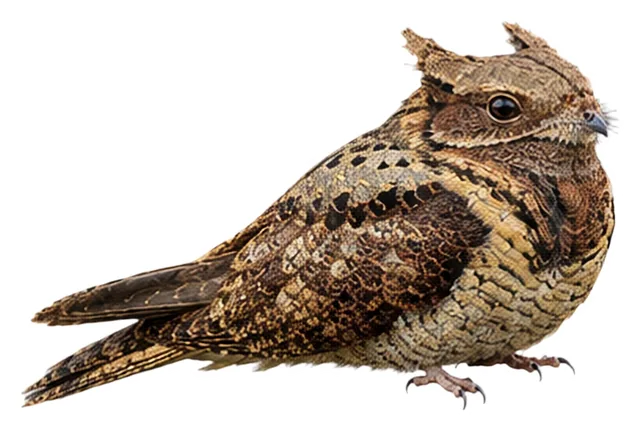
Great Eared Nightjar
Lyncornis macrotis (Vigors, 1831)
≈34 cmLength141 gWeight
It has two long tufts of ear-coverts on the head, often held flat.
Busiest months: February–March · Most records: Philippines, Vietnam, Thailand
How to identify
Field marks
- Long tufts of ear-coverts, often held flat
- A single white band across the throat
- Long wings and tail with barring
- No white on either wings or tail
Voice
A sharp “tsiik”, followed after a pause by a two-syllable “ba-haaww”.
Where and when it's recorded

Great Eared Nightjar has been recorded at 116 of the 8,171 birding hotspots we track, in 10 countries and regions.
Records by month Northern Hemisphere
Where it's recorded most
- Cat Tien NPVietnam604 records
- Khao Yai NPThailand398 records
- Thattekkad Bird SanctuaryIndia354 records
More places
- Cat Tien National Park – HQVietnam259 records
- Subic Bay – Nabasan TrailPhilippines243 records
- Tangkoko Batuangus NR – Forest andIndonesia228 records
- Mt. Kitanglad Range Natural Park – Del Monte LodgePhilippines146 records
- Khao Yai NP – headquarters vicinityThailand140 records
- Subic BayPhilippines136 records
- Raja Sikatuna National ParkPhilippines129 records
Countries and regions with the most records
eBird records via GBIF up to 2024-12-31. A record means someone listed it; more records partly mean more birders, not more birds.
About
The great eared nightjar (Lyncornis macrotis) is a species of nightjar in the genus Lyncornis. It is found in southwest India and in parts of Southeast Asia. This very large nightjar has long barred wings, a barred tail and long ear-tufts which are often recumbent.
Excerpt from Wikipedia, CC BY-SA 4.0 · authors · Read more on Wikipedia
Questions
How big is the Great Eared Nightjar?
The Great Eared Nightjar is about ≈34 cm long and weighs around 141 g.
Where does the Great Eared Nightjar live?
Its breeding range: Oriental, Australasia: widespread; also Sulawesi. It is most often recorded in Philippines, Vietnam and Thailand.
When is the best time to see the Great Eared Nightjar?
At the hotspots we track, it is recorded most in February and March (Northern Hemisphere).
Is the Great Eared Nightjar endangered?
The IUCN Red List classifies the Great Eared Nightjar as Least Concern.
What does the Great Eared Nightjar eat?
Main food: Insects & other invertebrates.
What family is the Great Eared Nightjar in?
It belongs to the family Nightjars (Caprimulgidae), order Caprimulgiformes.
At a glance
- Length
- ≈34 cm
- Weight
- 141 g
- Habitat
- Forest
- Diet
- Insects & other invertebrates
- Lifestyle
- Feeds in the air
- Migration
- Resident (barely migrates)
- Conservation
- Least Concern
More measurements
- Wing
- 266 mm
- Tail
- 176 mm
- Bill
- 17 mm
- Tarsus
- 18 mm
Averages from the AVONET dataset; length from field guides where available.
Range
Oriental, Australasia: widespread; also Sulawesi
Breeding range, IOC World Bird List 15.2
Subspecies · 1
- Lyncornis macrotis cerviniceps Bangladesh and ne India to s China, Indochina and n Malay Pen.
Classification
- Order
- Caprimulgiformes
- Family
- Nightjars Caprimulgidae
- Genus
- Lyncornis
Other birds in the genus Lyncornis
 Malaysian Eared NightjarLyncornis temminckii
 Spotted NightjarEurostopodus argus
 White-throated NightjarEurostopodus mystacalis
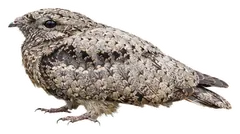 Solomons NightjarEurostopodus nigripennis
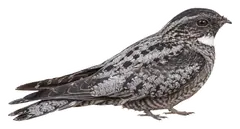 New Caledonian NightjarEurostopodus exul
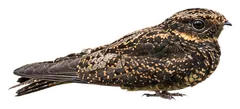 Satanic NightjarEurostopodus diabolicus
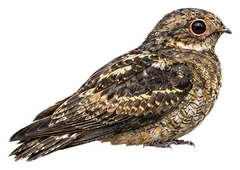 Papuan NightjarEurostopodus papuensis
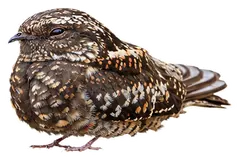 Archbold's NightjarEurostopodus archboldi
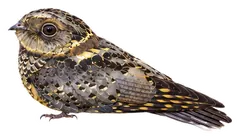 Collared NightjarGactornis enarratus
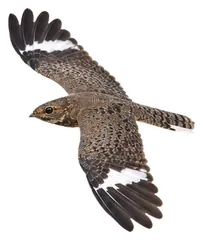 Nacunda NighthawkChordeiles nacunda
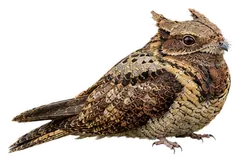
Download illustration
Free to use with credit: “Illustration: Bird Album (birdalbum.com)”. Drawn by AI from a reference photo by Chien Lee. ↗
Heard it but can't see it? Mingji identifies birds by sound and photo, on your phone.
In other languages
- EnglishGreat Eared Nightjar
- 简体中文毛腿耳夜鹰
- 繁體中文毛腿夜鷹
- 日本語オオミミヨタカ
- DeutschRiesennachtschwalbe
- FrançaisEngoulevent oreillard
- EspañolChotacabras orejudo
- Portuguêsnoitibó-orelhudo
- ItalianoSucciacapre orecchiuto maggiore
- NederlandsGrote Nachtzwaluw
- РусскийГигантский рогатень
- Svenskastörre öronnattskärra
- DanskStor Hornnatravn
- Polskirogatnik duży