 Bird Album
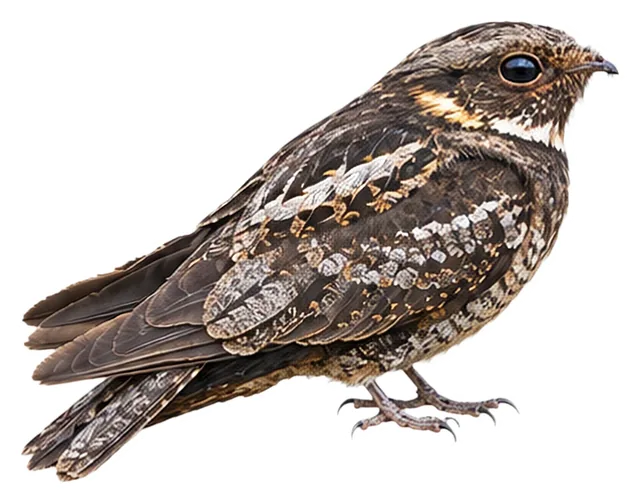
White-throated Nightjar
Eurostopodus mystacalis (Temminck, 1826)
134 gWeight
The white-throated nightjar or white-throated eared nightjar (Eurostopodus mystacalis) is a species of nightjar in the family Caprimulgidae.
Busiest months: November–January · Most records: Australia, Papua New Guinea, Indonesia
Where and when it's recorded

White-throated Nightjar has been recorded at 56 of the 8,171 birding hotspots we track, in 3 countries and regions.
Records by month Southern Hemisphere
Where it's recorded most
- Bunyip State ParkAustralia226 records
- Daintree Village Boat CruiseAustralia91 records
- Gold Creek ReservoirAustralia66 records
More places
- Lake Samsonvale – Golds Scrub LaneAustralia65 records
- Lake Samsonvale – Postmans TrackAustralia62 records
- Nature Refuge Hawkesbury RoadAustralia54 records
- Shelley Road ParkAustralia26 records
- Chiltern-Mt Pilot National Park – ChilternAustralia19 records
- Lake ManchesterAustralia15 records
- Partridge CreekAustralia14 records
Countries and regions with the most records
eBird records via GBIF up to 2024-12-31. A record means someone listed it; more records partly mean more birders, not more birds.
About
The white-throated nightjar or white-throated eared nightjar (Eurostopodus mystacalis) is a species of nightjar in the family Caprimulgidae. It is endemic to eastern Australia; it is a non-breeding winter visitor in Papua New Guinea. Its natural habitat is subtropical or tropical dry forests.
Excerpt from Wikipedia, CC BY-SA 4.0 · authors · Read more on Wikipedia
Questions
How big is the White-throated Nightjar?
The White-throated Nightjar weighs around 134 g.
Where does the White-throated Nightjar live?
Its breeding range: Australasia: northeastern Cape York Peninsula, northeastern Queensland to south-central Victoria (eastern Australia). It is most often recorded in Australia, Papua New Guinea and Indonesia.
When is the best time to see the White-throated Nightjar?
At the hotspots we track, it is recorded most in January, November and December (Southern Hemisphere).
Is the White-throated Nightjar endangered?
The IUCN Red List classifies the White-throated Nightjar as Least Concern.
What does the White-throated Nightjar eat?
Main food: Insects & other invertebrates.
What family is the White-throated Nightjar in?
It belongs to the family Nightjars (Caprimulgidae), order Caprimulgiformes.
At a glance
- Weight
- 134 g
- Habitat
- Forest
- Diet
- Insects & other invertebrates
- Lifestyle
- Feeds in the air
- Migration
- Resident (barely migrates)
- Conservation
- Least Concern
More measurements
- Wing
- 252 mm
- Tail
- 162 mm
- Bill
- 18 mm
- Tarsus
- 20 mm
Averages from the AVONET dataset; length from field guides where available.
Range
Australasia: northeastern Cape York Peninsula, northeastern Queensland to south-central Victoria (eastern Australia)
Breeding range, IOC World Bird List 15.2
Classification
- Order
- Caprimulgiformes
- Family
- Nightjars Caprimulgidae
- Genus
- Eurostopodus
Other birds in the genus Eurostopodus
 Spotted NightjarEurostopodus argus
 Solomons NightjarEurostopodus nigripennis
 New Caledonian NightjarEurostopodus exul
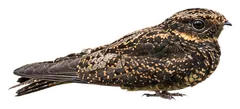 Satanic NightjarEurostopodus diabolicus
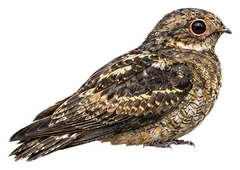 Papuan NightjarEurostopodus papuensis
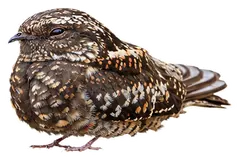 Archbold's NightjarEurostopodus archboldi
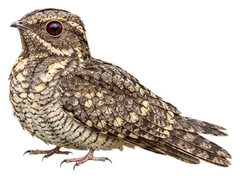 Malaysian Eared NightjarLyncornis temminckii
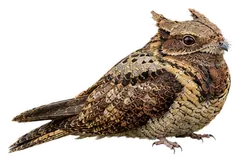 Great Eared NightjarLyncornis macrotis
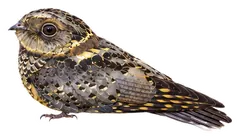 Collared NightjarGactornis enarratus
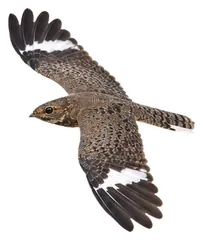 Nacunda NighthawkChordeiles nacunda
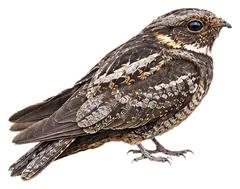
Download illustration
Free to use with credit: “Illustration: Bird Album (birdalbum.com)”. Drawn by AI from reference photos. ↗
Heard it but can't see it? Mingji identifies birds by sound and photo, on your phone.
In other languages
- EnglishWhite-throated Nightjar
- 简体中文白喉毛腿夜鹰
- 繁體中文白喉毛腿夜鷹
- 日本語オオヒゲナシヨタカ
- DeutschBartnachtschwalbe
- FrançaisEngoulevent moustac
- EspañolChotacabras bigotudo
- Portuguêsnoitibó-de-bigodes
- ItalianoSucciacapre golabianca
- NederlandsBaardnachtzwaluw
- РусскийБелоусый козодой
- Svenskavitstrupig nattskärra
- DanskGråbrystet Hornnatravn
- Polskirogatnik białogardły