 Bird Album
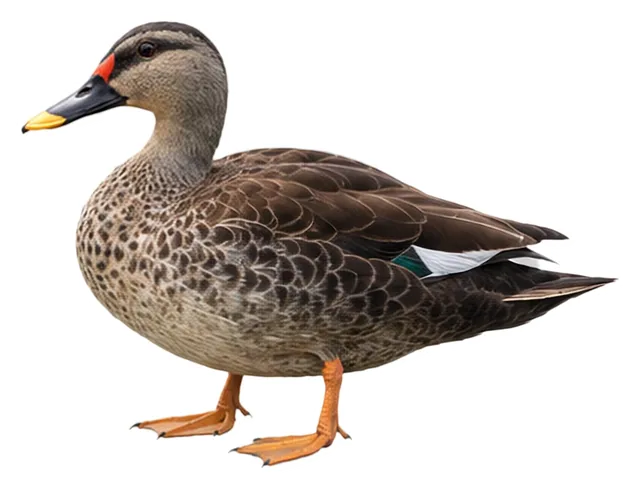
Indian Spot-billed Duck
Anas poecilorhyncha Forster, JR, 1781
55–63 cmLength69 cmWingspan1 kgWeight
This mainly gray duck has a paler head and neck, a black bill with a yellow tip, and a white stripe formed by the tertials along the side.
Busiest months: January–February · Most records: India, Cambodia, Thailand
Looks like Eastern Spot-billed Duck
How to identify
Field marks
- Bill black with a yellow tip
- White tertials form a single white stripe
- Head pale, with dark crown and eyestripe
- Throat and cheeks buff, legs and feet coral-red
Male, female and young
Female somewhat duller than male; juvenile browner and darker.
Voice
Both sexes have calls similar to those of Mallard.
Similar species
Where and when it's recorded

Indian Spot-billed Duck has been recorded at 285 of the 8,171 birding hotspots we track, in 13 countries and regions.
Records by month Northern Hemisphere
Where it's recorded most
- Saul Kere / Sowl KereIndia4,139 records
- Bharatpur – Keoladeo Ghana NPIndia4,030 records
- Wildlife Institute of IndiaIndia3,054 records
More places
- Changaram Wetlands – EzhupunnaIndia2,774 records
- Okhla Bird SanctuaryIndia2,661 records
- Hoskote / Hosakote KereIndia2,581 records
- Krishnampathi Lake, SeeranaickenpalayamIndia2,426 records
- Sultanpur National ParkIndia2,381 records
- Vetal Tekdi/HillIndia2,349 records
- Wildlife Institute of India (WII) – Nature Trail & LakeIndia2,090 records
Countries and regions with the most records
eBird records via GBIF up to 2024-12-31. A record means someone listed it; more records partly mean more birders, not more birds.
About
The Indian spot-billed duck (Anas poecilorhyncha) is a species of large dabbling duck that is a non-migratory breeding duck throughout freshwater wetlands in the Indian subcontinent. The name is derived from the red spot at the base of the bill that is found in the mainland Indian population.
Excerpt from Wikipedia, CC BY-SA 4.0 · authors · Read more on Wikipedia
Questions
How big is the Indian Spot-billed Duck?
The Indian Spot-billed Duck is about 55–63 cm long, with a wingspan of 69 cm and weighs around 1 kg.
Where does the Indian Spot-billed Duck live?
Its breeding range: Oriental: southern, Southeast Asia from Pakistan, south to Sri Lanka, east to Laos and north to southwestern Yunnan. It is most often recorded in India, Cambodia and Thailand.
When is the best time to see the Indian Spot-billed Duck?
At the hotspots we track, it is recorded most in January and February (Northern Hemisphere).
Is the Indian Spot-billed Duck endangered?
The IUCN Red List classifies the Indian Spot-billed Duck as Least Concern.
What does the Indian Spot-billed Duck eat?
Main food: Aquatic plants.
What family is the Indian Spot-billed Duck in?
It belongs to the family Ducks, Geese, Swans (Anatidae), order Anseriformes.
At a glance
- Length
- 55–63 cm
- Wingspan
- 69 cm
- Weight
- 1 kg
- Habitat
- Wetland
- Diet
- Aquatic plants
- Lifestyle
- On the water surface
- Migration
- Partial migrant
- Conservation
- Least Concern
More measurements
- Wing
- 272 mm
- Tail
- 100 mm
- Bill
- 62 mm
- Tarsus
- 44 mm
Averages from the AVONET dataset; length from field guides where available.
Range
Oriental: southern, Southeast Asia from Pakistan, south to Sri Lanka, east to Laos and north to southwestern Yunnan
Breeding range, IOC World Bird List 15.2
Subspecies · 1
- Anas poecilorhyncha haringtoni Myanmar to s China and Laos
Classification
- Order
- Anseriformes
- Family
- Ducks, Geese, Swans Anatidae
- Genus
- Anas
Other birds in the genus Anas
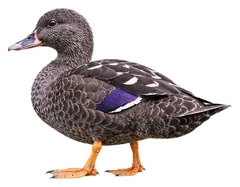 African Black DuckAnas sparsa
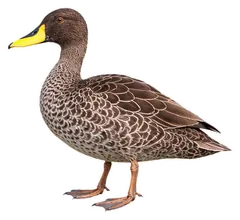 Yellow-billed DuckAnas undulata
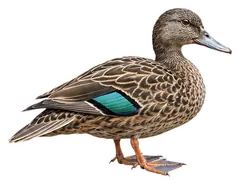 Meller's DuckAnas melleri
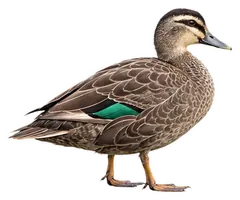 Pacific Black DuckAnas superciliosa
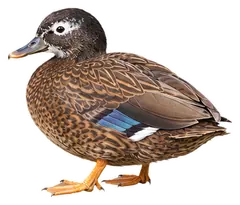 Laysan DuckAnas laysanensis
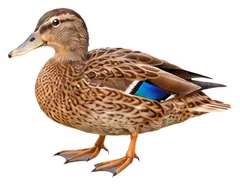 Hawaiian DuckAnas wyvilliana
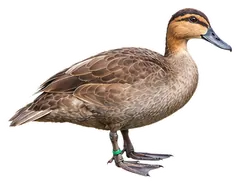 Philippine DuckAnas luzonica
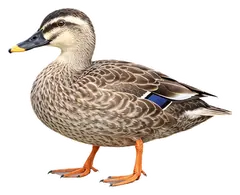 Eastern Spot-billed DuckAnas zonorhyncha
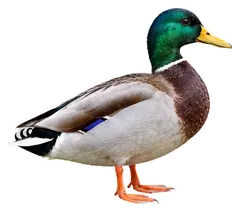 MallardAnas platyrhynchos
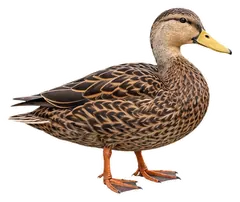 Mottled DuckAnas fulvigula
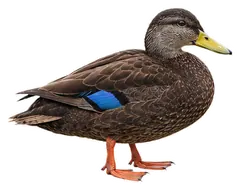 American Black DuckAnas rubripes
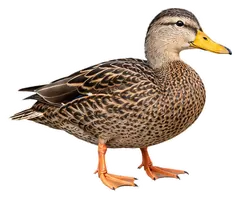 Mexican DuckAnas diazi
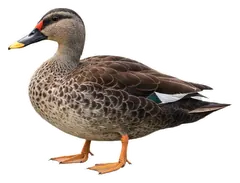
Download illustration
Free to use with credit: “Illustration: Bird Album (birdalbum.com)”. Drawn by AI from a reference photo by Ashim Gogoi. ↗
Heard it but can't see it? Mingji identifies birds by sound and photo, on your phone.
In other languages
- EnglishIndian Spot-billed Duck
- 简体中文印缅斑嘴鸭
- 繁體中文印緬花嘴鴨
- 日本語アカボシカルガモ
- DeutschIndien-Fleckschnabelente
- FrançaisCanard à bec tacheté
- EspañolÁnade picopinto indio
- Portuguêspato-de-bico-pintado-indiano
- ItalianoGermano beccomacchiato
- NederlandsIndische Vlekbekeend
- РусскийПестроносая кряква
- Svenskafläcknäbbad and
- DanskPletnæbbet And
- Polskikaczka pstrodzioba