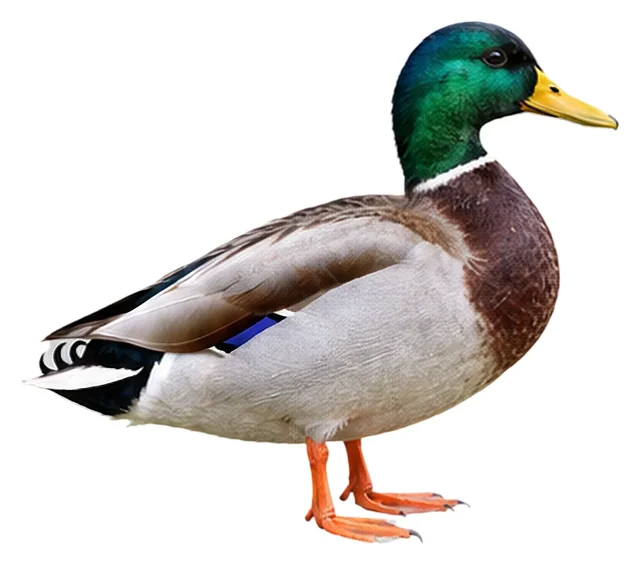
Mallard
Anas platyrhynchos Linnaeus, 1758
50–65 cmLength88 cmWingspan843 gWeight
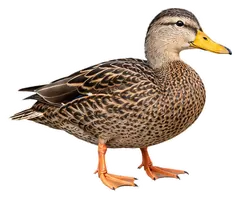
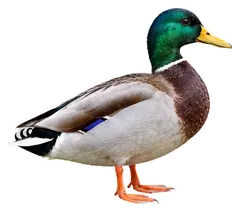
The male has a bright green head, while the female is covered in rufous spots.
Busiest months: May · Most records: United States, Canada, United Kingdom
How to identify
Field marks
- Male in the breeding season has a green head and white collar
- Both sexes have a purple-blue speculum edged with white
- Female mottled rufous, with pale yellow cheeks, supercilium and throat
- Male has a yellow-orange bill with a black tip
Male, female and young
Male in the breeding season has a green head; female mainly mottled rufous. Male has a yellow-orange bill with a black tip; female’s bill is usually darker, ranging from black to mottled orange-brown. Adult male changes into non-breeding eclipse plumage at the start of the summer molt, and changes back at its end.
Voice
Female gives a deep “quack”, often in a series of 2–10 calls that fade from loud to soft; male’s call is lower and quieter.
Where and when it's recorded
Busiest months: May · Most records: United States, Canada, United Kingdom

Mallard has been recorded at 4,031 of the 8,276 birding hotspots we track, in 143 countries and regions.
Records by month Northern Hemisphere
Where it's recorded most
- Montrose Point Bird Sanctuary, Lincoln Park, ChicagoUnited States40,921 records
- Prospect ParkUnited States36,030 records
- Central ParkUnited States34,973 records
More places
- Parker River NWRUnited States31,852 records
- Cape Island – South Cape May MeadowsUnited States26,754 records
- Union Bay Natural Area/Montlake FillUnited States25,231 records
- Cape Island – Cape May Point SPUnited States23,316 records
- John Heinz NWR – impoundmentUnited States22,755 records
- Edwin B. Forsythe NWRUnited States22,425 records
- Toronto – Colonel Samuel Smith ParkCanada22,326 records
Countries and regions with the most records
eBird records via GBIF up to 2024-12-31. A record means someone listed it; more records partly mean more birders, not more birds.
About
The mallard or wild duck (Anas platyrhynchos) is a dabbling duck that breeds throughout temperate and subtropical North America, Eurasia, and North Africa. It has been introduced to New Zealand, Australia, Peru, Brazil, Uruguay, Argentina, Chile, Colombia, the Falkland Islands, and South Africa. Belonging to the subfamily Anatinae of the waterfowl family Anatidae, mallards live in wetlands, eat water plants and small animals, and are social animals preferring to congregate in groups or flocks of varying sizes.
Excerpt from Wikipedia, CC BY-SA 4.0 · authors · Read more on Wikipedia
Questions
How big is the Mallard?
The Mallard is about 50–65 cm long, with a wingspan of 88 cm and weighs around 843 g.
Where does the Mallard live?
Its breeding range: North America, Palearctic: widespread. It is most often recorded in United States, Canada and United Kingdom.
When is the best time to see the Mallard?
At the hotspots we track, it is recorded most in May (Northern Hemisphere).
Is the Mallard endangered?
The IUCN Red List classifies the Mallard as Least Concern.
What does the Mallard eat?
Main food: Aquatic plants.
What family is the Mallard in?
It belongs to the family Ducks, Geese, Swans (Anatidae), order Anseriformes.
At a glance
- Length
- 50–65 cm
- Wingspan
- 88 cm
- Weight
- 843 g
- Habitat
- Wetland
- Diet
- Aquatic plants
- Lifestyle
- On the water surface
- Migration
- Partial migrant
- Conservation
- Least Concern
More measurements
- Wing
- 263 mm
- Tail
- 87 mm
- Bill
- 58 mm
- Tarsus
- 41 mm
Averages from the AVONET dataset; length from field guides where available.
Range
North America, Palearctic: widespread
Breeding range, IOC World Bird List 15.2
Classification
- Order
- Anseriformes
- Family
- Ducks, Geese, Swans Anatidae
- Genus
- Anas
Other birds in the genus Anas
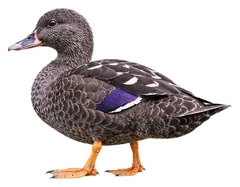 African Black DuckAnas sparsa
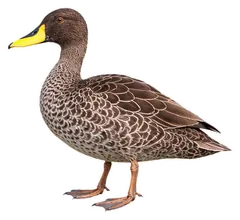 Yellow-billed DuckAnas undulata
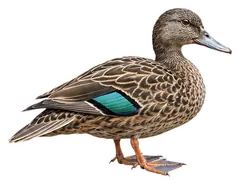 Meller's DuckAnas melleri
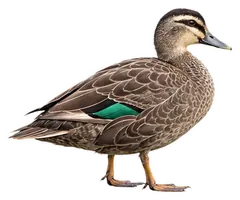 Pacific Black DuckAnas superciliosa
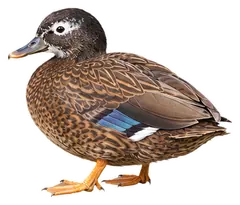 Laysan DuckAnas laysanensis
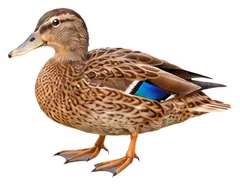 Hawaiian DuckAnas wyvilliana
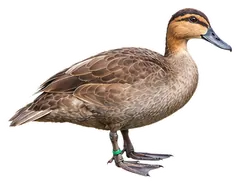 Philippine DuckAnas luzonica
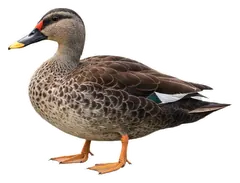 Indian Spot-billed DuckAnas poecilorhyncha
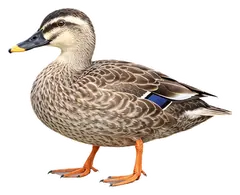 Eastern Spot-billed DuckAnas zonorhyncha
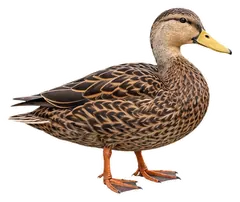 Mottled DuckAnas fulvigula
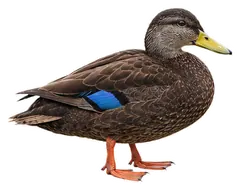 American Black DuckAnas rubripes
 Mexican DuckAnas diazi
Download illustration
Free to use with credit: “Illustration: Bird Album (birdalbum.com)”. Drawn by AI from a reference photo by This picture was realized by Richard Bartz by using a Canon EF 70-300mm f/4-5.6 IS USM Lens. ↗

Heard it but can't see it? Mingji identifies birds by sound and photo, on your phone.