 Bird Album
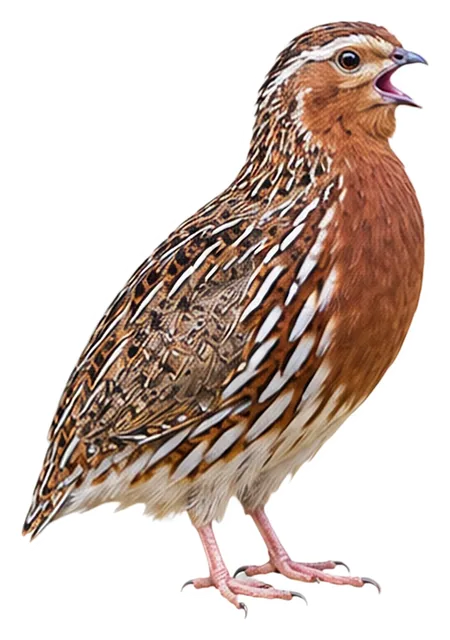
Japanese Quail
Coturnix japonica Temminck & Schlegel, 1848
≈18 cmLength95 gWeight
It is a brown quail often hidden in dense grass, with rufous cheeks and breast in the male.
Busiest months: May · Most records: China, Russia, Mongolia
Looks like Common Quail
How to identify
Field marks
- Adults have mainly rufous feathers
- Male has dark rufous cheeks and breast
- Female has dark spots on the breast feathers
- Male has reddish-brown throat during the breeding season
Male, female and young
The male has a dark rufous breast without dark spots, and some have a white collar; the female has dark spots on the breast and creamy cheeks.
Voice
The typical call begins with two short notes, followed by a long trill.
Similar species
Where and when it's recorded
Busiest months: May · Most records: China, Russia, Mongolia

Japanese Quail has been recorded at 361 of the 8,276 birding hotspots we track, in 15 countries and regions.
Records by month Northern Hemisphere
Where it's recorded most
- Muravyevka ParkRussia394 records
- Nanpu MudflatChina226 records
- Nanhui DongtanChina187 records
More places
- Happy IslandChina163 records
- Sang YuanChina132 records
- Beidaihe [General Area]China113 records
- South Lake, YuhangChina104 records
- Long ValleyHong Kong (China)96 records
- Kinmen – Shagang RanchChina94 records
- Shahe ReservoirChina89 records
Countries and regions with the most records
eBird records via GBIF up to 2024-12-31. A record means someone listed it; more records partly mean more birders, not more birds.
About
The Japanese quail (Coturnix japonica), also known as the coturnix quail, is a species of Old World quail found in East Asia. First considered a subspecies of the common quail, it is now considered as a separate species. The Japanese quail has played an active role in the lives of humanity since the 12th century, and continues to play major roles in industry and scientific research.
Excerpt from Wikipedia, CC BY-SA 4.0 · authors · Read more on Wikipedia
Questions
How big is the Japanese Quail?
The Japanese Quail is about ≈18 cm long and weighs around 95 g.
Where does the Japanese Quail live?
Its breeding range: Palearctic: Mongolia and eastern Siberia, Japan and Korean Peninsula. It is most often recorded in China, Russia and Mongolia.
When is the best time to see the Japanese Quail?
At the hotspots we track, it is recorded most in May (Northern Hemisphere).
Is the Japanese Quail endangered?
The IUCN Red List classifies the Japanese Quail as Near Threatened.
What does the Japanese Quail eat?
Main food: Omnivore.
What family is the Japanese Quail in?
It belongs to the family Pheasants & Allies (Phasianidae), order Galliformes.
At a glance
- Length
- ≈18 cm
- Weight
- 95 g
- Habitat
- Grassland
- Diet
- Omnivore
- Lifestyle
- Active on the ground
- Migration
- Migratory
- Conservation
- Near Threatened
More measurements
- Wing
- 97 mm
- Tail
- 35 mm
- Bill
- 15 mm
- Tarsus
- 24 mm
Averages from the AVONET dataset; length from field guides where available.
Range
Palearctic: Mongolia and eastern Siberia, Japan and Korean Peninsula
Breeding range, IOC World Bird List 15.2
Classification
- Order
- Galliformes
- Family
- Pheasants & Allies Phasianidae
- Genus
- Coturnix
Other birds in the genus Coturnix
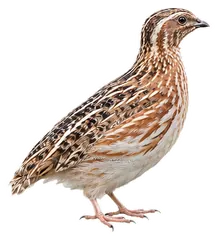 Common QuailCoturnix coturnix
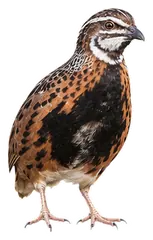 Harlequin QuailCoturnix delegorguei
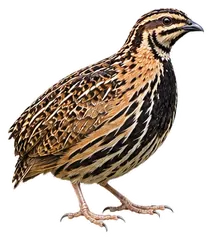 Rain QuailCoturnix coromandelica
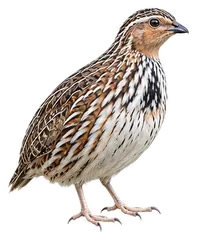 Stubble QuailCoturnix pectoralis
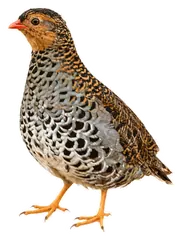 Udzungwa Forest PartridgeXenoperdix udzungwensis
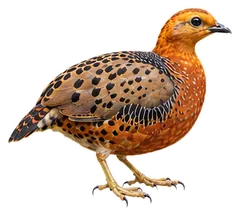 Ferruginous PartridgeCaloperdix oculeus
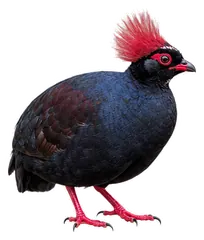 Crested PartridgeRollulus rouloul
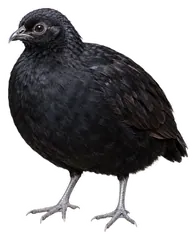 Black PartridgeMelanoperdix niger
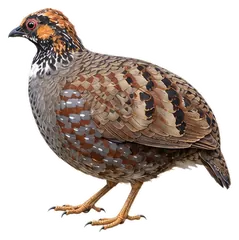 Hill PartridgeArborophila torqueola
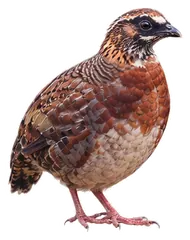 Sichuan PartridgeArborophila rufipectus
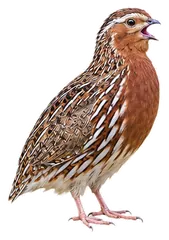
Download illustration
Free to use with credit: “Illustration: Bird Album (birdalbum.com)”. Drawn by AI from a reference photo by jimchurches. ↗
Heard it but can't see it? Mingji identifies birds by sound and photo, on your phone.