 Bird Album
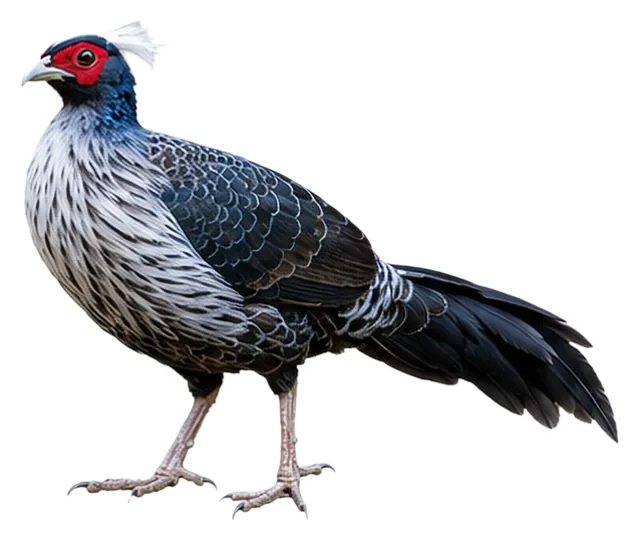
Kalij Pheasant
Lophura leucomelanos (Latham, 1790)
57–59 cmLength868 gWeight
The male is mainly blue-black with an upright crest on the crown.
Busiest months: February–April · Most records: India, Thailand, Nepal
Looks like Silver Pheasant
How to identify
Field marks
- Male mainly blue-black, with a purplish sheen on the blue-black back
- Upright crest on the crown, usually blue-black
- Males of most western and central subspecies have white on the rump or underparts
- Face bare and red; legs and feet gray
Male, female and young
Female mainly reddish-brown, paler on the breast and belly; some subspecies have pale feather edges that give a scaly appearance.
Similar species
Where and when it's recorded

Kalij Pheasant has been recorded at 143 of the 8,171 birding hotspots we track, in 9 countries and regions.
Records by month Northern Hemisphere
Where it's recorded most
- SattalIndia1,252 records
- Corbett NP – DhikalaIndia617 records
- Munsyari – Bheema WodeyarIndia495 records
More places
- PangotIndia422 records
- Corbett NPIndia340 records
- Dihing Patkai NP – SoraipungIndia299 records
- Kaeng Krachan NP – Bird's hideThailand286 records
- Dihing Patkai NP – SoraipungIndia285 records
- Manas NP – BanasbariIndia258 records
- Kaeng Krachan NPThailand244 records
Countries and regions with the most records
eBird records via GBIF up to 2024-12-31. A record means someone listed it; more records partly mean more birders, not more birds.
About
The kalij pheasant (Lophura leucomelanos), or simply kalij, is a pheasant found in forests and thickets, especially in the Himalayan foothills, from India, Nepal, Pakistan to western Thailand. Both sexes have a bare red face and greyish legs (the latter separating it from the red-legged silver pheasant).
Excerpt from Wikipedia, CC BY-SA 4.0 · authors · Read more on Wikipedia
Questions
How big is the Kalij Pheasant?
The Kalij Pheasant is about 57–59 cm long and weighs around 868 g.
Where does the Kalij Pheasant live?
Its breeding range: Oriental: northern Pakistan to western Thailand. It is most often recorded in India, Thailand and Nepal.
When is the best time to see the Kalij Pheasant?
At the hotspots we track, it is recorded most in February, March and April (Northern Hemisphere).
Is the Kalij Pheasant endangered?
The IUCN Red List classifies the Kalij Pheasant as Least Concern.
What does the Kalij Pheasant eat?
Main food: Omnivore.
What family is the Kalij Pheasant in?
It belongs to the family Pheasants & Allies (Phasianidae), order Galliformes.
At a glance
- Length
- 57–59 cm
- Weight
- 868 g
- Habitat
- Forest
- Diet
- Omnivore
- Lifestyle
- Active on the ground
- Migration
- Resident (barely migrates)
- Conservation
- Least Concern
More measurements
- Wing
- 212 mm
- Tail
- 222 mm
- Bill
- 36 mm
- Tarsus
- 67 mm
Averages from the AVONET dataset; length from field guides where available.
Range
Oriental: northern Pakistan to western Thailand
Breeding range, IOC World Bird List 15.2
Subspecies · 1
- Lophura leucomelanos lathami e Bhutan and s Tibet to n Myanmar
Classification
- Order
- Galliformes
- Family
- Pheasants & Allies Phasianidae
- Genus
- Lophura
Other birds in the genus Lophura
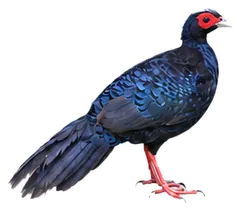 Edwards's PheasantLophura edwardsi
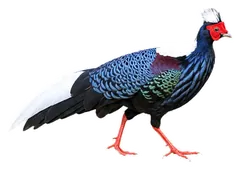 Swinhoe's PheasantLophura swinhoii
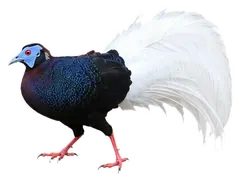 Bulwer's PheasantLophura bulweri
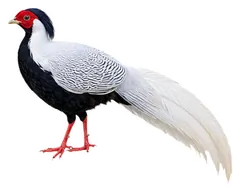 Silver PheasantLophura nycthemera
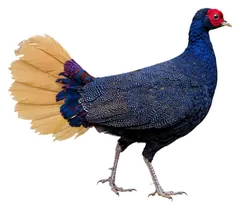 Malayan Crestless FirebackLophura erythrophthalma
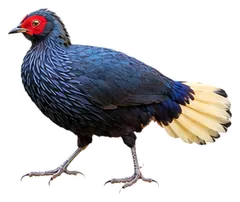 Bornean Crestless FirebackLophura pyronota
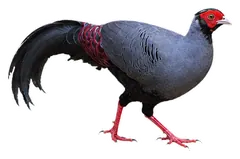 Siamese FirebackLophura diardi
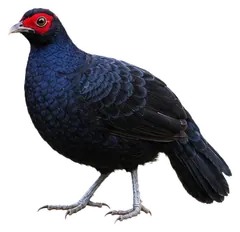 Salvadori's PheasantLophura inornata
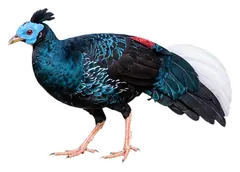 Malayan Crested FirebackLophura rufa
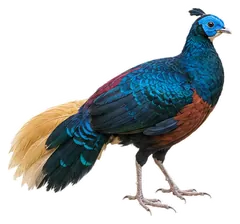 Bornean Crested FirebackLophura ignita
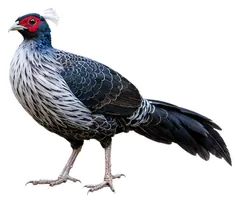
Download illustration
Free to use with credit: “Illustration: Bird Album (birdalbum.com)”. Drawn by AI from a reference photo by Avinash Bhagat. ↗
Heard it but can't see it? Mingji identifies birds by sound and photo, on your phone.