 Bird Album
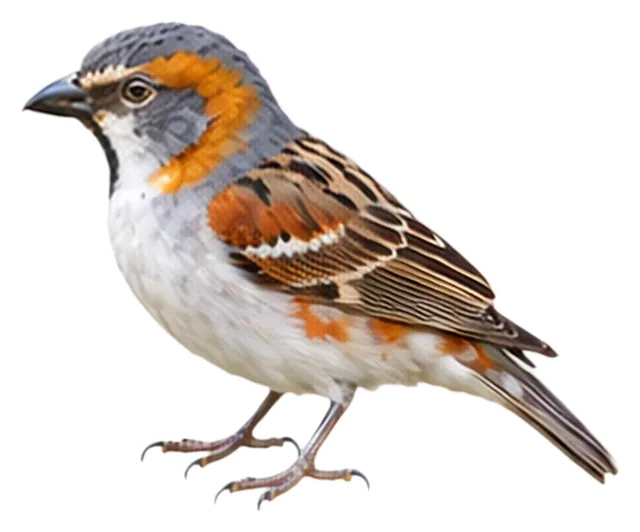
Kenya Sparrow
Passer rufocinctus Fischer, GA & Reichenow, 1884
28 gWeight
The Kenya sparrow (Passer rufocinctus), also known as the Kenya rufous sparrow, is a sparrow found in Kenya and Tanzania.
Busiest months: February, July–August and October–November · Most records: Kenya, Tanzania
Where and when it's recorded
Busiest months: February, July–August and October–November · Most records: Kenya, Tanzania

Kenya Sparrow has been recorded at 75 of the 8,276 birding hotspots we track, in 2 countries and regions.
Records by month Southern Hemisphere
Where it's recorded most
- Nairobi NPKenya1,837 records
- Lake Nakuru NPKenya725 records
- Ngorongoro Conservation Area – Ngorongoro CraterTanzania314 records
More places
- Serengeti NPTanzania270 records
- Ol Pejeta ConservancyKenya218 records
- Lewa Wildlife ConservancyKenya208 records
- Mpala Ranch and Research CentreKenya197 records
- Engikaret Lark PlainsTanzania162 records
- Naro Moru River LodgeKenya160 records
- Serengeti NP – SeroneraTanzania155 records
Countries and regions with the most records
eBird records via GBIF up to 2024-12-31. A record means someone listed it; more records partly mean more birders, not more birds.
About
The Kenya sparrow (Passer rufocinctus), also known as the Kenya rufous sparrow, is a sparrow found in Kenya and Tanzania. It tends to be found in dry wooded savannah and agricultural areas. Some authorities have lumped the great sparrow (P. motitensis), the Kenya sparrow, and the Socotra sparrow (P. insularis) into P. motitensis following Dowsett and Forbes-Watson (1993).
Excerpt from Wikipedia, CC BY-SA 4.0 · authors · Read more on Wikipedia
Questions
How big is the Kenya Sparrow?
The Kenya Sparrow weighs around 28 g.
Where does the Kenya Sparrow live?
Its breeding range: Africa: eastern African acacia savanna and settlements: southwestern, south-central Kenya and northern Tanzania. It is most often recorded in Kenya and Tanzania.
When is the best time to see the Kenya Sparrow?
At the hotspots we track, it is recorded most in February, July, August, October and November (Southern Hemisphere).
Is the Kenya Sparrow endangered?
The IUCN Red List classifies the Kenya Sparrow as Least Concern.
What does the Kenya Sparrow eat?
Main food: Seeds.
What family is the Kenya Sparrow in?
It belongs to the family Old World Sparrows, Snowfinches (Passeridae), order Passerines (Passeriformes).
At a glance
- Weight
- 28 g
- Habitat
- Woodland
- Diet
- Seeds
- Lifestyle
- Active on the ground
- Migration
- Resident (barely migrates)
- Conservation
- Least Concern
More measurements
- Wing
- 75 mm
- Tail
- 51 mm
- Bill
- 14 mm
- Tarsus
- 20 mm
Averages from the AVONET dataset; length from field guides where available.
Range
Africa: eastern African acacia savanna and settlements: southwestern, south-central Kenya and northern Tanzania
Breeding range, IOC World Bird List 15.2
Classification
- Order
- Passerines Passeriformes
- Family
- Old World Sparrows, Snowfinches Passeridae
- Genus
- Passer
Other birds in the genus Passer
 Cape SparrowPasser melanurus
 Chestnut SparrowPasser eminibey
 Kordofan SparrowPasser cordofanicus
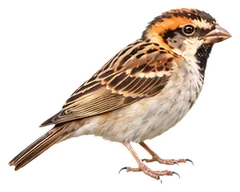 Shelley's SparrowPasser shelleyi
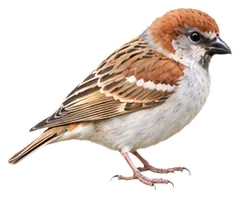 Great SparrowPasser motitensis
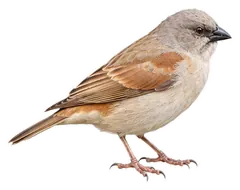 Northern Grey-headed SparrowPasser griseus
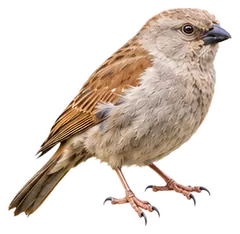 Swainson's SparrowPasser swainsonii
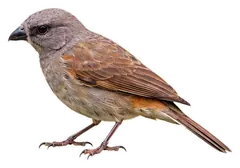 Swahili SparrowPasser suahelicus
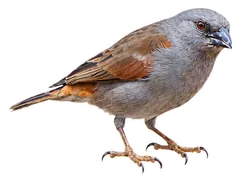 Parrot-billed SparrowPasser gongonensis
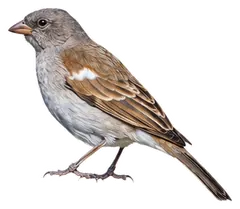 Southern Grey-headed SparrowPasser diffusus
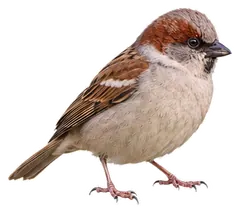 Sind SparrowPasser pyrrhonotus
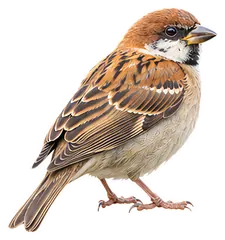 Russet SparrowPasser cinnamomeus
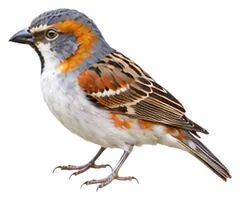
Download illustration
Free to use with credit: “Illustration: Bird Album (birdalbum.com)”. Drawn by AI from a reference photo by Ad Konings. ↗
Heard it but can't see it? Mingji identifies birds by sound and photo, on your phone.