 Bird Album
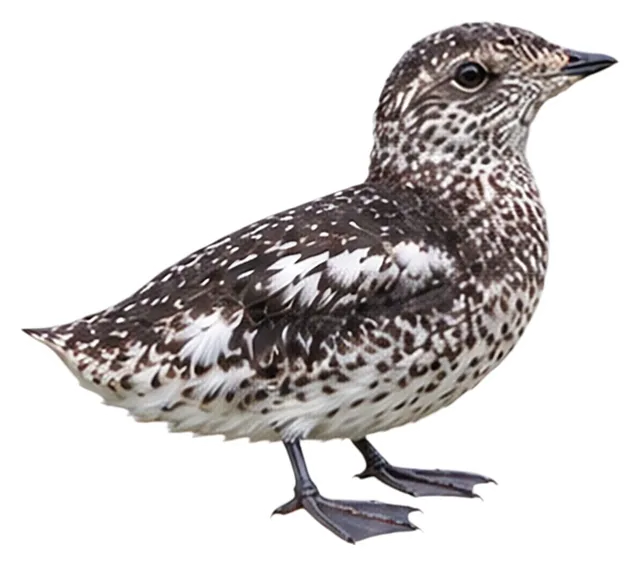
Kittlitz's Murrelet
Brachyramphus brevirostris (Vigors, 1829)
234 gWeight
Kittlitz's murrelet (Brachyramphus brevirostris) is a small alcid found in the waters off Alaska and Eastern Siberia.
Busiest months: September · Most records: United States, Russia
Where and when it's recorded
Busiest months: September · Most records: United States, Russia

Kittlitz's Murrelet has been recorded at 3 of the 8,276 birding hotspots we track, in 2 countries and regions.
Records by month Northern Hemisphere
Where it's recorded most
- GambellUnited States185 records
- MeynypilgynoRussia11 records
- St. Paul IslandUnited States5 records
Countries and regions with the most records
eBird records via GBIF up to 2024-12-31. A record means someone listed it; more records partly mean more birders, not more birds.
About
Kittlitz's murrelet (Brachyramphus brevirostris) is a small alcid found in the waters off Alaska and Eastern Siberia. This near threatened species is, like the closely related marbled murrelet, unusual for seabirds in not being colonial, nesting instead in isolated locations on mountain tops, where the nests were known to Native Americans for many years before skeptical ornithologists described and photographed them. It is a poorly known and little studied species, although concern over its status and that of the closely related marbled murrelet has led to a recent increase in research.
Excerpt from Wikipedia, CC BY-SA 4.0 · authors · Read more on Wikipedia
Questions
How big is the Kittlitz's Murrelet?
The Kittlitz's Murrelet weighs around 234 g.
Where does the Kittlitz's Murrelet live?
Its breeding range: Palearctic, North America: Arctic to subarctic northwest to northeastern North Pacific coasts: patchily from Wrangel Island (north of northeastern Siberia), Chukotka, northeastern Kamchatka, northern Sea of Okhotsk (eastern Russia); Bering Sea and Aleutian Islands, Gulf of Alaska to southeastern Alaska; nests up to 75 km inland. It is most often recorded in United States and Russia.
When is the best time to see the Kittlitz's Murrelet?
At the hotspots we track, it is recorded most in September (Northern Hemisphere).
Is the Kittlitz's Murrelet endangered?
The IUCN Red List classifies the Kittlitz's Murrelet as Near Threatened.
What does the Kittlitz's Murrelet eat?
Main food: Fish, shrimp & shellfish.
What family is the Kittlitz's Murrelet in?
It belongs to the family Auks (Alcidae), order Charadriiformes.
At a glance
- Weight
- 234 g
- Habitat
- Ocean
- Diet
- Fish, shrimp & shellfish
- Lifestyle
- On the water surface
- Migration
- Migratory
- Conservation
- Near Threatened
More measurements
- Wing
- 138 mm
- Tail
- 37 mm
- Bill
- 21 mm
- Tarsus
- 15 mm
Averages from the AVONET dataset; length from field guides where available.
Range
Palearctic, North America: Arctic to subarctic northwest to northeastern North Pacific coasts: patchily from Wrangel Island (north of northeastern Siberia), Chukotka, northeastern Kamchatka, northern Sea of Okhotsk (eastern Russia); Bering Sea and Aleutian Islands, Gulf of Alaska to southeastern Alaska; nests up to 75 km inland
Breeding range, IOC World Bird List 15.2
Classification
- Order
- Charadriiformes
- Family
- Auks Alcidae
- Genus
- Brachyramphus
Other birds in the genus Brachyramphus
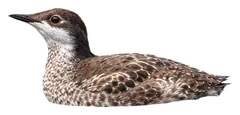 Long-billed MurreletBrachyramphus perdix
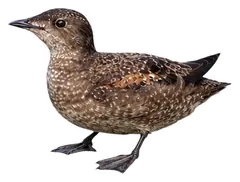 Marbled MurreletBrachyramphus marmoratus
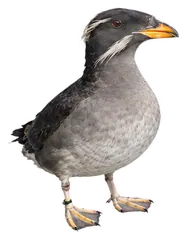 Rhinoceros AukletCerorhinca monocerata
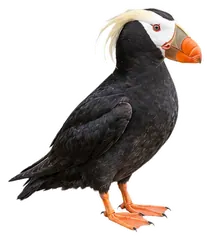 Tufted PuffinFratercula cirrhata
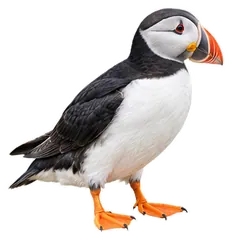 Atlantic PuffinFratercula arctica
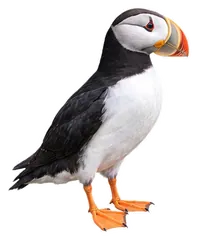 Horned PuffinFratercula corniculata
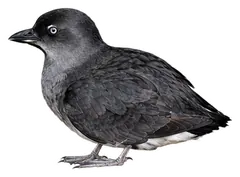 Cassin's AukletPtychoramphus aleuticus
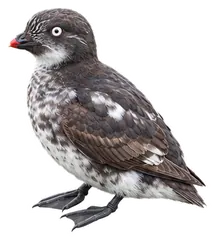 Least AukletAethia pusilla
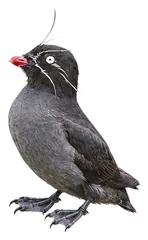 Whiskered AukletAethia pygmaea
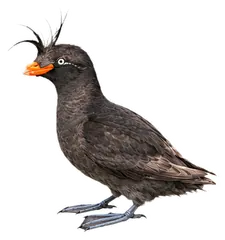 Crested AukletAethia cristatella
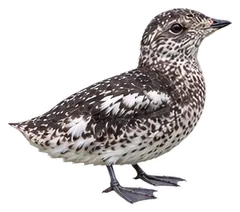
Download illustration
Free to use with credit: “Illustration: Bird Album (birdalbum.com)”. Drawn by AI from a reference photo by Chris Benesh. ↗
Heard it but can't see it? Mingji identifies birds by sound and photo, on your phone.