 Bird Album
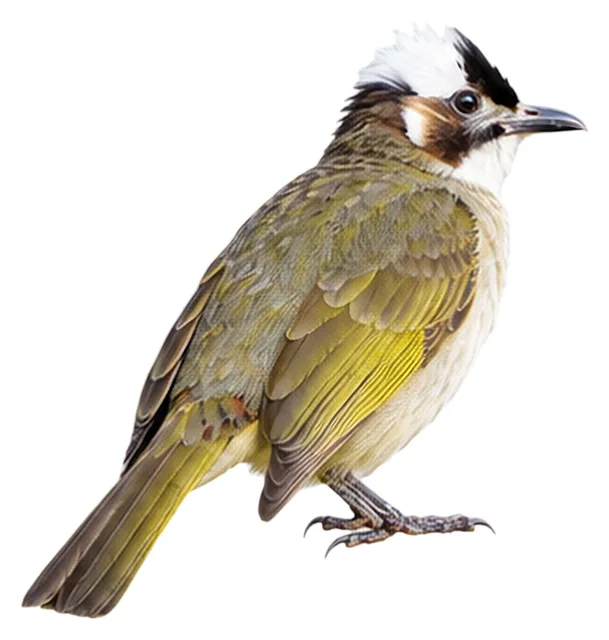
Light-vented Bulbul
Pycnonotus sinensis (Gmelin, JF, 1789)
17–22 cmLength34 gWeight
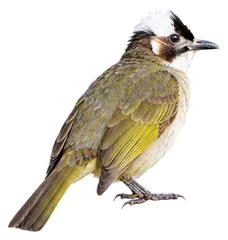
It has a white ring around the back of the head and a white patch behind the ear-coverts, and often moves in flocks among park thickets.
Busiest months: April · Most records: China, South Korea, Japan
How to identify
Field marks
- White from above both eyes to the back of the head, forming a ring around the occiput
- A single white patch on the rear ear-coverts
- Chin and throat white, breast gray-brown
- Bill black, legs and feet also black
Male, female and young
The male has darker gray on the breast and the female is paler; juveniles have a gray-brown head and olive back.
Voice
Bright, varied vocalizations such as “cha-ko-lee”; in the breeding season, two birds may call in response to each other.
Where and when it's recorded

Light-vented Bulbul has been recorded at 1,287 of the 8,171 birding hotspots we track, in 5 countries and regions.
Records by month Northern Hemisphere
Where it's recorded most
- Taipei – Tianliaoyang WetlandTaiwan (China)5,648 records
- Taipei – Taipei Botanical GardenTaiwan (China)5,417 records
- Taipei – National Taiwan University Main CampusTaiwan (China)5,390 records
More places
- Nantou – Jiji Endemic Species Research InstituteTaiwan (China)5,024 records
- Yeliu IBATaiwan (China)4,927 records
- Huajiang IBA – Huajiang Wild Duck Nature Park (Huajiang to Zhongxing Bridge)Taiwan (China)4,454 records
- Mai Po Nature ReserveHong Kong (China)3,951 records
- Taipei – Da'an Forest ParkTaiwan (China)3,623 records
- Chiayi – NCYU Lantan CampusTaiwan (China)3,210 records
- Nanhui DongtanChina2,558 records
Countries and regions with the most records
eBird records via GBIF up to 2024-12-31. A record means someone listed it; more records partly mean more birders, not more birds.
About
The light-vented bulbul (Pycnonotus sinensis), also called the Chinese bulbul, is a species of bird in the bulbul family found in Asia. A common species of songbird that favors lightly wooded habitats, it can frequently be seen in towns, suburbs and urban parks within its range.
Excerpt from Wikipedia, CC BY-SA 4.0 · authors · Read more on Wikipedia
Questions
How big is the Light-vented Bulbul?
The Light-vented Bulbul is about 17–22 cm long and weighs around 34 g.
Where does the Light-vented Bulbul live?
Its breeding range: Oriental: central, southern China, northern Vietnam, Taiwan (China). It is most often recorded in China, South Korea and Japan.
When is the best time to see the Light-vented Bulbul?
At the hotspots we track, it is recorded most in April (Northern Hemisphere).
Is the Light-vented Bulbul endangered?
The IUCN Red List classifies the Light-vented Bulbul as Least Concern.
What does the Light-vented Bulbul eat?
Main food: Fruit.
What family is the Light-vented Bulbul in?
It belongs to the family Bulbuls (Pycnonotidae), order Passerines (Passeriformes).
At a glance
- Length
- 17–22 cm
- Weight
- 34 g
- Habitat
- Towns & farmland
- Diet
- Fruit
- Lifestyle
- Perches in trees
- Migration
- Migratory
- Conservation
- Least Concern
More measurements
- Wing
- 87 mm
- Tail
- 82 mm
- Bill
- 18 mm
- Tarsus
- 22 mm
Averages from the AVONET dataset; length from field guides where available.
Range
Oriental: central, southern China, northern Vietnam, Taiwan (China)
Breeding range, IOC World Bird List 15.2
Subspecies · 3
- Pycnonotus sinensis sinensis c, e China
- Pycnonotus sinensis hainanus se China and n Vietnam
- Pycnonotus sinensis formosae Taiwan (China)
Classification
- Order
- Passerines Passeriformes
- Family
- Bulbuls Pycnonotidae
- Genus
- Pycnonotus
Other birds in the genus Pycnonotus
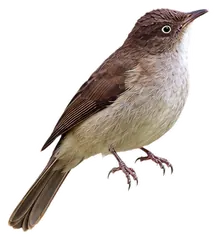 Cream-vented BulbulPycnonotus simplex
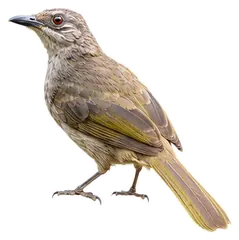 Olive-winged BulbulPycnonotus plumosus
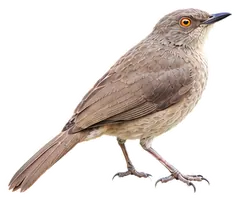 Asian Red-eyed BulbulPycnonotus brunneus
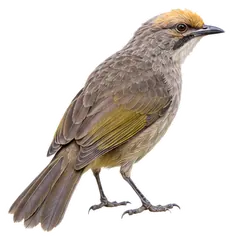 Straw-headed BulbulPycnonotus zeylanicus
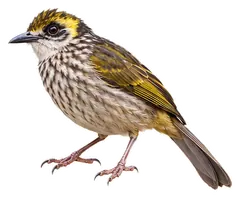 Spot-necked BulbulPycnonotus tympanistrigus
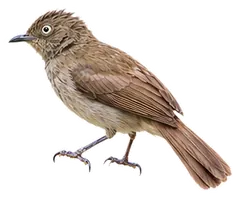 Cream-eyed BulbulPycnonotus pseudosimplex
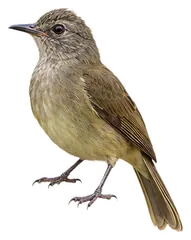 Ashy-fronted BulbulPycnonotus cinereifrons
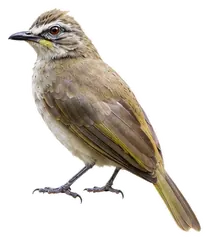 White-browed BulbulPycnonotus luteolus
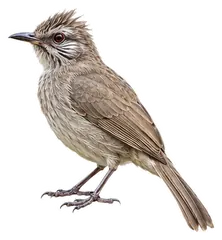 Ayeyarwady BulbulPycnonotus blanfordi
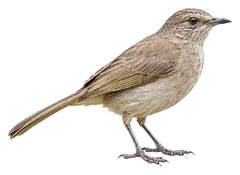 Streak-eared BulbulPycnonotus conradi
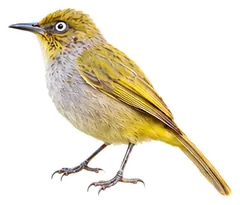 Pale-eyed BulbulPycnonotus davisoni
 Stripe-throated BulbulPycnonotus finlaysoni
Download illustration
Free to use with credit: “Illustration: Bird Album (birdalbum.com)”. Drawn by AI from a reference photo by Flickr user CharlesLam . Photo uploaded to commons by user ltshears. ↗

Heard it but can't see it? Mingji identifies birds by sound and photo, on your phone.