 Bird Album
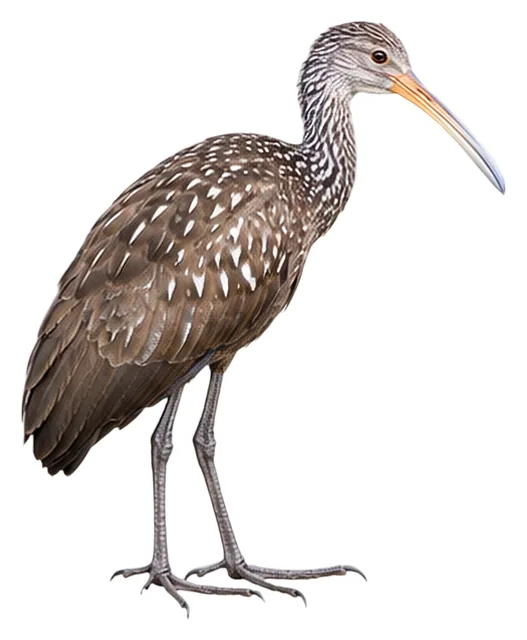
Limpkin
Aramus guarauna (Linnaeus, 1766)
1.1 kgWeight
The limpkin (Aramus guarauna) is a large wading bird related to rails and cranes, and the only extant species in the family Aramidae.
Busiest months: January–March · Most records: United States, Argentina, Brazil
Where and when it's recorded

Limpkin has been recorded at 672 of the 8,171 birding hotspots we track, in 30 countries and regions.
Records by month Northern Hemisphere
Where it's recorded most
- Sweetwater Wetlands ParkUnited States13,461 records
- The Celery FieldsUnited States11,594 records
- Reserva Ecológica Costanera SurArgentina8,586 records
More places
- Orlando WetlandsUnited States7,297 records
- Audubon Corkscrew Swamp SanctuaryUnited States6,760 records
- Harns MarshUnited States6,086 records
- Green Cay Wetlands & Nature CenterUnited States5,574 records
- Paynes Prairie Preserve SP – La Chua TrailUnited States5,388 records
- Circle B Bar ReserveUnited States5,310 records
- "Viera" Ritch Grissom Memorial WetlandsUnited States3,866 records
Countries and regions with the most records
eBird records via GBIF up to 2024-12-31. A record means someone listed it; more records partly mean more birders, not more birds.
About
The limpkin (Aramus guarauna) is a large wading bird related to rails and cranes, and the only extant species in the family Aramidae. It is found mostly in wetlands in warm parts of the Americas, from Florida to northern Argentina, but individuals have been reported as far north as Wisconsin, and Southern Ontario. It feeds on molluscs, with the diet dominated by apple snails of the genus Pomacea.
Excerpt from Wikipedia, CC BY-SA 4.0 · authors · Read more on Wikipedia
Questions
How big is the Limpkin?
The Limpkin weighs around 1.1 kg.
Where does the Limpkin live?
Its breeding range: North America, Middle America, South America: southeastern USA to Argentina. It is most often recorded in United States, Argentina and Brazil.
When is the best time to see the Limpkin?
At the hotspots we track, it is recorded most in January, February and March (Northern Hemisphere).
Is the Limpkin endangered?
The IUCN Red List classifies the Limpkin as Least Concern.
What does the Limpkin eat?
Main food: Fish, shrimp & shellfish.
What family is the Limpkin in?
It belongs to the family Limpkin (Aramidae), order Gruiformes.
At a glance
- Weight
- 1.1 kg
- Habitat
- Wetland
- Diet
- Fish, shrimp & shellfish
- Lifestyle
- Active on the ground
- Migration
- Resident (barely migrates)
- Conservation
- Least Concern
More measurements
- Wing
- 241 mm
- Tail
- 226 mm
- Bill
- 130 mm
- Tarsus
- 85 mm
Averages from the AVONET dataset; length from field guides where available.
Range
North America, Middle America, South America: southeastern USA to Argentina
Breeding range, IOC World Bird List 15.2
Classification
- Order
- Gruiformes
- Family
- Limpkin Aramidae
- Genus
- Aramus
Download illustration
Free to use with credit: “Illustration: Bird Album (birdalbum.com)”. Drawn by AI from a reference photo by JeffreyGammon. ↗
Heard it but can't see it? Mingji identifies birds by sound and photo, on your phone.