 Bird Album
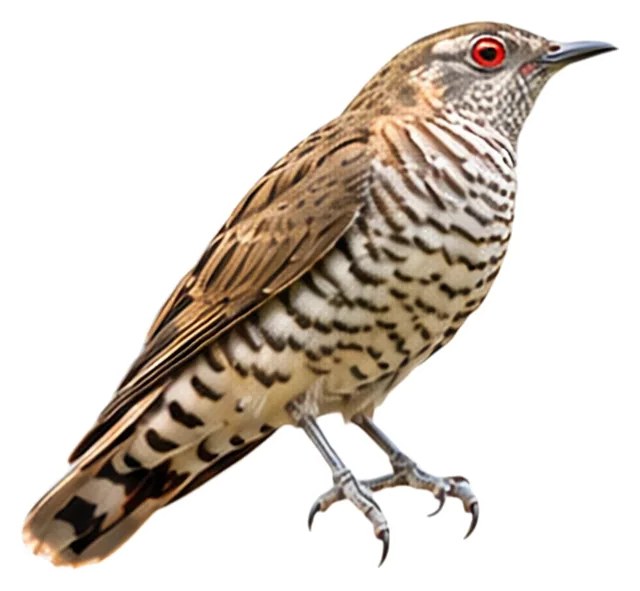
Little Bronze Cuckoo
Chalcites minutillus (Gould, 1859)
15–16 cmLength19 gWeight
Busiest months: October · Most records: Australia, Singapore, Malaysia
Where and when it's recorded

Little Bronze Cuckoo has been recorded at 304 of the 8,171 birding hotspots we track, in 10 countries and regions.
Records by month Southern Hemisphere
Where it's recorded most
- Cattana WetlandsAustralia1,251 records
- Broome Bird ObservatoryAustralia1,225 records
- Townsville Town Common Conservation ParkAustralia630 records
More places
- Cairns Botanical Gardens and Centenary LakesAustralia523 records
- Lake Samsonvale – Golds Scrub LaneAustralia518 records
- Daintree Village Boat CruiseAustralia423 records
- Kingfisher Park Birdwatchers LodgeAustralia375 records
- Kingfisher Park Birdwatchers Lodge – Morning WalkAustralia370 records
- East Point Mangrove BoardwalkAustralia368 records
- Tyto WetlandsAustralia357 records
Countries and regions with the most records
eBird records via GBIF up to 2024-12-31. A record means someone listed it; more records partly mean more birders, not more birds.
Questions
How big is the Little Bronze Cuckoo?
The Little Bronze Cuckoo is about 15–16 cm long and weighs around 19 g.
Where does the Little Bronze Cuckoo live?
Its breeding range: Oriental, Australasia: Southeast Asia to Philippines, Lesser Sundas and northern, eastern Australia. It is most often recorded in Australia, Singapore and Malaysia.
When is the best time to see the Little Bronze Cuckoo?
At the hotspots we track, it is recorded most in October (Southern Hemisphere).
Is the Little Bronze Cuckoo endangered?
The IUCN Red List classifies the Little Bronze Cuckoo as Least Concern.
What does the Little Bronze Cuckoo eat?
Main food: Insects & other invertebrates.
What family is the Little Bronze Cuckoo in?
It belongs to the family Cuckoos (Cuculidae), order Cuculiformes.
At a glance
- Length
- 15–16 cm
- Weight
- 19 g
- Habitat
- Forest
- Diet
- Insects & other invertebrates
- Lifestyle
- Perches in trees
- Migration
- Resident (barely migrates)
- Conservation
- Least Concern
More measurements
- Wing
- 93 mm
- Tail
- 60 mm
- Bill
- 19 mm
- Tarsus
- 15 mm
Averages from the AVONET dataset; length from field guides where available.
Range
Oriental, Australasia: Southeast Asia to Philippines, Lesser Sundas and northern, eastern Australia
Breeding range, IOC World Bird List 15.2
Classification
- Order
- Cuculiformes
- Family
- Cuckoos Cuculidae
- Genus
- Chalcites
Other birds in the genus Chalcites
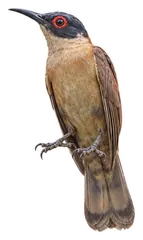 Long-billed CuckooChalcites megarhynchus
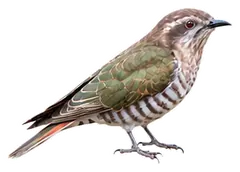 Horsfield's Bronze CuckooChalcites basalis
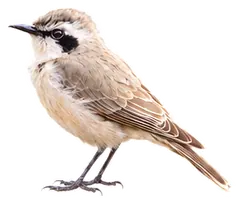 Black-eared CuckooChalcites osculans
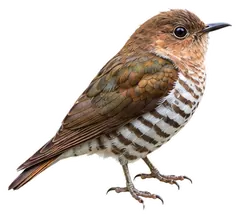 Rufous-throated Bronze CuckooChalcites ruficollis
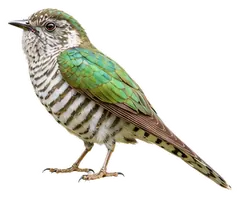 Shining Bronze CuckooChalcites lucidus
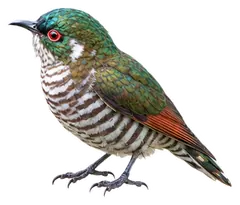 White-eared Bronze CuckooChalcites meyerii
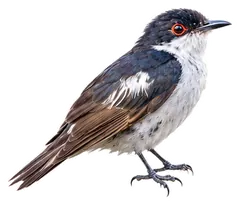 Pied Bronze CuckooChalcites crassirostris
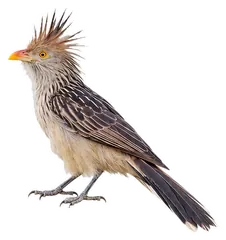 Guira CuckooGuira guira
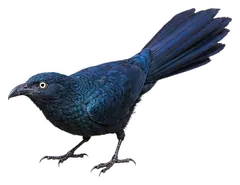 Greater AniCrotophaga major
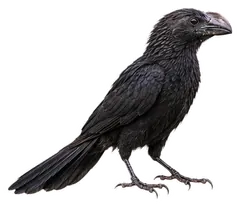 Smooth-billed AniCrotophaga ani
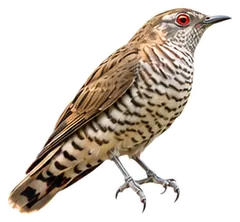
Download illustration
Free to use with credit: “Illustration: Bird Album (birdalbum.com)”. Drawn by AI from a reference photo by Graham Winterflood. ↗
Heard it but can't see it? Mingji identifies birds by sound and photo, on your phone.
In other languages
- EnglishLittle Bronze Cuckoo
- 简体中文棕胸金鹃
- 繁體中文棕胸金鵑
- 日本語アカメテリカッコウ
- DeutschGrünscheitel-Bronzekuckuck
- FrançaisCoucou menu
- EspañolCuclillo menudo
- Portuguêscuco-miúdo
- ItalianoCuculo bronzeo minore
- NederlandsKleine Bronskoekoek
- РусскийКарликовая кукушка
- Svenskamindre glansgök
- DanskLille Bronzegøg
- Polskikukułeczka zielonogłowa