 Bird Album
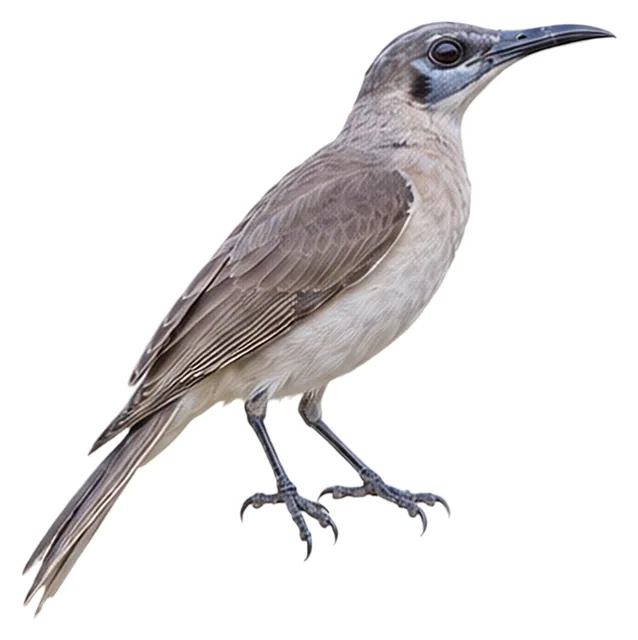
Little Friarbird
Philemon citreogularis (Gould, 1837)
25–30 cmLength61 gWeight
The little friarbird (Philemon citreogularis), also known as the little leatherhead or yellow-throated friarbird, is the smallest of the friarbirds within the Philemon genus.
Busiest months: September–October · Most records: Australia
Where and when it's recorded
Busiest months: September–October · Most records: Australia

Little Friarbird has been recorded at 126 of the 8,276 birding hotspots we track, in 1 country or region.
Records by month Southern Hemisphere
Where it's recorded most
- Broome Bird ObservatoryAustralia4,017 records
- Sandy Camp Road WetlandsAustralia2,902 records
- Bowra Wildlife SanctuaryAustralia2,174 records
More places
- Oxley Creek CommonAustralia1,353 records
- Broome South Wastewater Treatment PlantAustralia1,265 records
- Bundaberg Botanical GardensAustralia1,204 records
- Carlyle Gardens Retirement Resort, TownsvilleAustralia990 records
- Lake Samsonvale – Golds Scrub LaneAustralia977 records
- Gemmill Swamp Wildlife ReserveAustralia892 records
- Muirhead bushlandAustralia866 records
Countries and regions with the most records
eBird records via GBIF up to 2024-12-31. A record means someone listed it; more records partly mean more birders, not more birds.
About
The little friarbird (Philemon citreogularis), also known as the little leatherhead or yellow-throated friarbird, is the smallest of the friarbirds within the Philemon genus. It is found throughout northern and eastern Australia as well as southern Papua New Guinea. It lives a very prominent life, whereby it can easily be seen chasing other honeyeaters, and also it is very vocal.
Excerpt from Wikipedia, CC BY-SA 4.0 · authors · Read more on Wikipedia
Questions
How big is the Little Friarbird?
The Little Friarbird is about 25–30 cm long and weighs around 61 g.
Where does the Little Friarbird live?
Its breeding range: Australasia: south-central New Guinea and northern, eastern Australia. It is most often recorded in Australia.
When is the best time to see the Little Friarbird?
At the hotspots we track, it is recorded most in September and October (Southern Hemisphere).
Is the Little Friarbird endangered?
The IUCN Red List classifies the Little Friarbird as Least Concern.
What does the Little Friarbird eat?
Main food: Omnivore.
What family is the Little Friarbird in?
It belongs to the family Honeyeaters (Meliphagidae), order Passerines (Passeriformes).
At a glance
- Length
- 25–30 cm
- Weight
- 61 g
- Habitat
- Forest
- Diet
- Omnivore
- Lifestyle
- Perches in trees
- Migration
- Partial migrant
- Conservation
- Least Concern
More measurements
- Wing
- 127 mm
- Tail
- 103 mm
- Bill
- 31 mm
- Tarsus
- 27 mm
Averages from the AVONET dataset; length from field guides where available.
Range
Australasia: south-central New Guinea and northern, eastern Australia
Breeding range, IOC World Bird List 15.2
Classification
- Order
- Passerines Passeriformes
- Family
- Honeyeaters Meliphagidae
- Genus
- Philemon
Other birds in the genus Philemon
 Meyer's FriarbirdPhilemon meyeri
 Brass's FriarbirdPhilemon brassi
 Grey FriarbirdPhilemon kisserensis
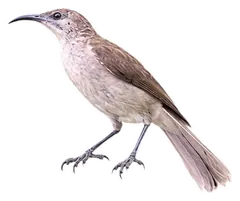 Timor FriarbirdPhilemon inornatus
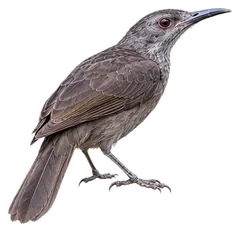 Morotai FriarbirdPhilemon fuscicapillus
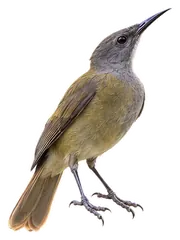 Seram FriarbirdPhilemon subcorniculatus
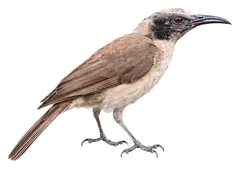 Buru FriarbirdPhilemon moluccensis
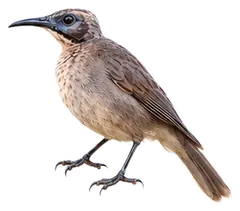 Tanimbar FriarbirdPhilemon plumigenis
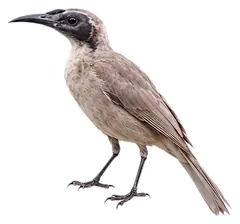 Helmeted FriarbirdPhilemon buceroides
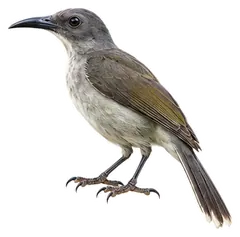 New Britain FriarbirdPhilemon cockerelli
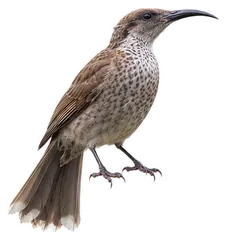 New Ireland FriarbirdPhilemon eichhorni
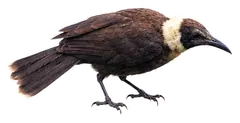 Manus FriarbirdPhilemon albitorques
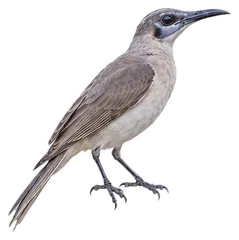
Download illustration
Free to use with credit: “Illustration: Bird Album (birdalbum.com)”. Drawn by AI from a reference photo by Sandy Horne. ↗
Heard it but can't see it? Mingji identifies birds by sound and photo, on your phone.
In other languages
- EnglishLittle Friarbird
- 简体中文小吮蜜鸟
- 繁體中文小吮蜜鳥
- 日本語ヒメハゲミツスイ
- DeutschGlattstirn-Lederkopf
- FrançaisPolochion à menton jaune
- EspañolFilemón goligualdo
- Portuguêspássaro-monge-pequeno
- ItalianoUccello frate minore
- NederlandsKleine Lederkop
- РусскийЖелтогорлый кожеголов
- Svenskamindre munkskata
- DanskHvidstrubet Munkefugl
- Polskifilemon białoszyi