 Bird Album
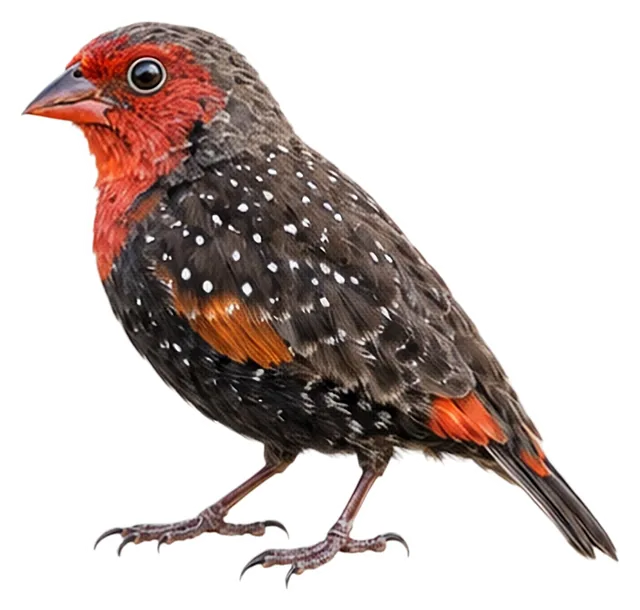
Locust Finch
Paludipasser locustella Neave, 1909
9–10 cmLength11 gWeight
The locust finch or locustfinch (Paludipasser locustella) is a species of waxbill found in south-central and south-eastern Africa.
Busiest months: December · Most records: Zambia, Mozambique, Congo - Brazzaville
Where and when it's recorded
Busiest months: December · Most records: Zambia, Mozambique, Congo - Brazzaville

Locust Finch has been recorded at 10 of the 8,276 birding hotspots we track, in 6 countries and regions.
Records by month Southern Hemisphere
Where it's recorded most
- Rio Savanne WetlandsMozambique38 records
- Mutinondo WildernessZambia33 records
- Kafue NP – Busanga PlainsZambia21 records
More places
- Kasanka NPZambia4 records
- Odzala NP – Mboko CampCongo - Brazzaville3 records
- Environs de LékoniGabon1 record
- Mt. Moco Reserve IBAAngola1 record
- Lamingo DamNigeria1 record
- Musekese CampZambia1 record
- Semahwa FarmZambia1 record
Countries and regions with the most records
eBird records via GBIF up to 2024-12-31. A record means someone listed it; more records partly mean more birders, not more birds.
About
The locust finch or locustfinch (Paludipasser locustella) is a species of waxbill found in south-central and south-eastern Africa. It is the only species in the genus Paludipasser. It is sometimes placed in the genus Ortygospiza.
Excerpt from Wikipedia, CC BY-SA 4.0 · authors · Read more on Wikipedia
Questions
How big is the Locust Finch?
The Locust Finch is about 9–10 cm long and weighs around 11 g.
Where does the Locust Finch live?
Its breeding range: Africa: south-central, southeastern. It is most often recorded in Zambia, Mozambique and Congo - Brazzaville.
When is the best time to see the Locust Finch?
At the hotspots we track, it is recorded most in December (Southern Hemisphere).
Is the Locust Finch endangered?
The IUCN Red List classifies the Locust Finch as Least Concern.
What does the Locust Finch eat?
Main food: Seeds.
What family is the Locust Finch in?
It belongs to the family Waxbills, Munias & Allies (Estrildidae), order Passerines (Passeriformes).
At a glance
- Length
- 9–10 cm
- Weight
- 11 g
- Habitat
- Grassland
- Diet
- Seeds
- Lifestyle
- Active on the ground
- Migration
- Resident (barely migrates)
- Conservation
- Least Concern
More measurements
- Wing
- 44 mm
- Tail
- 30 mm
- Bill
- 9 mm
- Tarsus
- 16 mm
Averages from the AVONET dataset; length from field guides where available.
Range
Africa: south-central, southeastern
Breeding range, IOC World Bird List 15.2
Classification
- Order
- Passerines Passeriformes
- Family
- Waxbills, Munias & Allies Estrildidae
- Genus
- Paludipasser
More from the family Waxbills, Munias & Allies
 Pictorella MannikinHeteromunia pectoralis
 Mountain FiretailOreostruthus fuliginosus
 Diamond FiretailStagonopleura guttata
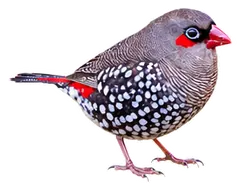 Red-eared FiretailStagonopleura oculata
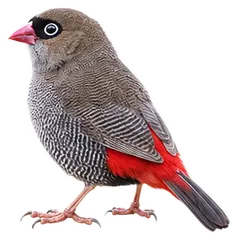 Beautiful FiretailStagonopleura bella
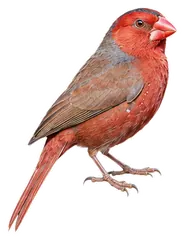 Crimson FinchNeochmia phaeton
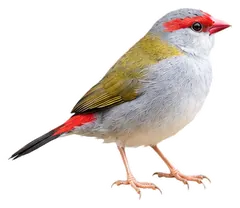 Red-browed FinchNeochmia temporalis
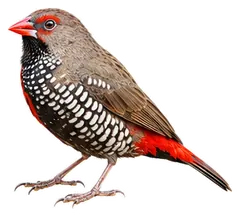 Painted FinchEmblema pictum
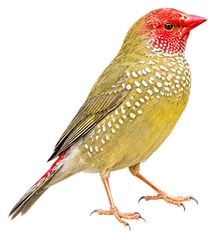 Star FinchEmblema ruficauda
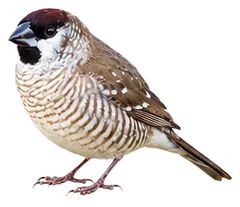 Plum-headed FinchEmblema modesta
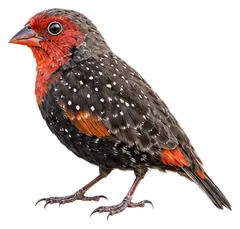
Download illustration
Free to use with credit: “Illustration: Bird Album (birdalbum.com)”. Drawn by AI from a reference photo by Niall Perrins. ↗
Heard it but can't see it? Mingji identifies birds by sound and photo, on your phone.
In other languages
- EnglishLocust Finch
- 简体中文蝗鹑雀
- 繁體中文蝗鶉雀
- 日本語ムネアカウズラスズメ
- DeutschHeuschreckenastrild
- FrançaisAstrild-caille à gorge rouge
- EspañolEstrilda saltamontes
- Portuguêsbico-de-lacre-gafanhoto
- ItalianoFringuello locusta
- NederlandsSprinkhaanastrild
- РусскийСаранчовый астрильд
- Svenskagräshoppsastrild
- DanskRødvinget Vagtelastrild
- Polskitrawinek czerwonolicy