 Bird Album
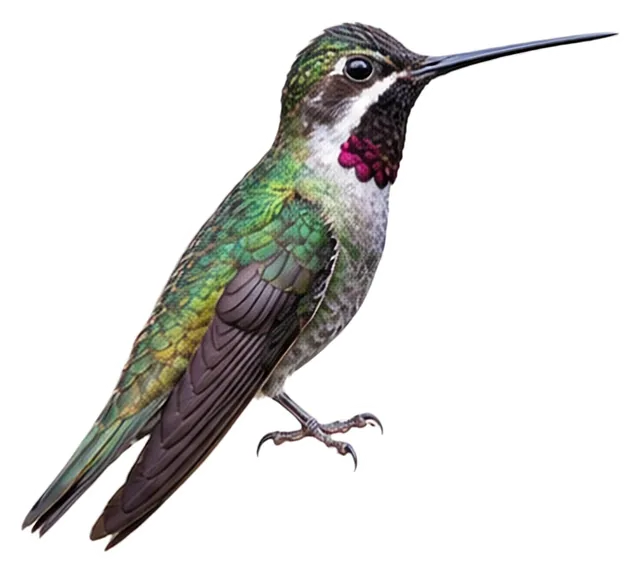
Long-billed Starthroat
Heliomaster longirostris (Audebert & Vieillot, 1801)
6.6 gWeight
The long-billed starthroat (Heliomaster longirostris) is a species of hummingbird in the "mountain gems", tribe Lampornithini in subfamily Trochilinae.
Busiest months: December–March and October · Most records: Panama, Ecuador, Costa Rica
Where and when it's recorded

Long-billed Starthroat has been recorded at 414 of the 8,171 birding hotspots we track, in 17 countries and regions.
Records by month Northern Hemisphere
Where it's recorded most
- Asa Wright Nature CenterTrinidad & Tobago2,353 records
- Canopy CampPanama1,137 records
- Sendero Frutti Tour & BirdwatchingEcuador1,005 records
More places
- Paraíso Birding ParadisePanama914 records
- Finca La GraciaGuatemala903 records
- Canopy LodgePanama689 records
- RNP Los Tarrales – sendero La RinconadaGuatemala596 records
- Wilson Botanical GardenCosta Rica491 records
- RNP Los TarralesGuatemala483 records
- Reserva Jorupe y Urraca LodgeEcuador477 records
Countries and regions with the most records
eBird records via GBIF up to 2024-12-31. A record means someone listed it; more records partly mean more birders, not more birds.
About
The long-billed starthroat (Heliomaster longirostris) is a species of hummingbird in the "mountain gems", tribe Lampornithini in subfamily Trochilinae. It is found in Mexico, Central America, Trinidad, and all but the four southernmost countries of South America.
Excerpt from Wikipedia, CC BY-SA 4.0 · authors · Read more on Wikipedia
Questions
How big is the Long-billed Starthroat?
The Long-billed Starthroat weighs around 6.6 g.
Where does the Long-billed Starthroat live?
Its breeding range: Middle America, South America: southern Mexico to eastern Bolivia and northeastern Brazil. It is most often recorded in Panama, Ecuador and Costa Rica.
When is the best time to see the Long-billed Starthroat?
At the hotspots we track, it is recorded most in January, February, March, October and December (Northern Hemisphere).
Is the Long-billed Starthroat endangered?
The IUCN Red List classifies the Long-billed Starthroat as Least Concern.
What does the Long-billed Starthroat eat?
Main food: Nectar.
What family is the Long-billed Starthroat in?
It belongs to the family Hummingbirds (Trochilidae), order Apodiformes.
At a glance
- Weight
- 6.6 g
- Habitat
- Forest
- Diet
- Nectar
- Lifestyle
- Feeds in the air
- Migration
- Resident (barely migrates)
- Conservation
- Least Concern
More measurements
- Wing
- 58 mm
- Tail
- 31 mm
- Bill
- 35 mm
- Tarsus
- 4 mm
Averages from the AVONET dataset; length from field guides where available.
Range
Middle America, South America: southern Mexico to eastern Bolivia and northeastern Brazil
Breeding range, IOC World Bird List 15.2
Classification
- Order
- Apodiformes
- Family
- Hummingbirds Trochilidae
- Genus
- Heliomaster
Other birds in the genus Heliomaster
 Plain-capped StarthroatHeliomaster constantii
 Stripe-breasted StarthroatHeliomaster squamosus
 Blue-tufted StarthroatHeliomaster furcifer
 Crimson TopazTopaza pella
 Fiery TopazTopaza pyra
 White-necked JacobinFlorisuga mellivora
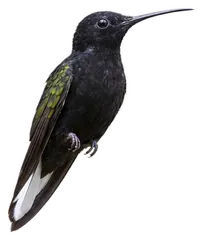 Black JacobinFlorisuga fusca
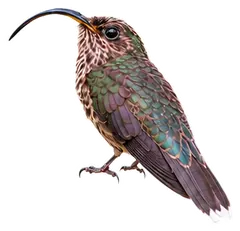 White-tipped SicklebillEutoxeres aquila
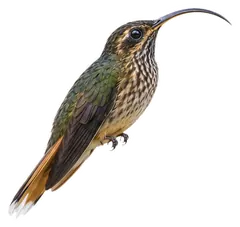 Buff-tailed SicklebillEutoxeres condamini
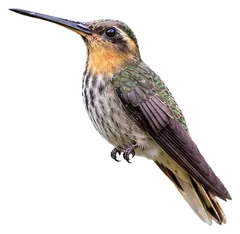 Saw-billed HermitRamphodon naevius
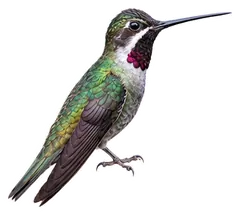
Download illustration
Free to use with credit: “Illustration: Bird Album (birdalbum.com)”. Drawn by AI from reference photos. ↗
Heard it but can't see it? Mingji identifies birds by sound and photo, on your phone.
In other languages
- EnglishLong-billed Starthroat
- 简体中文长嘴星喉蜂鸟
- 繁體中文長嘴星喉蜂鳥
- 日本語ハシナガハチドリ
- DeutschRosenkehlkolibri
- FrançaisColibri corinne
- EspañolColibrí piquilargo
- Portuguêsbico-reto-cinzento
- ItalianoGolastella beccolungo
- NederlandsLangsnavelsterkeelkolibrie
- РусскийДлинноклювый ангел
- Svenskalångnäbbad stjärnkolibri
- DanskLangnæbbet Stjernestrube
- Polskiaksamitek długodzioby