 Bird Album
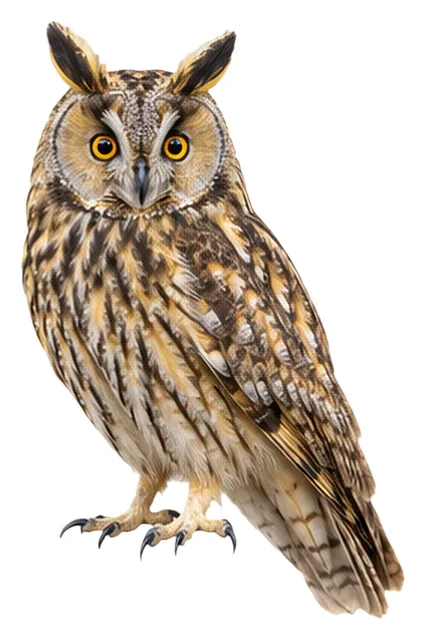
Long-eared Owl
Asio otus (Linnaeus, 1758)
35–40 cmLength95 cmWingspan297 gWeight
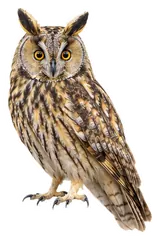
This medium-sized owl has tall, raised ear tufts and stands bolt upright when perched.
Busiest months: January–March, May and November · Most records: Canada, Israel, Spain
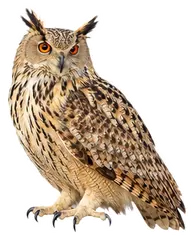
Looks like Tawny Owl, Eurasian Eagle-Owl
How to identify
Field marks
- Two long tufts of alternating black and yellow ear-coverts on the crown
- White feathers between the eyes form a large X
- Body held upright when perched, perpendicular to the ground
- Iris orange-yellow
Male, female and young
Female usually larger than male; male may have paler plumage.
Similar species

Where and when it's recorded

Long-eared Owl has been recorded at 777 of the 8,171 birding hotspots we track, in 67 countries and regions.
Records by month Northern Hemisphere
Where it's recorded most
- Domaine de MaizeretsCanada715 records
- Amherst IslandCanada587 records
- Tommy Thompson ParkCanada505 records
More places
- International Birding and Research Center Eilat (IBRCE)Israel502 records
- Toronto – Colonel Samuel Smith ParkCanada429 records
- Jerusalem Bird ObservatoryIsrael427 records
- Technoparc Mtl – Site généralCanada407 records
- Beaverhill Bird ObservatoryCanada383 records
- Niigata – Lake ToyanogataJapan277 records
- Aras Kuş Halkalama İstasyonuTürkiye232 records
Countries and regions with the most records
eBird records via GBIF up to 2024-12-31. A record means someone listed it; more records partly mean more birders, not more birds.
About
The long-eared owl (Asio otus), also known as the northern long-eared owl or informally as the lesser horned owl or cat owl, is a medium-sized typical owl with an extensive range. The genus name, Asio, is Latin for "horned owl", and the specific epithet, otus, is derived from Greek and refers to a small eared owl. It breeds in Europe and the Palearctic, as well as in North America.
Excerpt from Wikipedia, CC BY-SA 4.0 · authors · Read more on Wikipedia
Questions
How big is the Long-eared Owl?
The Long-eared Owl is about 35–40 cm long, with a wingspan of 95 cm and weighs around 297 g.
Where does the Long-eared Owl live?
Its breeding range: North America, Middle America, Palearctic: widespread. It is most often recorded in Canada, Israel and Spain.
When is the best time to see the Long-eared Owl?
At the hotspots we track, it is recorded most in January, February, March, May and November (Northern Hemisphere).
Is the Long-eared Owl endangered?
The IUCN Red List classifies the Long-eared Owl as Least Concern.
What does the Long-eared Owl eat?
Main food: Vertebrate prey.
What family is the Long-eared Owl in?
It belongs to the family Owls (Strigidae), order Strigiformes.
At a glance
- Length
- 35–40 cm
- Wingspan
- 95 cm
- Weight
- 297 g
- Habitat
- Forest
- Diet
- Vertebrate prey
- Lifestyle
- Feeds in the air
- Migration
- Partial migrant
- Conservation
- Least Concern
More measurements
- Wing
- 281 mm
- Tail
- 137 mm
- Bill
- 28 mm
- Tarsus
- 40 mm
Averages from the AVONET dataset; length from field guides where available.
Range
North America, Middle America, Palearctic: widespread
Breeding range, IOC World Bird List 15.2
Classification
- Order
- Strigiformes
- Family
- Owls Strigidae
- Genus
- Asio
Other birds in the genus Asio
 Jamaican OwlAsio grammicus
 Striped OwlAsio clamator
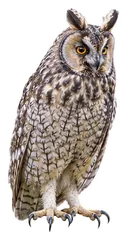 Abyssinian OwlAsio abyssinicus
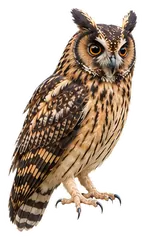 Madagascar OwlAsio madagascariensis
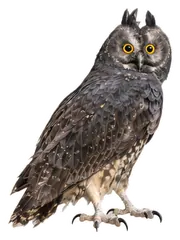 Stygian OwlAsio stygius
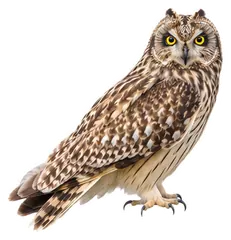 Short-eared OwlAsio flammeus
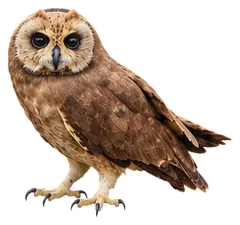 Marsh OwlAsio capensis
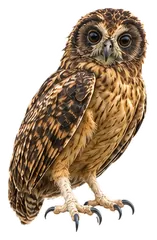 Fearful OwlAsio solomonensis
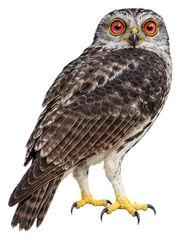 Papuan Hawk-OwlUroglaux dimorpha
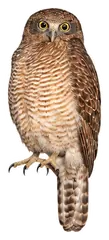 Rufous OwlNinox rufa
Download illustration
Free to use with credit: “Illustration: Bird Album (birdalbum.com)”. Drawn by AI from a reference photo by Francesco Veronesi. ↗

Heard it but can't see it? Mingji identifies birds by sound and photo, on your phone.