 Bird Album
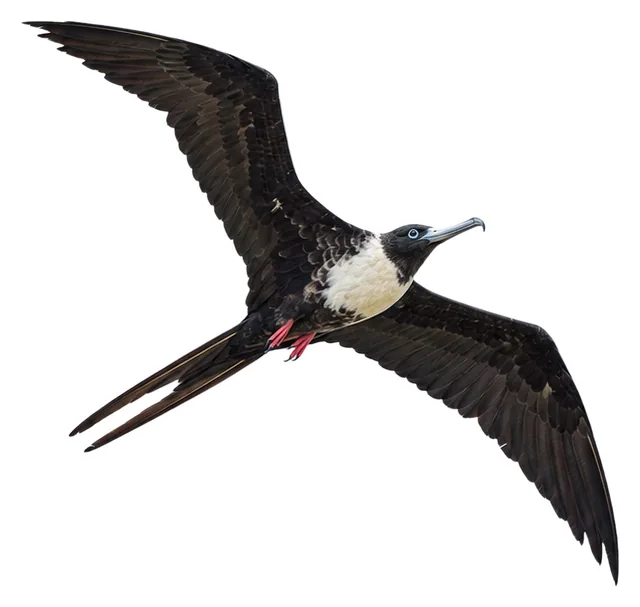
Magnificent Frigatebird
Fregata magnificens Mathews, 1914
89–114 cmLength230 cmWingspan1.5 kgWeight
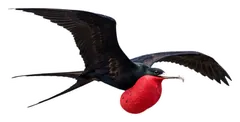
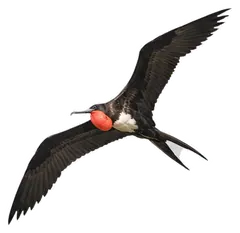
During courtship, the male inflates its gular pouch into a red balloon.
Busiest months: January–April and October · Most records: United States, Panama, Costa Rica
Looks like Great Frigatebird
How to identify
Field marks
- Male all black, with a scarlet gular pouch
- Wings long and slender; tail deeply forked
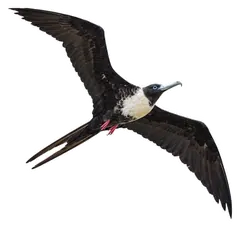
- Female has a white breast and blue eye-ring
- Male has a purple sheen on the scapulars in sunlight
Male, female and young
Male all black, with a red gular pouch; female has a white breast and blue eye-ring; immature has a white head and underparts.
Voice
Quiet in flight; gives clucking sounds near the nest.
Similar species
Where and when it's recorded

Magnificent Frigatebird has been recorded at 886 of the 8,171 birding hotspots we track, in 52 countries and regions.
Records by month Northern Hemisphere
Where it's recorded most
- Fort De Soto ParkUnited States9,589 records
- Tárcoles – Tour en BoteCosta Rica4,121 records
- Cattle Landing – waterfrontBelize3,830 records
More places
- Ammo Dump PondsPanama3,352 records
- Curry Hammock SP – FL Keys HawkwatchUnited States2,863 records
- Bubali Bird SanctuaryAruba2,054 records
- Caye CaulkerBelize1,944 records
- Ensenada Lodge [Área General]Costa Rica1,719 records
- J. N. Ding Darling NWR – Wildlife DriveUnited States1,684 records
- Tranquilo Bay Eco-Adventure LodgePanama1,556 records
Countries and regions with the most records
eBird records via GBIF up to 2024-12-31. A record means someone listed it; more records partly mean more birders, not more birds.
About
The magnificent frigatebird (Fregata magnificens), frigate petrel or man o' war is a seabird of the frigatebird family Fregatidae. It occurs over tropical and subtropical waters off America, between northern Mexico and Peru on the Pacific coast and between Florida and southern Brazil along the Atlantic coast. There are also populations on the Galápagos Islands in the Pacific and the Cape Verde islands in the Atlantic.
Excerpt from Wikipedia, CC BY-SA 4.0 · authors · Read more on Wikipedia
Questions
How big is the Magnificent Frigatebird?
The Magnificent Frigatebird is about 89–114 cm long, with a wingspan of 230 cm and weighs around 1.5 kg.
Where does the Magnificent Frigatebird live?
Its breeding range: Atlantic Ocean, Pacific Ocean: eastern Pacific Ocean (western Mexico to Ecuador), Atlantic Ocean (eastern Mexico and Florida to Brazil), and Cape Verde Islands (where almost extinct). It is most often recorded in United States, Panama and Costa Rica.
When is the best time to see the Magnificent Frigatebird?
At the hotspots we track, it is recorded most in January, February, March, April and October (Northern Hemisphere).
Is the Magnificent Frigatebird endangered?
The IUCN Red List classifies the Magnificent Frigatebird as Least Concern.
What does the Magnificent Frigatebird eat?
Main food: Fish, shrimp & shellfish.
What family is the Magnificent Frigatebird in?
It belongs to the family Frigatebirds (Fregatidae), order Suliformes.
At a glance
- Length
- 89–114 cm
- Wingspan
- 230 cm
- Weight
- 1.5 kg
- Habitat
- Ocean
- Diet
- Fish, shrimp & shellfish
- Lifestyle
- Feeds in the air
- Migration
- Migratory
- Conservation
- Least Concern
More measurements
- Wing
- 642 mm
- Tail
- 440 mm
- Bill
- 122 mm
- Tarsus
- 29 mm
Averages from the AVONET dataset; length from field guides where available.
Range
Atlantic Ocean, Pacific Ocean: eastern Pacific Ocean (western Mexico to Ecuador), Atlantic Ocean (eastern Mexico and Florida to Brazil), and Cape Verde Islands (where almost extinct)
Breeding range, IOC World Bird List 15.2
Classification
- Order
- Suliformes
- Family
- Frigatebirds Fregatidae
- Genus
- Fregata
Other birds in the genus Fregata
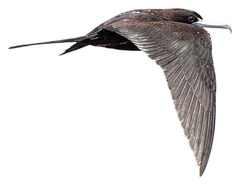 Ascension FrigatebirdFregata aquila
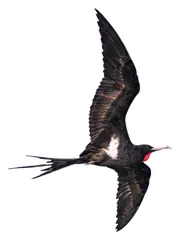 Lesser FrigatebirdFregata ariel
 Christmas FrigatebirdFregata andrewsi
Download illustration
Free to use with credit: “Illustration: Bird Album (birdalbum.com)”. Drawn by AI from a reference photo by Ligocsicnarf89. ↗
Heard it but can't see it? Mingji identifies birds by sound and photo, on your phone.
In other languages
- EnglishMagnificent Frigatebird
- 简体中文华丽军舰鸟
- 繁體中文麗色軍艦鳥
- 日本語アメリカグンカンドリ
- DeutschPrachtfregattvogel
- FrançaisFrégate superbe
- EspañolRabihorcado magnífico
- Portuguêsrabiforcado-magnífico
- ItalianoFregata magnifica
- NederlandsAmerikaanse Fregatvogel
- РусскийВеликолепный фрегат
- Svenskapraktfregattfågel
- DanskPragtfregatfugl
- Polskifregata wielka