 Bird Album
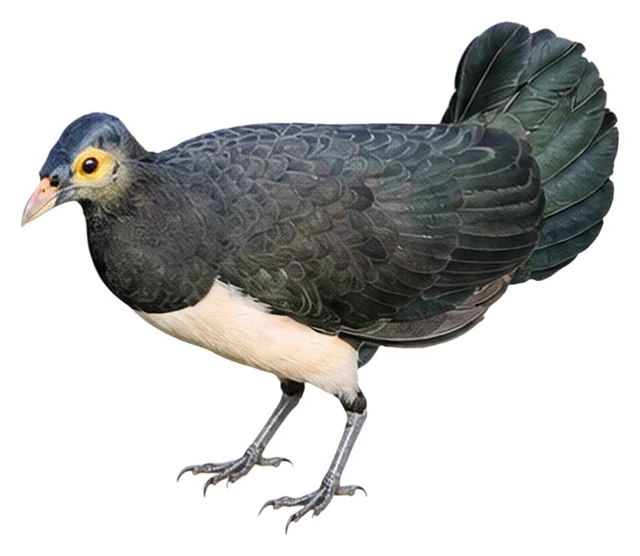
Maleo
Macrocephalon maleo Müller, S, 1846
1.6 kgWeight
The maleo (Macrocephalon maleo) is a large megapode and the only member of the monotypic genus Macrocephalon.
Busiest months: July–September · Most records: Indonesia
Where and when it's recorded

Maleo has been recorded at 5 of the 8,171 birding hotspots we track, in 1 country or region.
Records by month Northern Hemisphere
Where it's recorded most
- Dumoga-Bone (Bogani Nani Wartabone) NP – TambunIndonesia243 records
- Tangkoko Batuangus NR – Forest andIndonesia12 records
- Dumoga-Bone (Bogani Nani Wartabone) NP – TorautIndonesia7 records
More places
- Lore Lindu NPIndonesia5 records
- Tangkoko Batuangas NR – overlookIndonesia2 records
Countries and regions with the most records
eBird records via GBIF up to 2024-12-31. A record means someone listed it; more records partly mean more birders, not more birds.
About
The maleo (Macrocephalon maleo) is a large megapode and the only member of the monotypic genus Macrocephalon. The maleo is endemic to Sulawesi and the nearby smaller island of Buton in Indonesia. It is found in the tropical lowland and hill forests, but nests in the open sandy areas, volcanic soils, or beaches that are heated by the sun or geothermal energy for incubation.
Excerpt from Wikipedia, CC BY-SA 4.0 · authors · Read more on Wikipedia
Questions
How big is the Maleo?
The Maleo weighs around 1.6 kg.
Where does the Maleo live?
Its breeding range: Australasia: Sulawesi and Butung (=Buton, south of southeastern Sulawesi). It is most often recorded in Indonesia.
When is the best time to see the Maleo?
At the hotspots we track, it is recorded most in July, August and September (Northern Hemisphere).
Is the Maleo endangered?
The IUCN Red List classifies the Maleo as Critically Endangered.
What does the Maleo eat?
Main food: Omnivore.
What family is the Maleo in?
It belongs to the family Megapodes (Megapodiidae), order Galliformes.
At a glance
- Weight
- 1.6 kg
- Habitat
- Forest
- Diet
- Omnivore
- Lifestyle
- Active on the ground
- Migration
- Resident (barely migrates)
- Conservation
- Critically Endangered
More measurements
- Wing
- 291 mm
- Tail
- 132 mm
- Bill
- 42 mm
- Tarsus
- 82 mm
Averages from the AVONET dataset; length from field guides where available.
Range
Australasia: Sulawesi and Butung (=Buton, south of southeastern Sulawesi)
Breeding range, IOC World Bird List 15.2
Classification
- Order
- Galliformes
- Family
- Megapodes Megapodiidae
- Genus
- Macrocephalon
More from the family Megapodes
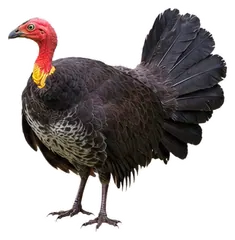 Australian BrushturkeyAlectura lathami
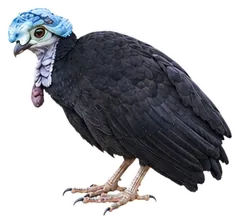 Wattled BrushturkeyAepypodius arfakianus
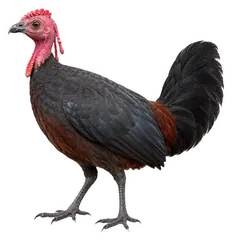 Waigeo BrushturkeyAepypodius bruijnii
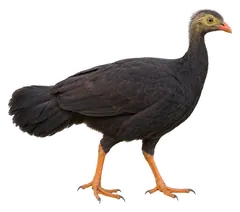 Red-billed BrushturkeyTalegalla cuvieri
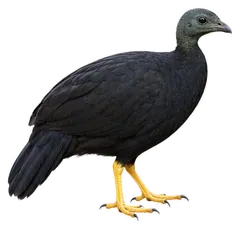 Black-billed BrushturkeyTalegalla fuscirostris
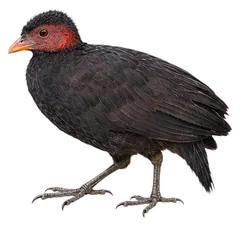 Collared BrushturkeyTalegalla jobiensis
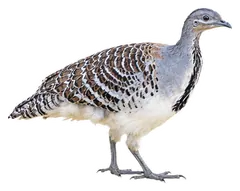 MalleefowlLeipoa ocellata
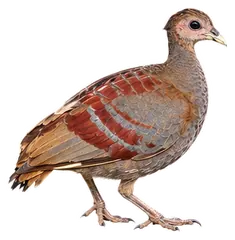 Moluccan MegapodeEulipoa wallacei
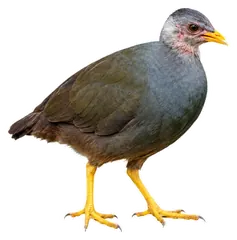 Tongan MegapodeMegapodius pritchardii
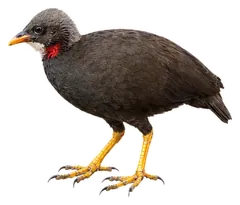 Micronesian MegapodeMegapodius laperouse
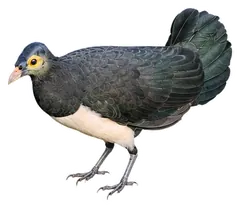
Download illustration
Free to use with credit: “Illustration: Bird Album (birdalbum.com)”. Drawn by AI from a reference photo by Chien Lee. ↗
Heard it but can't see it? Mingji identifies birds by sound and photo, on your phone.