 Bird Album
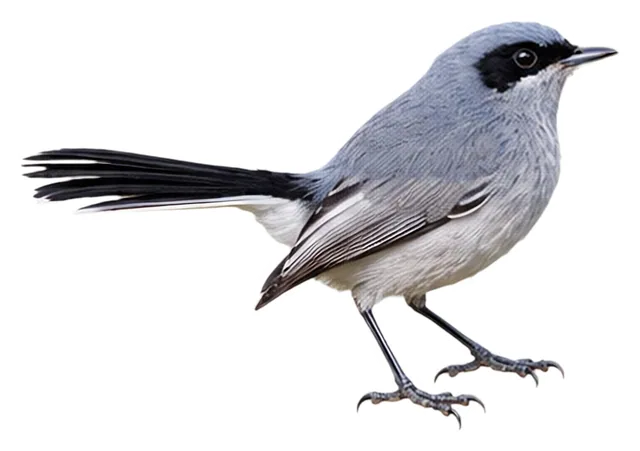
Masked Gnatcatcher
Polioptila dumicola (Vieillot, 1817)
12–13 cmLength7 gWeight
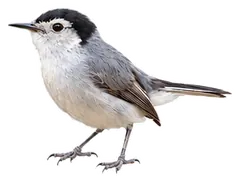
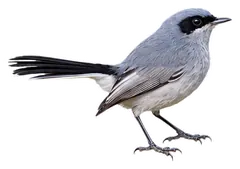
The masked gnatcatcher (Polioptila dumicola) is a small songbird in the family Polioptilidae.
Busiest months: October · Most records: Argentina, Brazil, Uruguay
Where and when it's recorded
Busiest months: October · Most records: Argentina, Brazil, Uruguay

Masked Gnatcatcher has been recorded at 208 of the 8,276 birding hotspots we track, in 5 countries and regions.
Records by month Southern Hemisphere
Where it's recorded most
- Reserva Ecológica Costanera SurArgentina10,573 records
- Reserva Ecológica Ciudad Universitaria - Costanera NorteArgentina2,029 records
- Reserva Ribera NorteArgentina1,326 records
More places
- Reserva Ecológica de Vicente LópezArgentina1,055 records
- Gran Asunción – Parque Guasu MetropolitanoParaguay1,028 records
- Poconé – Pousada PiuvalBrazil789 records
- Poconé – Aymara LodgeBrazil771 records
- Poconé – SouthWild PantanalBrazil693 records
- PN Iberá – Portal Laguna IberáArgentina686 records
- CeibasArgentina662 records
Countries and regions with the most records
eBird records via GBIF up to 2024-12-31. A record means someone listed it; more records partly mean more birders, not more birds.
About
The masked gnatcatcher (Polioptila dumicola) is a small songbird in the family Polioptilidae. It is found in Argentina, Bolivia, Brazil, Paraguay, and Uruguay.
Excerpt from Wikipedia, CC BY-SA 4.0 · authors · Read more on Wikipedia
Questions
How big is the Masked Gnatcatcher?
The Masked Gnatcatcher is about 12–13 cm long and weighs around 7 g.
Where does the Masked Gnatcatcher live?
Its breeding range: South America: central, southeastern. It is most often recorded in Argentina, Brazil and Uruguay.
When is the best time to see the Masked Gnatcatcher?
At the hotspots we track, it is recorded most in October (Southern Hemisphere).
Is the Masked Gnatcatcher endangered?
The IUCN Red List classifies the Masked Gnatcatcher as Least Concern.
What does the Masked Gnatcatcher eat?
Main food: Insects & other invertebrates.
What family is the Masked Gnatcatcher in?
It belongs to the family Gnatcatchers (Polioptilidae), order Passerines (Passeriformes).
At a glance
- Length
- 12–13 cm
- Weight
- 7 g
- Habitat
- Woodland
- Diet
- Insects & other invertebrates
- Lifestyle
- Perches in trees
- Migration
- Resident (barely migrates)
- Conservation
- Least Concern
More measurements
- Wing
- 50 mm
- Tail
- 56 mm
- Bill
- 13 mm
- Tarsus
- 18 mm
Averages from the AVONET dataset; length from field guides where available.
Range
South America: central, southeastern
Breeding range, IOC World Bird List 15.2
Classification
- Order
- Passerines Passeriformes
- Family
- Gnatcatchers Polioptilidae
- Genus
- Polioptila
Other birds in the genus Polioptila
 Rio Negro GnatcatcherPolioptila facilis
 Guianan GnatcatcherPolioptila guianensis
 Slate-throated GnatcatcherPolioptila schistaceigula
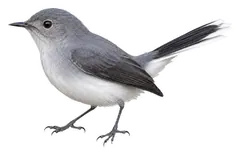 Para GnatcatcherPolioptila paraensis
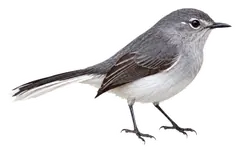 Iquitos GnatcatcherPolioptila clementsi
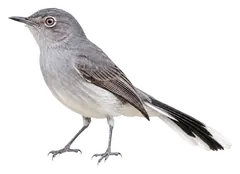 Inambari GnatcatcherPolioptila attenboroughi
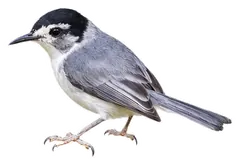 Tropical GnatcatcherPolioptila plumbea
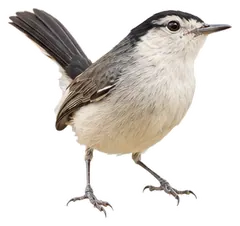 Maranon GnatcatcherPolioptila maior
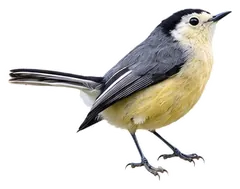 Creamy-bellied GnatcatcherPolioptila lactea
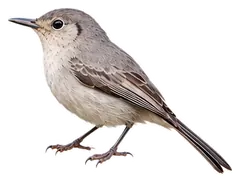 Cuban GnatcatcherPolioptila lembeyei
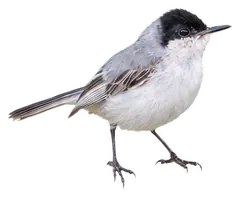 Yucatan GnatcatcherPolioptila albiventris
 White-browed GnatcatcherPolioptila bilineata
Download illustration
Free to use with credit: “Illustration: Bird Album (birdalbum.com)”. Drawn by AI from a reference photo by Gustavo Fernando Durán. ↗
Heard it but can't see it? Mingji identifies birds by sound and photo, on your phone.
In other languages
- EnglishMasked Gnatcatcher
- 简体中文花脸蚋莺
- 繁體中文擬蚋鶯
- 日本語ミミグロブユムシクイ
- DeutschMaskenmückenfänger
- FrançaisGobemoucheron masqué
- EspañolPerlita azul
- Portuguêsbalança-rabo-de-máscara
- ItalianoPigliamoschini mascherato
- NederlandsMaskermuggenvanger
- РусскийМасковая комароловка
- Svenskasvartmaskad myggsnappare
- DanskMaskesnerresmutte
- Polskisiwuszka maskowa