 Bird Album
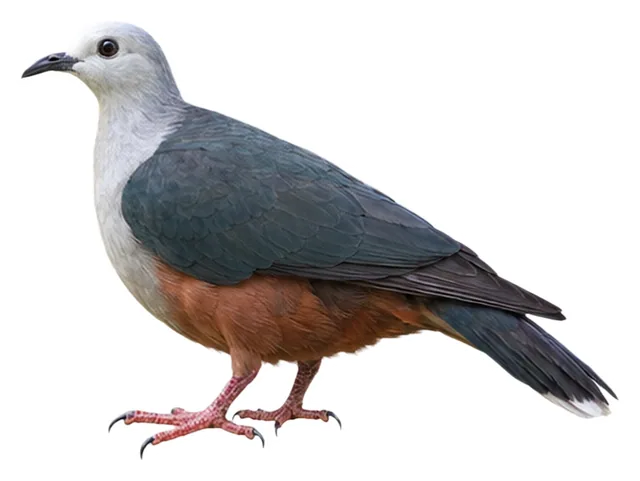
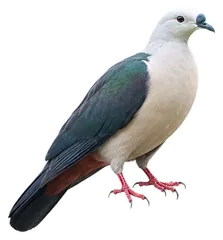
Micronesian Imperial Pigeon
Ducula oceanica (Desmarest, 1826)
36 cmLength372 gWeight
The Micronesian imperial pigeon (Ducula oceanica), also known as the Micronesian pigeon, and Belochel is a species of bird in the family Columbidae (doves).
Busiest months: February and May · Most records: Palau, Micronesia, Marshall Islands
Where and when it's recorded

Micronesian Imperial Pigeon has been recorded at 19 of the 8,171 birding hotspots we track, in 3 countries and regions.
Records by month Northern Hemisphere
Where it's recorded most
- Ngchus St.1Palau104 records
- Ngchus St.2Palau101 records
- Ngemelis St.1Palau95 records
More places
- Ulong St.1Palau78 records
- Jellyfish Lake St.1Palau65 records
- Ngeremdiu St.1Palau60 records
- Ulong St.2Palau59 records
- Long Island Park & Conservation AreaPalau45 records
- Euidelchol St.1Palau18 records
- Ngeanges St.1Palau13 records
Countries and regions with the most records
eBird records via GBIF up to 2024-12-31. A record means someone listed it; more records partly mean more birders, not more birds.
About
The Micronesian imperial pigeon (Ducula oceanica), also known as the Micronesian pigeon, and Belochel is a species of bird in the family Columbidae (doves). It is found in Palau, the Caroline Islands, the Marshall Islands and Nauru. Its habitats include montane forests, secondary forests, forests on beaches, and mangroves.
Excerpt from Wikipedia, CC BY-SA 4.0 · authors · Read more on Wikipedia
Questions
How big is the Micronesian Imperial Pigeon?
The Micronesian Imperial Pigeon is about 36 cm long and weighs around 372 g.
Where does the Micronesian Imperial Pigeon live?
Its breeding range: Pacific Ocean: Palau, Yap (where perhaps introduced) and Chuuk, Pohnpei and Kosrae (Caroline Islands, western, central Micronesia) and Marshall Islands (eastern Micronesia, where probably extinct). It is most often recorded in Palau, Micronesia and Marshall Islands.
When is the best time to see the Micronesian Imperial Pigeon?
At the hotspots we track, it is recorded most in February and May (Northern Hemisphere).
Is the Micronesian Imperial Pigeon endangered?
The IUCN Red List classifies the Micronesian Imperial Pigeon as Vulnerable.
What does the Micronesian Imperial Pigeon eat?
Main food: Fruit.
What family is the Micronesian Imperial Pigeon in?
It belongs to the family Pigeons, Doves (Columbidae), order Columbiformes.
At a glance
- Length
- 36 cm
- Weight
- 372 g
- Habitat
- Forest
- Diet
- Fruit
- Lifestyle
- Perches in trees
- Migration
- Resident (barely migrates)
- Conservation
- Vulnerable
More measurements
- Wing
- 215 mm
- Tail
- 145 mm
- Bill
- 24 mm
- Tarsus
- 31 mm
Averages from the AVONET dataset; length from field guides where available.
Range
Pacific Ocean: Palau, Yap (where perhaps introduced) and Chuuk, Pohnpei and Kosrae (Caroline Islands, western, central Micronesia) and Marshall Islands (eastern Micronesia, where probably extinct)
Breeding range, IOC World Bird List 15.2
Classification
- Order
- Columbiformes
- Family
- Pigeons, Doves Columbidae
- Genus
- Ducula
Other birds in the genus Ducula
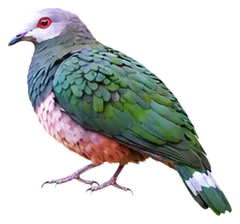 Pink-bellied Imperial PigeonDucula poliocephala
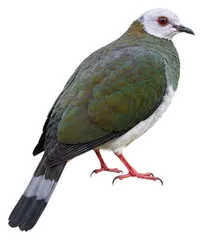 White-bellied Imperial PigeonDucula forsteni
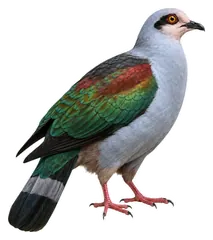 Mindoro Imperial PigeonDucula mindorensis
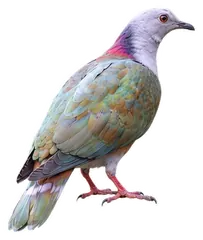 Grey-headed Imperial PigeonDucula radiata
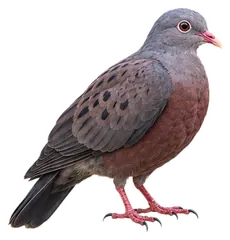 Spotted Imperial PigeonDucula carola
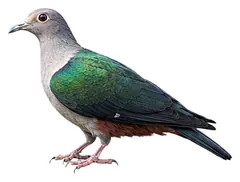 Green Imperial PigeonDucula aenea
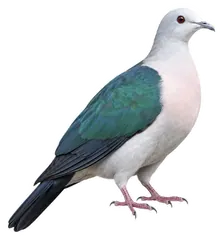 Enggano Imperial PigeonDucula oenothorax
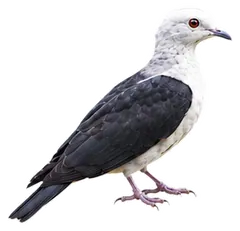 Nicobar Imperial PigeonDucula nicobarica
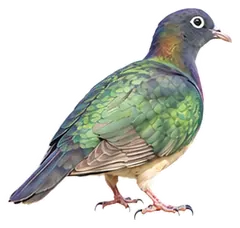 Spectacled Imperial PigeonDucula perspicillata
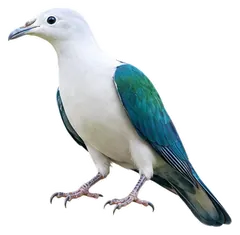 Seram Imperial PigeonDucula neglecta
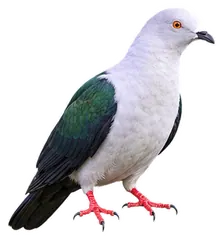 Elegant Imperial PigeonDucula concinna
 Pacific Imperial PigeonDucula pacifica
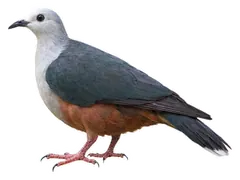
Download illustration
Free to use with credit: “Illustration: Bird Album (birdalbum.com)”. Drawn by AI from a reference photo by sea-kangaroo. ↗
Heard it but can't see it? Mingji identifies birds by sound and photo, on your phone.
In other languages
- EnglishMicronesian Imperial Pigeon
- 简体中文密克皇鸠
- 繁體中文密克羅尼西亞皇鳩
- 日本語コブバト
- DeutschKarolinenfruchttaube
- FrançaisCarpophage de Micronésie
- EspañolDúcula de Micronesia
- Portuguêspombo-imperial-micronésio
- ItalianoPiccione imperiale di Micronesia
- NederlandsMicronesische Muskaatduif
- РусскийМикронезийский плодовый голубь
- Svenskamikronesisk kejsarduva
- DanskMikronesisk Kejserdue
- Polskimuszkatela szarogłowa