 Bird Album
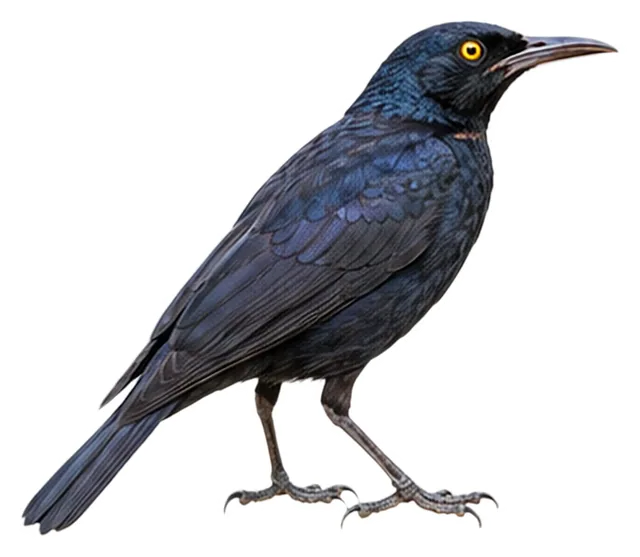
Micronesian Starling
Aplonis opaca (Kittlitz, 1833)
83 gWeight
The Micronesian starling (Aplonis opaca) is a species of starling in the family Sturnidae.
Busiest months: November–May · Most records: Palau, Northern Mariana Islands, Micronesia
Where and when it's recorded

Micronesian Starling has been recorded at 34 of the 8,171 birding hotspots we track, in 4 countries and regions.
Records by month Northern Hemisphere
Where it's recorded most
- Long Island Park & Conservation AreaPalau212 records
- Rota Resort and Country ClubNorthern Mariana Islands201 records
- Pinatang ParkNorthern Mariana Islands177 records
More places
- Ngchus St.1Palau161 records
- Ngchus St.2Palau147 records
- WW II MemorialsNorthern Mariana Islands138 records
- Euidelchol St.1Palau136 records
- Ngeanges St.1Palau131 records
- Ngeanges St.2Palau124 records
- Jellyfish Lake St.1Palau124 records
Countries and regions with the most records
eBird records via GBIF up to 2024-12-31. A record means someone listed it; more records partly mean more birders, not more birds.
About
The Micronesian starling (Aplonis opaca) is a species of starling in the family Sturnidae. It is found in Micronesia, from the Northern Mariana Islands to Palau and all the way into eastern Micronesia. Its natural habitats are subtropical or tropical dry forest and subtropical or tropical moist lowland forest.
Excerpt from Wikipedia, CC BY-SA 4.0 · authors · Read more on Wikipedia
Questions
How big is the Micronesian Starling?
The Micronesian Starling weighs around 83 g.
Where does the Micronesian Starling live?
Its breeding range: Pacific Ocean: Mariana and Caroline islands (western, central Micronesia). It is most often recorded in Palau, Northern Mariana Islands and Micronesia.
When is the best time to see the Micronesian Starling?
At the hotspots we track, it is recorded most in January, February, March, April, May, November and December (Northern Hemisphere).
Is the Micronesian Starling endangered?
The IUCN Red List classifies the Micronesian Starling as Least Concern.
What does the Micronesian Starling eat?
Main food: Omnivore.
What family is the Micronesian Starling in?
It belongs to the family Starlings, Rhabdornises (Sturnidae), order Passerines (Passeriformes).
At a glance
- Weight
- 83 g
- Habitat
- Forest
- Diet
- Omnivore
- Lifestyle
- Perches in trees
- Migration
- Resident (barely migrates)
- Conservation
- Least Concern
More measurements
- Wing
- 125 mm
- Tail
- 88 mm
- Bill
- 27 mm
- Tarsus
- 30 mm
Averages from the AVONET dataset; length from field guides where available.
Range
Pacific Ocean: Mariana and Caroline islands (western, central Micronesia)
Breeding range, IOC World Bird List 15.2
Classification
- Order
- Passerines Passeriformes
- Family
- Starlings, Rhabdornises Sturnidae
- Genus
- Aplonis
Other birds in the genus Aplonis
 Metallic StarlingAplonis metallica
 Yellow-eyed StarlingAplonis mystacea
 Singing StarlingAplonis cantoroides
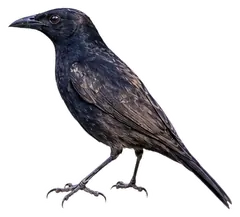 Tanimbar StarlingAplonis crassa
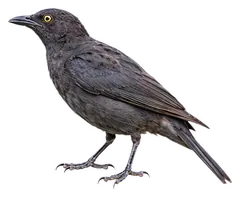 Atoll StarlingAplonis feadensis
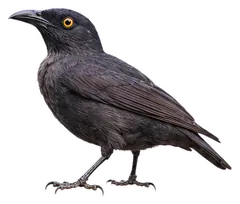 Rennell StarlingAplonis insularis
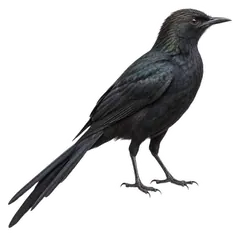 Long-tailed StarlingAplonis magna
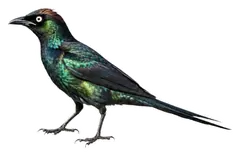 White-eyed StarlingAplonis brunneicapillus
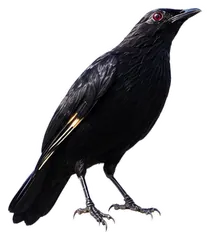 Brown-winged StarlingAplonis grandis
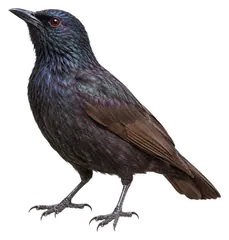 Makira StarlingAplonis dichroa
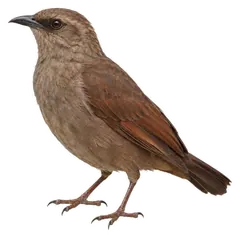 Rusty-winged StarlingAplonis zelandica
 Striated StarlingAplonis striata
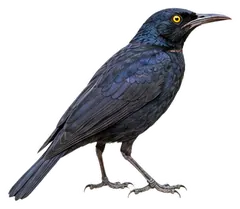
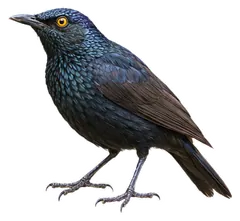
Download illustration
Free to use with credit: “Illustration: Bird Album (birdalbum.com)”. Drawn by AI from a reference photo by Dan LaVorgna. ↗
Heard it but can't see it? Mingji identifies birds by sound and photo, on your phone.
In other languages
- EnglishMicronesian Starling
- 简体中文花辉椋鸟
- 繁體中文密克羅尼西亞輝椋鳥
- 日本語カラスモドキ
- DeutschKarolinenstar
- FrançaisStourne de Micronésie
- EspañolEstornino de Micronesia
- Portuguêsestorninho-micronésio
- ItalianoStorno di Micronesia
- NederlandsMicronesische Purperspreeuw
- РусскийМикронезийский скворец
- Svenskamikronesisk stare
- DanskMikronesisk Træstær
- Polskiskworczyk mikronezyjski