 Bird Album
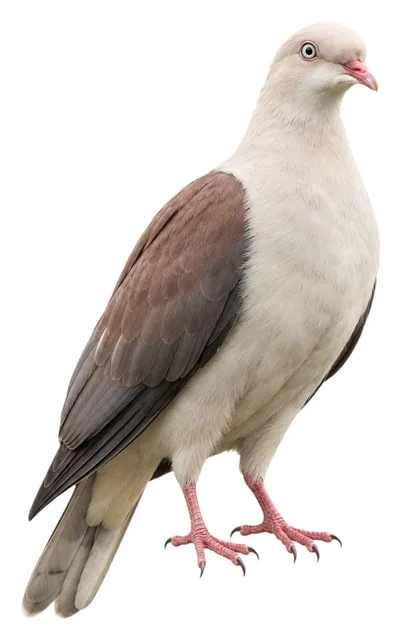
Mountain Imperial Pigeon
Ducula badia (Raffles, 1822)
43–51 cmLength486 gWeight
With a chestnut-brown back, wine-red-tinged gray head, neck, and underparts, and a white throat, it is the largest pigeon or dove within its range.
Busiest months: February–March · Most records: Thailand, Malaysia, Vietnam
How to identify
Field marks
- Head, neck, and underparts gray with a wine-red tinge
- Throat white and strongly contrasting
- Upperparts and wings chestnut-brown
- Tail blackish, with a single gray line across it
Voice
A low, resonant “boom”, audible only at close range.
Where and when it's recorded

Mountain Imperial Pigeon has been recorded at 242 of the 8,171 birding hotspots we track, in 12 countries and regions.
Records by month Northern Hemisphere
Where it's recorded most
- Bukit FraserMalaysia1,181 records
- Kinabalu Park – HQ areaMalaysia1,106 records
- Khao Yai NPThailand792 records
More places
- Doi Pha Hom Pok NP – Doi Lang (W), AKA Doi San JuThailand602 records
- Chiang Dao Wildlife Sanctuary – Wat Tham Pha PlongThailand484 records
- Kaeng Krachan NP – Panoen Thung (upper elevation) vicinityThailand408 records
- Kinabalu Park – Power Station RoadMalaysia353 records
- Kaeng Krachan NPThailand352 records
- Da Lat – Ta Nung ValleyVietnam347 records
- Mae Wong NP – Chong YenThailand341 records
Countries and regions with the most records
eBird records via GBIF up to 2024-12-31. A record means someone listed it; more records partly mean more birders, not more birds.
About
The mountain imperial pigeon (Ducula badia), also known as the maroon-backed imperial pigeon or Hodgson's imperial pigeon, is a species of bird in the pigeon and dove family with a wide range in southeastern Asia.
Excerpt from Wikipedia, CC BY-SA 4.0 · authors · Read more on Wikipedia
Questions
How big is the Mountain Imperial Pigeon?
The Mountain Imperial Pigeon is about 43–51 cm long and weighs around 486 g.
Where does the Mountain Imperial Pigeon live?
Its breeding range: Oriental: Himalayas from Nepal to southern China, Hainan, Southeast Asia, Malay Peninsula and Greater Sundas. It is most often recorded in Thailand, Malaysia and Vietnam.
When is the best time to see the Mountain Imperial Pigeon?
At the hotspots we track, it is recorded most in February and March (Northern Hemisphere).
Is the Mountain Imperial Pigeon endangered?
The IUCN Red List classifies the Mountain Imperial Pigeon as Least Concern.
What does the Mountain Imperial Pigeon eat?
Main food: Fruit.
What family is the Mountain Imperial Pigeon in?
It belongs to the family Pigeons, Doves (Columbidae), order Columbiformes.
At a glance
- Length
- 43–51 cm
- Weight
- 486 g
- Habitat
- Forest
- Diet
- Fruit
- Lifestyle
- Perches in trees
- Migration
- Resident (barely migrates)
- Conservation
- Least Concern
More measurements
- Wing
- 231 mm
- Tail
- 167 mm
- Bill
- 27 mm
- Tarsus
- 28 mm
Averages from the AVONET dataset; length from field guides where available.
Range
Oriental: Himalayas from Nepal to southern China, Hainan, Southeast Asia, Malay Peninsula and Greater Sundas
Breeding range, IOC World Bird List 15.2
Subspecies · 1
- Ducula badia griseicapilla ne India to sw, s China, Indochina and Myanmar
Classification
- Order
- Columbiformes
- Family
- Pigeons, Doves Columbidae
- Genus
- Ducula
Other birds in the genus Ducula
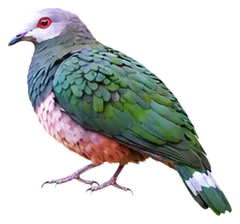 Pink-bellied Imperial PigeonDucula poliocephala
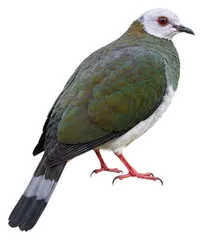 White-bellied Imperial PigeonDucula forsteni
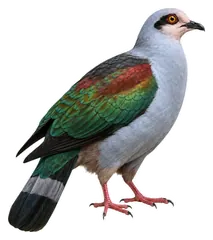 Mindoro Imperial PigeonDucula mindorensis
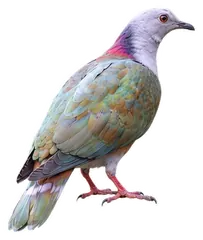 Grey-headed Imperial PigeonDucula radiata
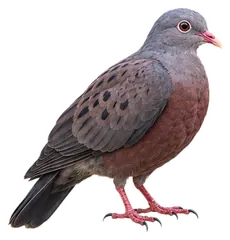 Spotted Imperial PigeonDucula carola
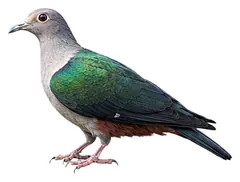 Green Imperial PigeonDucula aenea
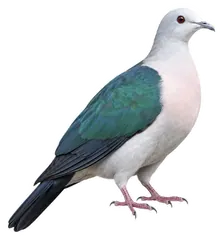 Enggano Imperial PigeonDucula oenothorax
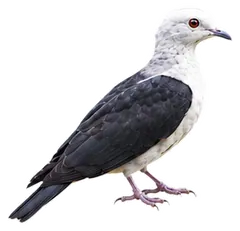 Nicobar Imperial PigeonDucula nicobarica
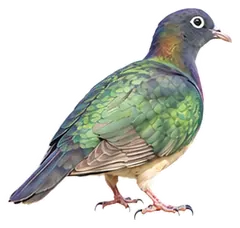 Spectacled Imperial PigeonDucula perspicillata
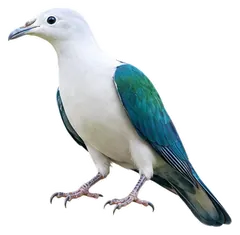 Seram Imperial PigeonDucula neglecta
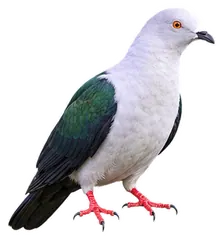 Elegant Imperial PigeonDucula concinna
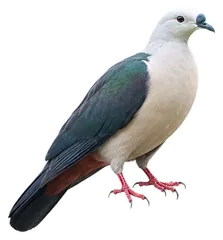 Pacific Imperial PigeonDucula pacifica
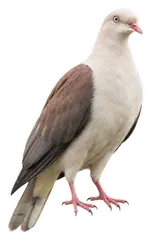
Download illustration
Free to use with credit: “Illustration: Bird Album (birdalbum.com)”. Drawn by AI from a reference photo by Pipat Soisook. ↗
Heard it but can't see it? Mingji identifies birds by sound and photo, on your phone.
In other languages
- EnglishMountain Imperial Pigeon
- 简体中文山皇鸠
- 繁體中文山皇鳩
- 日本語ヤマミカドバト
- DeutschFahlbauch-Fruchttaube
- FrançaisCarpophage à manteau brun
- EspañolDúcula dorsicastaña
- Portuguêspombo-imperial-de-dorso-castanho
- ItalianoPiccione imperiale montano
- NederlandsIndische Muskaatduif
- РусскийГорный плодовый голубь
- Svenskabergkejsarduva
- DanskBjergkejserdue
- Polskimuszkatela kasztanowata