 Bird Album
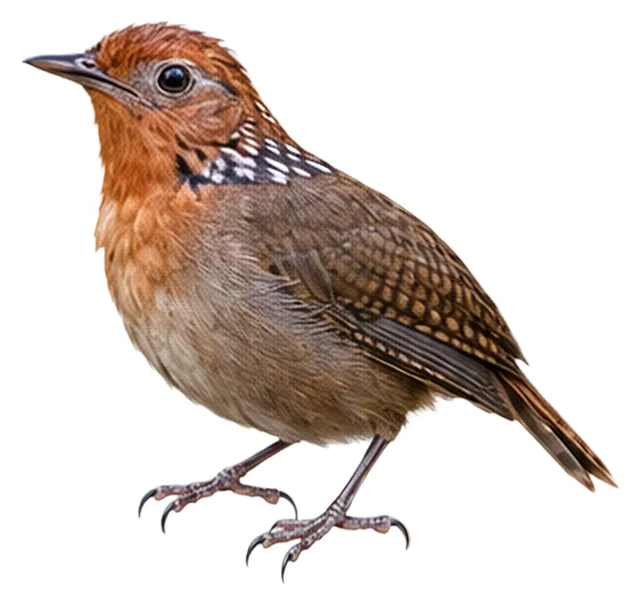
Musician Wren
Cyphorhinus arada (Hermann, 1783)
12 cmLength21 gWeight
The musician wren or organ wren (Cyphorhinus arada) is a species of wren named for its elaborate song.
Busiest months: January and July · Most records: Ecuador, Peru, Colombia
Where and when it's recorded
Busiest months: January and July · Most records: Ecuador, Peru, Colombia

Musician Wren has been recorded at 89 of the 8,276 birding hotspots we track, in 9 countries and regions.
Records by month Southern Hemisphere
Where it's recorded most
- WildSumaco LodgeEcuador694 records
- Reserva Biologica del Rio BigalEcuador253 records
- Los Amigos Biological StationPeru207 records
More places
- Tambopata Research CenterPeru170 records
- Explorer's InnPeru145 records
- Estación Biológica de Cocha CashuPeru137 records
- Rio Cristalino – listas históricasBrazil119 records
- Asociacion para La Conservacion de Aves y La Biodiversidad Koepcke's HermitPeru113 records
- Sacha LodgeEcuador107 records
- Sumaco RoadEcuador101 records
Countries and regions with the most records
eBird records via GBIF up to 2024-12-31. A record means someone listed it; more records partly mean more birders, not more birds.
About
The musician wren or organ wren (Cyphorhinus arada) is a species of wren named for its elaborate song. It is native to the Amazon rainforest in South America, from the lowlands into the foothills of the Andes.
Excerpt from Wikipedia, CC BY-SA 4.0 · authors · Read more on Wikipedia
Questions
How big is the Musician Wren?
The Musician Wren is about 12 cm long and weighs around 21 g.
Where does the Musician Wren live?
Its breeding range: South America: Amazonia. It is most often recorded in Ecuador, Peru and Colombia.
When is the best time to see the Musician Wren?
At the hotspots we track, it is recorded most in January and July (Southern Hemisphere).
Is the Musician Wren endangered?
The IUCN Red List classifies the Musician Wren as Least Concern.
What does the Musician Wren eat?
Main food: Insects & other invertebrates.
What family is the Musician Wren in?
It belongs to the family Wrens (Troglodytidae), order Passerines (Passeriformes).
At a glance
- Length
- 12 cm
- Weight
- 21 g
- Habitat
- Forest
- Diet
- Insects & other invertebrates
- Lifestyle
- Varied
- Migration
- Resident (barely migrates)
- Conservation
- Least Concern
More measurements
- Wing
- 64 mm
- Tail
- 39 mm
- Bill
- 18 mm
- Tarsus
- 24 mm
Averages from the AVONET dataset; length from field guides where available.
Range
South America: Amazonia
Breeding range, IOC World Bird List 15.2
Classification
- Order
- Passerines Passeriformes
- Family
- Wrens Troglodytidae
- Genus
- Cyphorhinus
Other birds in the genus Cyphorhinus
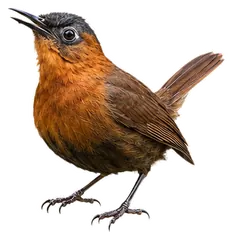 Northern Chestnut-breasted WrenCyphorhinus dichrous
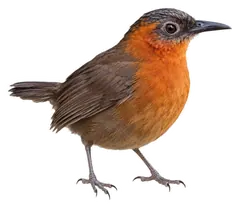 Southern Chestnut-breasted WrenCyphorhinus thoracicus
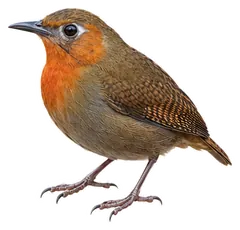 Song WrenCyphorhinus phaeocephalus
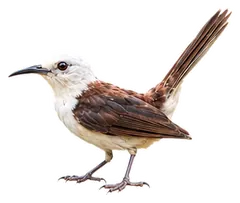 White-headed WrenCampylorhynchus albobrunneus
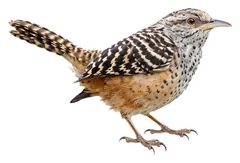 Band-backed WrenCampylorhynchus zonatus
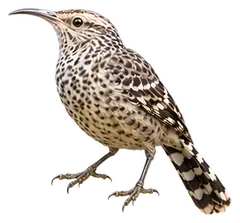 Grey-barred WrenCampylorhynchus megalopterus
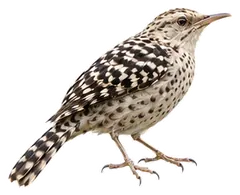 Stripe-backed WrenCampylorhynchus nuchalis
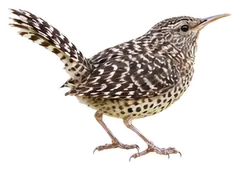 Fasciated WrenCampylorhynchus fasciatus
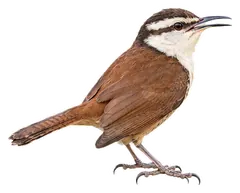 Giant WrenCampylorhynchus chiapensis
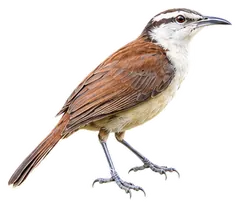 Bicolored WrenCampylorhynchus griseus
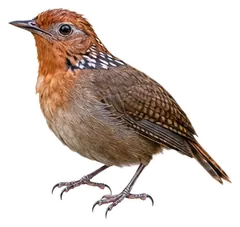
Download illustration
Free to use with credit: “Illustration: Bird Album (birdalbum.com)”. Drawn by AI from a reference photo by Hudson Martins Soares. ↗
Heard it but can't see it? Mingji identifies birds by sound and photo, on your phone.